Summary: A custom shelf is dimensioned to the nearest millimetre according to the available space, the load it must bear, and the timber species or material chosen. Unlike standard units, it can incorporate repositionable shelves, finishes applied in a spray booth, and discreet fixings suited to each wall type. The choice of material — solid wood, multiply plywood, or lacquered MDF — determines both the resistance to deflection, the aesthetic, and the final budget.
A 187 cm-wide alcove between two party walls, a 38 cm-deep corridor under a staircase, a wall that rises to 310 cm beneath a mansard roof structure: these are common situations in apartments and houses along La Côte vaudoise, and no off-the-shelf shelving unit fits them properly. At our workshop in Gingins, the first question we ask during a site visit is not "what style do you want?" but "what are you going to put on it?" — because it is the load and the intended use that dictate shelf thickness, the choice of material, and the type of fixings.
This guide gathers the technical benchmarks we use in our design office when planning a custom shelf: materials, spans, fixings, timber species, and finishes. You will find concrete reference points to help you prepare your project and understand the trade-offs your cabinetmaker will propose.
What "bespoke" actually changes for shelving
A custom shelf is not simply a standard shelf repainted in a different colour. It is drawn from the actual dimensions of your room, taken on site during a survey visit. This means that shelf depth matches what you intend to store — 28 cm for paperbacks, 40 cm for A4 ring binders, 60 cm for a vinyl record collection stored upright — rather than whatever a manufacturer decided to produce at scale.
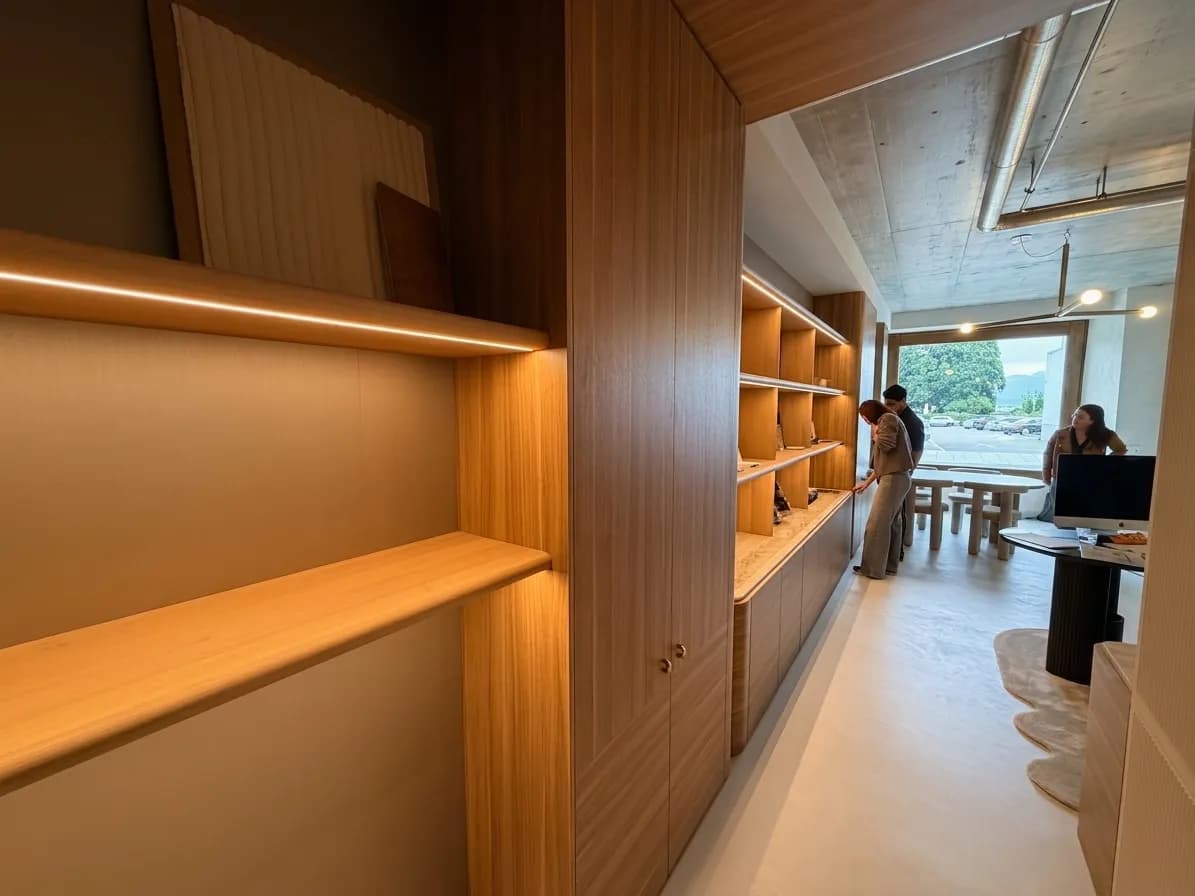
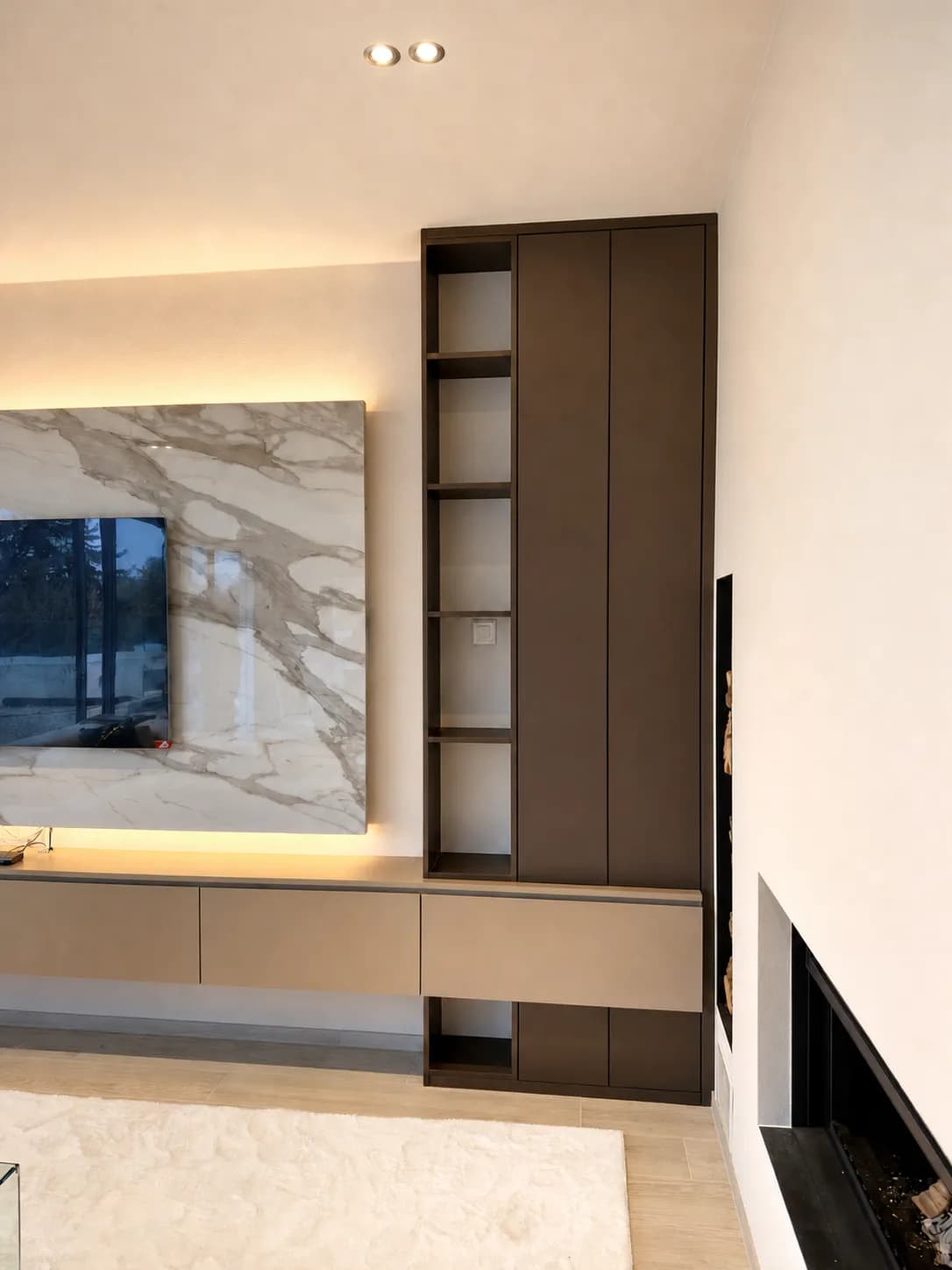
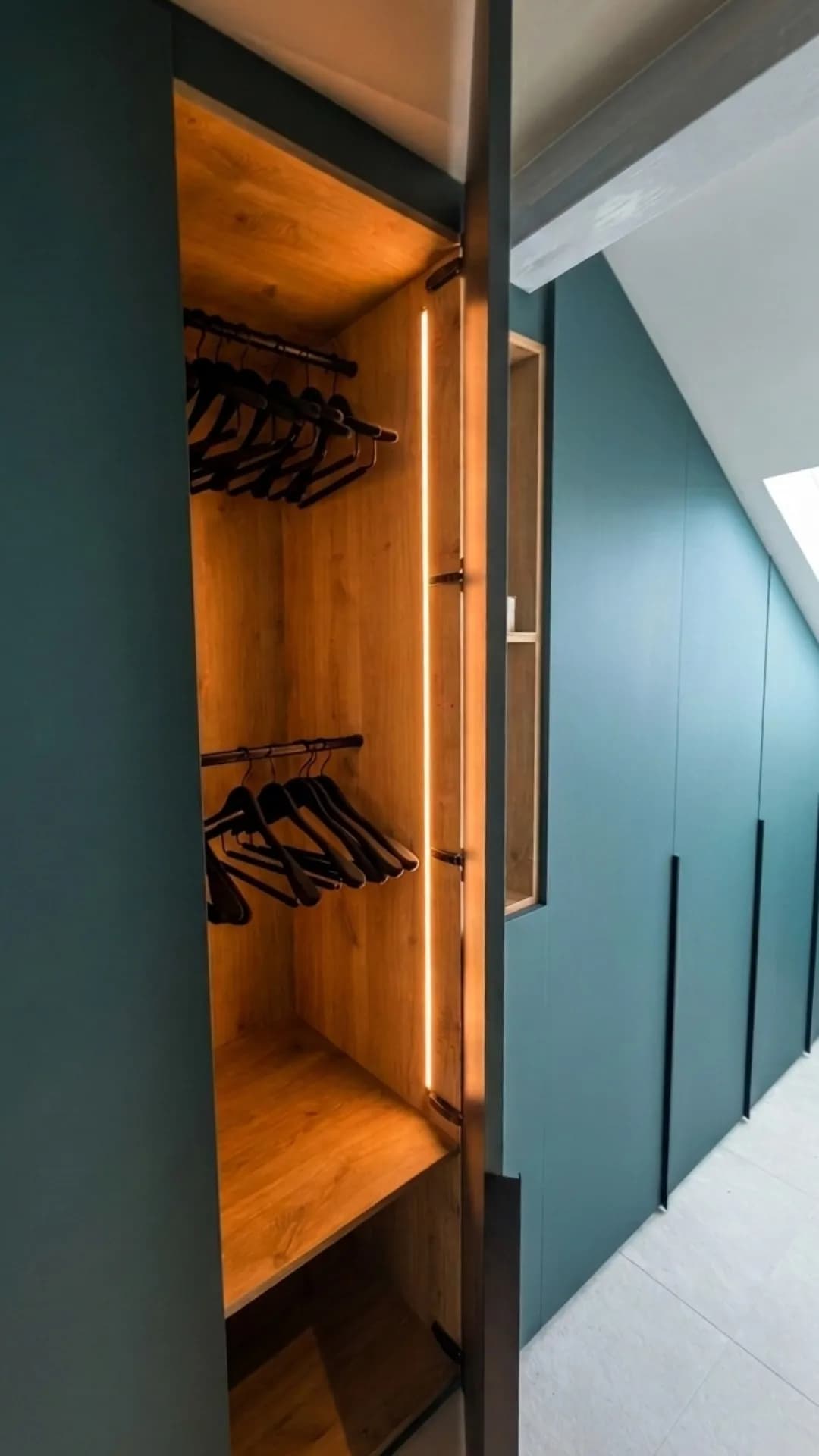
The other difference lies in integration. A custom shelf can be anchored into side walls, run from corner to corner without dead space, work around a beam or a service duct, and house an LED light strip recessed into the carcass. These details are not luxury options: they are simply made possible by the fact that the piece is designed for your space, not for a catalogue.
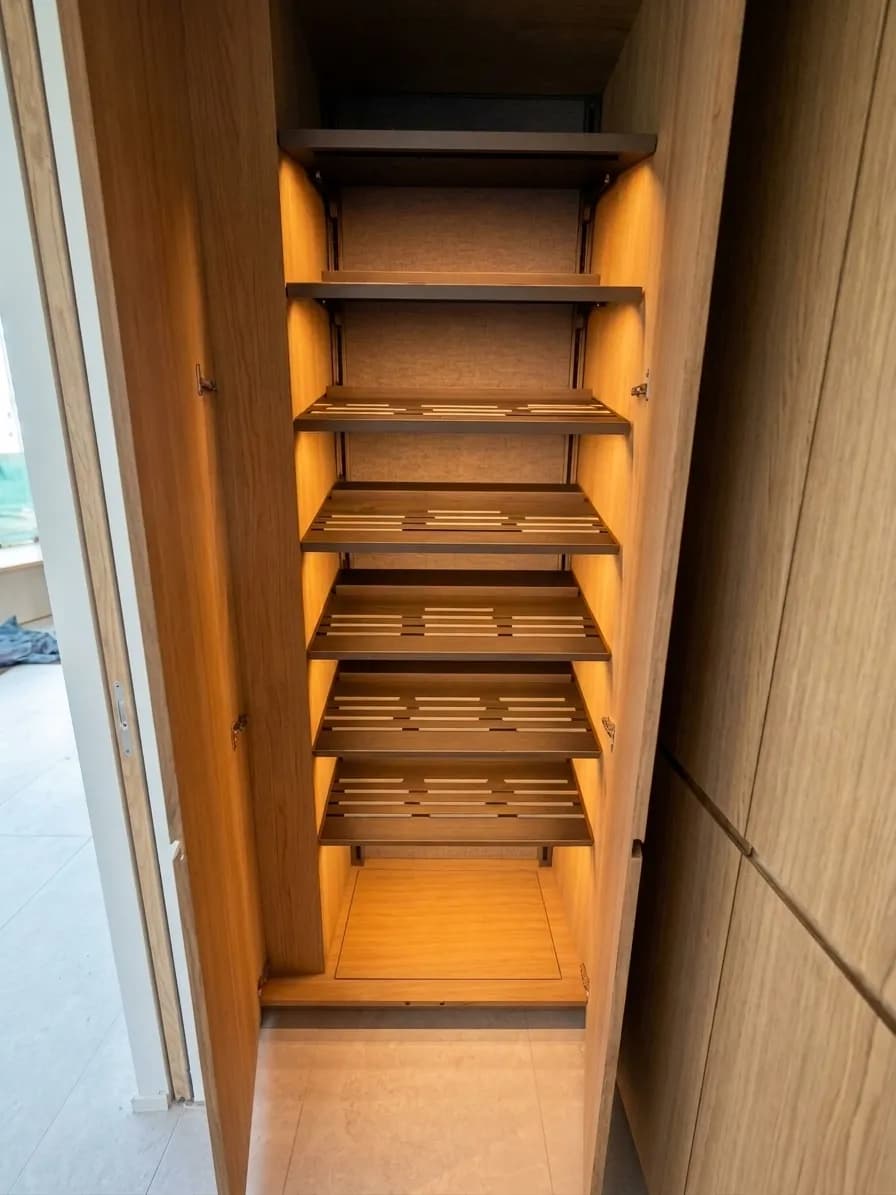
Finally, repositionable shelves — fixed on 5 mm pins in holes drilled every 32 mm — allow the height between levels to be adjusted as your needs change over time. This is a design detail we incorporate as standard in bookcases and storage fittings.
Choosing the right material for load and aesthetics
The material determines both resistance to deflection and the final appearance. Here are the options we use in the workshop, with their actual characteristics:
Solid wood
European oak, ash, and maple are the most common species for solid shelves. A 22 mm-thick oak shelf handles a free span of 70 to 80 cm under moderate load (everyday books, decorative objects). Beyond that, you need to move to 28 mm or reduce the span. Solid wood moves with ambient humidity — something not to overlook in kitchens or cellars — and must be assembled with tongue-and-groove joints over wider widths to stay flat. It is the most repairable material: a scratched shelf can be sanded back and re-oiled.
Birch multiply plywood
Less prone to distortion than solid timber, birch multiply plywood offers good rigidity for medium spans (up to 90 cm at 18 mm). It takes veneers and lacquer well, and its veneered or solid-wood edging gives a refined finish. We use it frequently for integrated bookcases where visual lightness matters.
Lacquered MDF
MDF (medium-density fibreboard) is the reference material for very smooth lacquered finishes. Its surface is uniform and grain-free, making it the ideal substrate for a matt or satin lacquer applied in a spray booth. On the other hand, it is sensitive to moisture and heavy; for longer shelves, an intermediate upright or an increased thickness of 22 or even 25 mm is advisable.
Melamine-faced board with ABS edging
For utility fittings (utility rooms, storerooms, service dressing rooms), melamine-faced board with heat-bonded ABS edging is robust, easy to maintain, and cost-effective. It is not suitable for visible wood finishes, but it is perfectly suited to technical spaces or contemporary interiors with a plain matt finish.
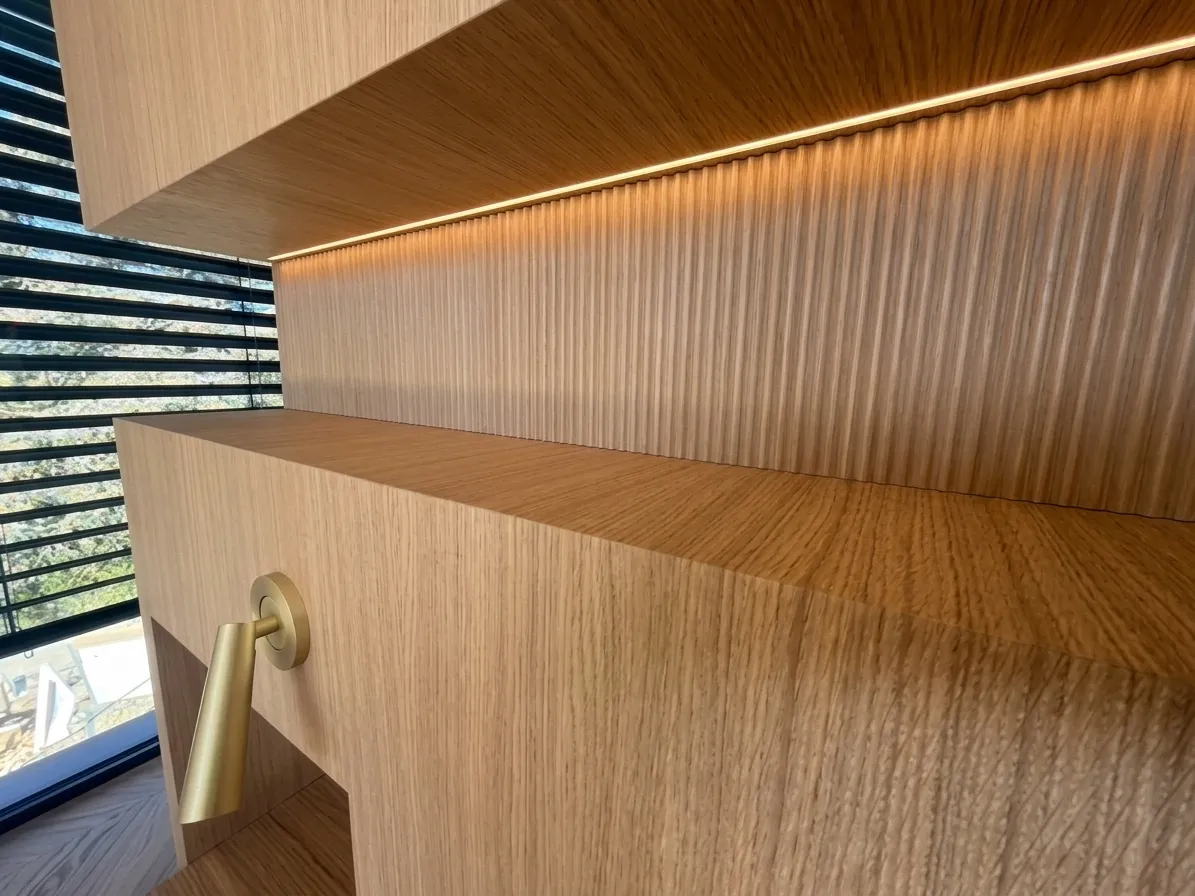 real project photo
Spans and thicknesses: workshop benchmarks
Deflection is the enemy of any shelf. A shelf that sags under load will eventually fail to return to its original position, and the overall appearance of the fitting suffers as a result. The figures below are the benchmarks used in our design office; they assume a moderate distributed load (books, light crockery):
Solid oak 22 mm 70–80 cm Solid oak 28 mm 90–100 cm Birch multiply 18 mm 80–90 cm Birch multiply 24 mm 100–110 cm MDF 22 mm 60–70 cm Melamine 19 mm 60–70 cmFor heavy loads — archives, tools, densely packed vinyl records — we systematically reduce these spans by 15 to 20 %, or we plan a discreet intermediate upright. A load of 80 kg distributed over 90 cm of 22 mm MDF will produce visible deflection within a few months; it is better to know that before manufacture.
Fixings: wall-hung, surface-mounted, or floating
The fixing method depends on the wall type (concrete, brick, dry lining, timber frame) and the desired aesthetic. Three main approaches:
Shelf recessed into side walls
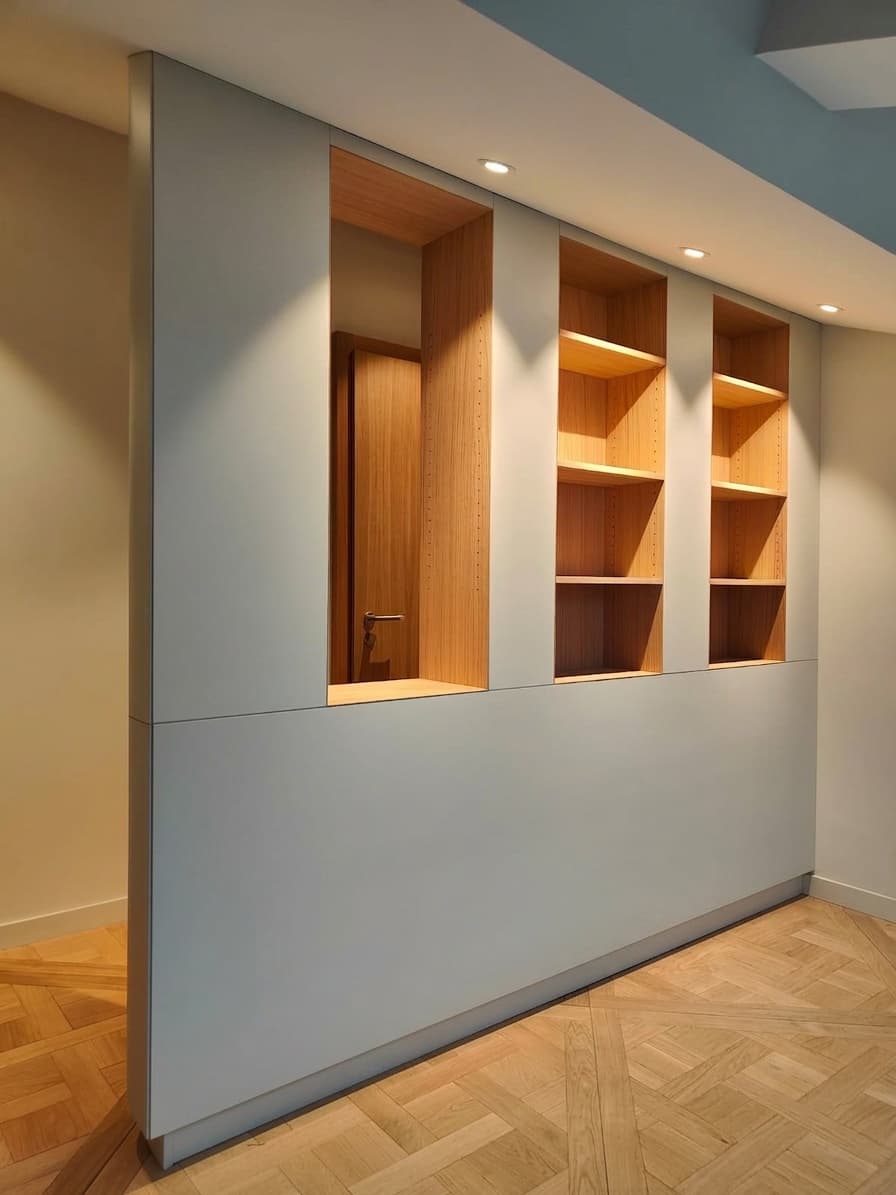
This is the most solid solution for an integrated fitting. The side uprights are plugged into load-bearing walls; the shelves rest in machined grooves or on spacing pins. This configuration is invisible from the front and tolerates significant loads. It requires a precise survey to compensate for wall irregularities.
Surface-mounted shelf on track or slotted upright
Vertical tracks fixed to the wall carry adjustable shelf brackets. Practical for evolving spaces (workshop, working library), this solution is visible and embraces its technical character. It suits concrete or solid brick walls well, which provide a reliable fixing point.
Floating shelf (concealed bracket)
Threaded rods or metal keyhole plates are set into the wall; the shelf slides over them with no visible support. The effect is clean and minimal. The limitation: load capacity depends entirely on the load-bearing wall. On a standard plasterboard partition, a floating shelf of 80 cm should not carry more than 15 to 20 kg in total — a figure to verify with your cabinetmaker during the site visit.
On projects where we work alongside an architect, the nature of the substrate is specified in the execution drawings before any ironmongery is ordered.
Species and finishes: what lasts and what pleases
The timber species influences the visual result, the weight of the piece, and its behaviour with humidity. In our workshop, the most frequent choices for visible solid-wood shelving are:
- European oak: open grain, golden to amber colouring, very strong. It takes oil and matt varnish well. As it ages, it develops a dense patina that adds character.
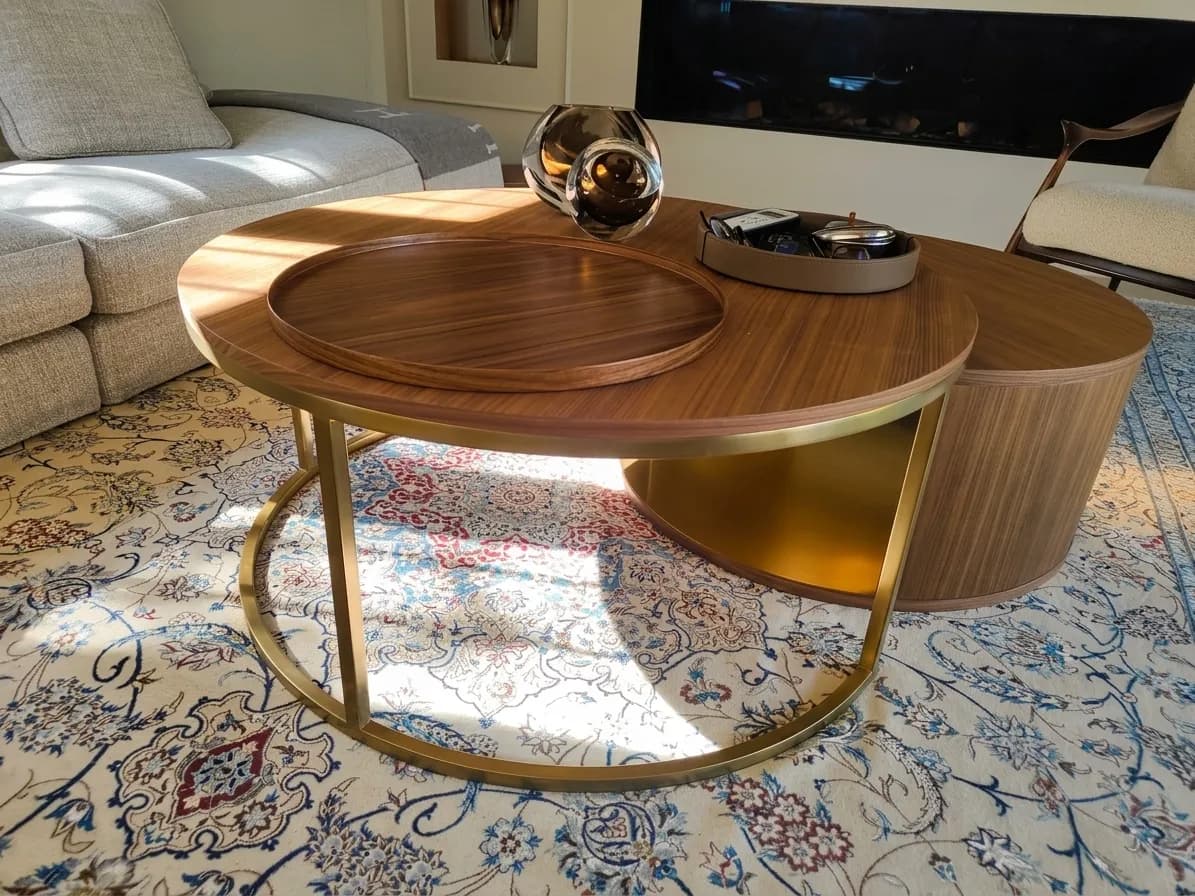
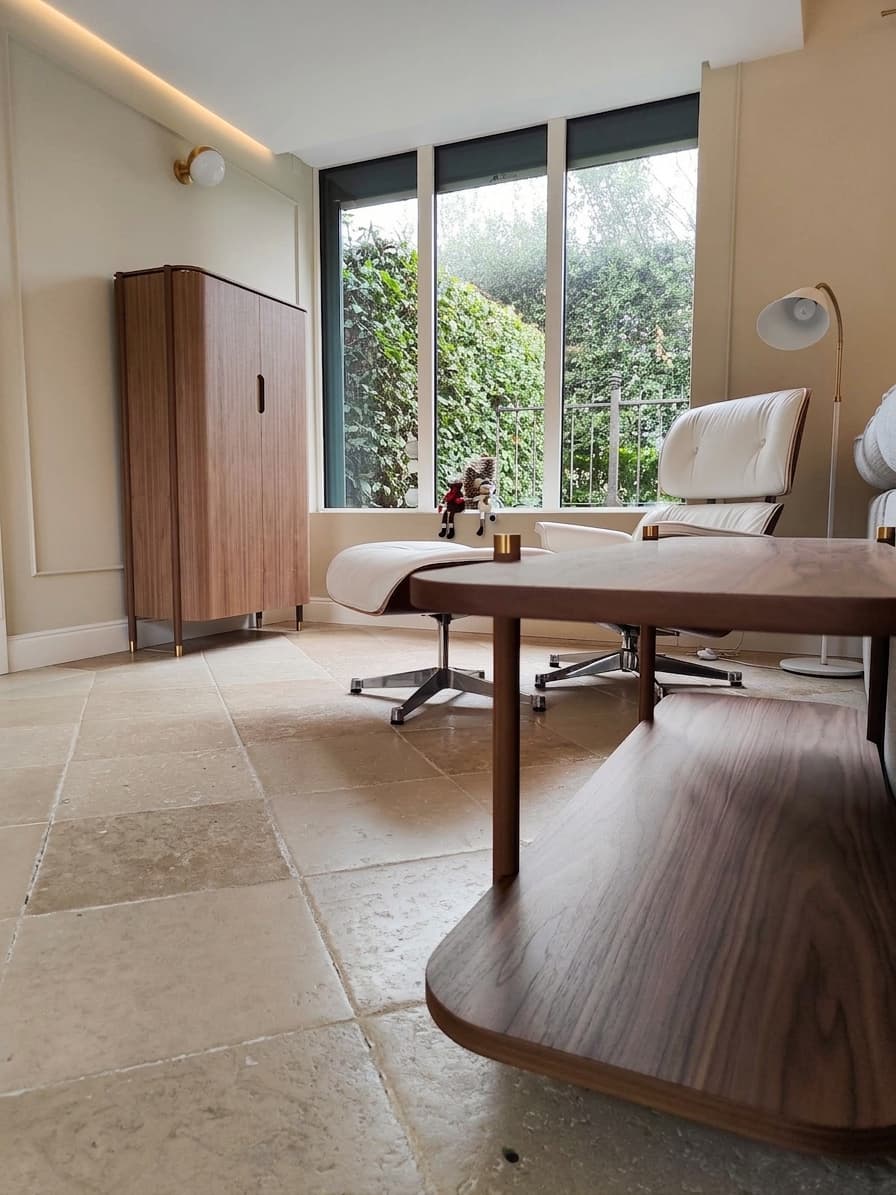
- American walnut: dark timber, spectacular figuring, smooth to the touch. Recommended for living-room or study shelving where aesthetics take precedence. Learn more about American walnut and its characteristics.
- Ash: fine, figured grain, light in colour. Light and stiff, it is well suited to long spans.
- Maple: very hard, tight grain, almost white. Ideal for contemporary spaces or desks subject to heavy use.
For finishes, hard oil is our first recommendation for solid-wood shelving: it penetrates the grain, nourishes the wood, and allows local repair in the event of a scratch. Matt varnish offers superior protection against liquids (kitchen, bathroom) but requires complete sanding if it is damaged. Lacquer, applied in our workshop's spray booth, suits melamine-faced boards and MDF; it delivers a uniform surface that is very difficult to achieve with a brush.
Single shelf or integrated fitting: when to move to a full bookcase
A custom shelf can be a standalone piece — a floating shelf above a desk, two levels in an alcove — or the starting point for a fitting that structures an entire room. The distinction is not merely formal: it affects lead time, budget, and design approach.
A simple shelf (a single level, wall-fixed) can be made in a few days in the workshop and installed in half a day. A full storage unit with carcass, back panel, drawers on Blum runners, and integrated LED lighting is a custom bookcase project, requiring a full study, 3D drawings submitted for approval, and a longer production lead time. Our guide to custom bookcases details these steps.
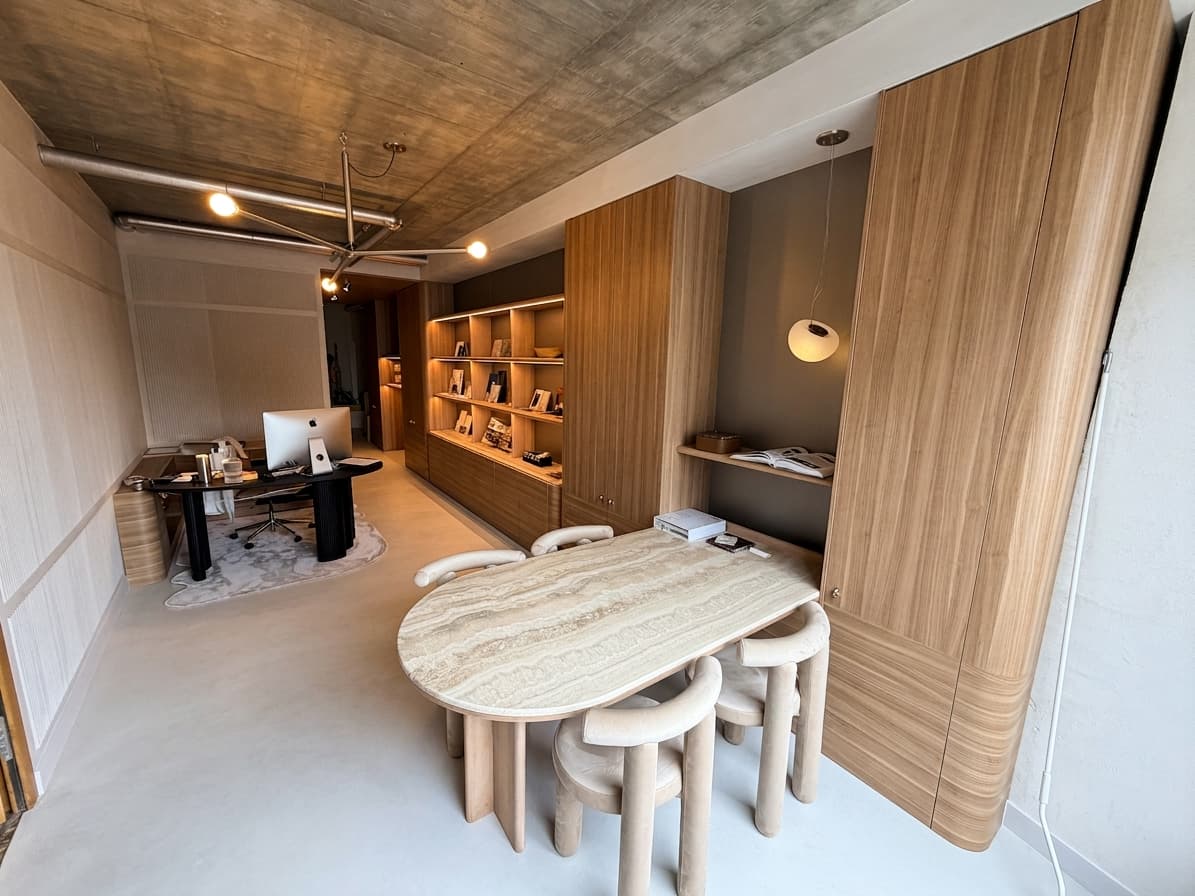
For whole-room projects — dressing room, bookcase, and desk in a single space — it is better to treat everything together: the pieces are coordinated in terms of depth, shelf heights, and finishes, and installation takes place in a single visit. Discover our approach to bespoke fittings and furniture.
Preparing your order: the information to gather
Before contacting the workshop, a few details make the first conversation far more productive:
- The dimensions of the space: available width, height, and depth (a tape measure is sufficient for an initial exchange).
- The wall type: concrete, brick, dry lining, or timber frame. If in doubt, a photograph and the address of the property often give us a good indication of the construction type.
- What you plan to store: books, crockery, electronics, a specific collection. This determines the depth, the spacing between shelves, and the design load.
- The desired aesthetic: visible wood or lacquered, integrated into the wall or surface-mounted, with or without lighting.
- The project context: is this a renovation, a move, a project coordinated with an architect? This information allows us to calibrate the lead time and anticipate any site constraints.
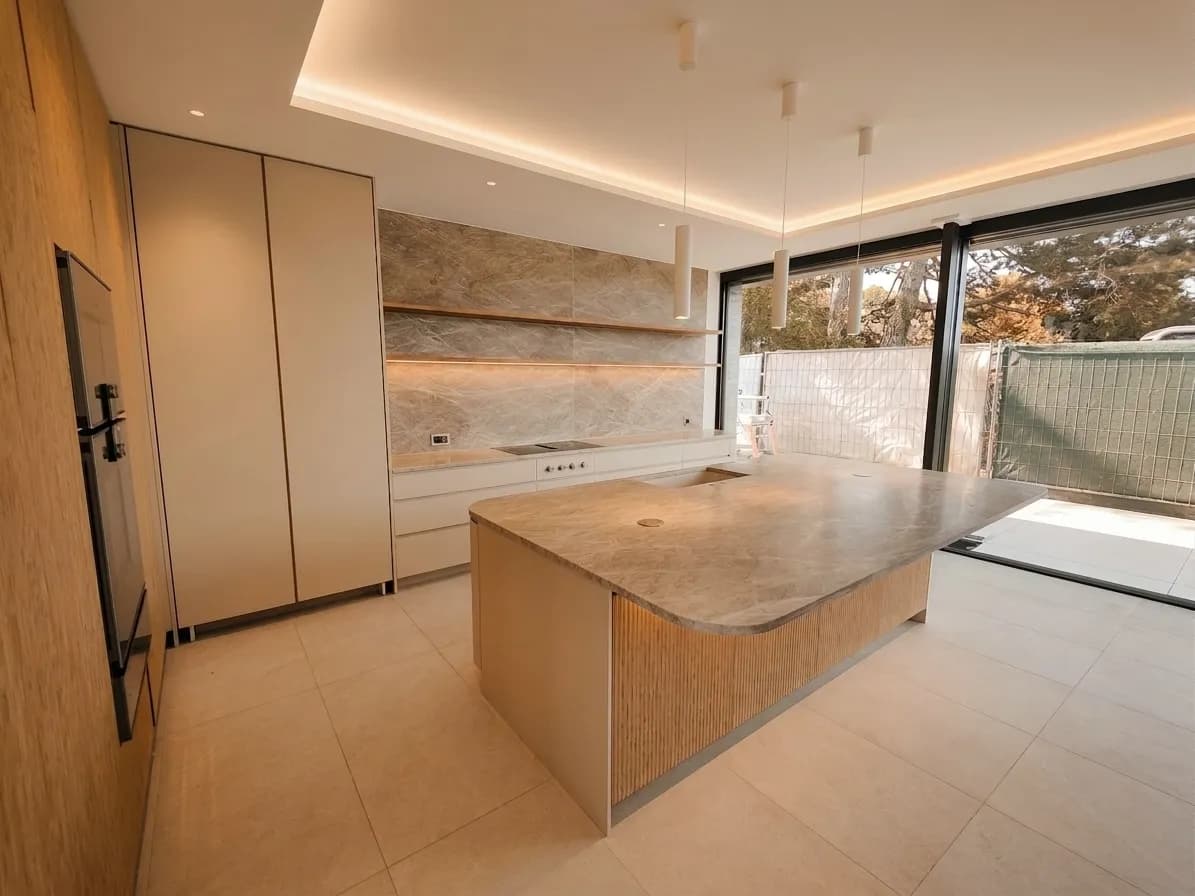
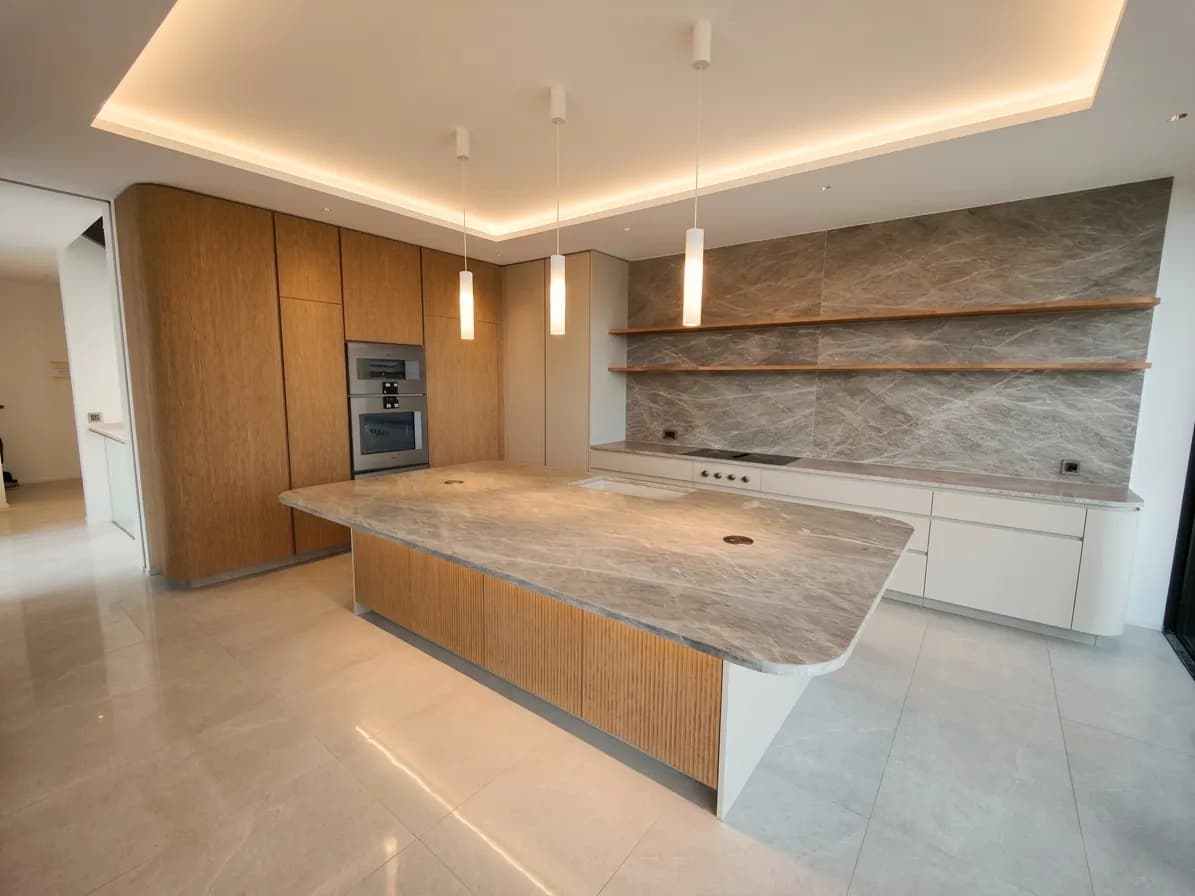
For property development projects — high-end schemes, individual villas, or apartment buildings — integrated shelving and storage often forms part of a broader fitting package handled with the client or their architect. Learn more about our approach to property development projects.
For a clearer idea of the budgets and timescales to expect for this type of commission, our article on budgets and lead times for bespoke furniture provides useful benchmarks.
Key points to remember
A custom shelf is, first and foremost, a question of span and load: choosing the right material and thickness prevents deflection and long-term disappointment. The species and finish determine maintenance requirements and service life. The fixing method depends on the load-bearing wall, which must be identified before any order is placed. And if your needs go beyond a single shelf — a complete alcove, an integrated bookcase, under-eaves storage — it is better to think through the whole scheme from the outset, with 3D drawings to support the process.
Tell us about your project
At TOMÉ, every project begins with a description of your space and what you would like to store in it. We respond within 48 hours with an initial estimate or a proposal to visit and take measurements on site. 3D drawings are submitted for your approval before any cutting begins: you know exactly what will be made. Describe your project in a few lines — dimensions, intended use, context — and we will get back to you promptly.