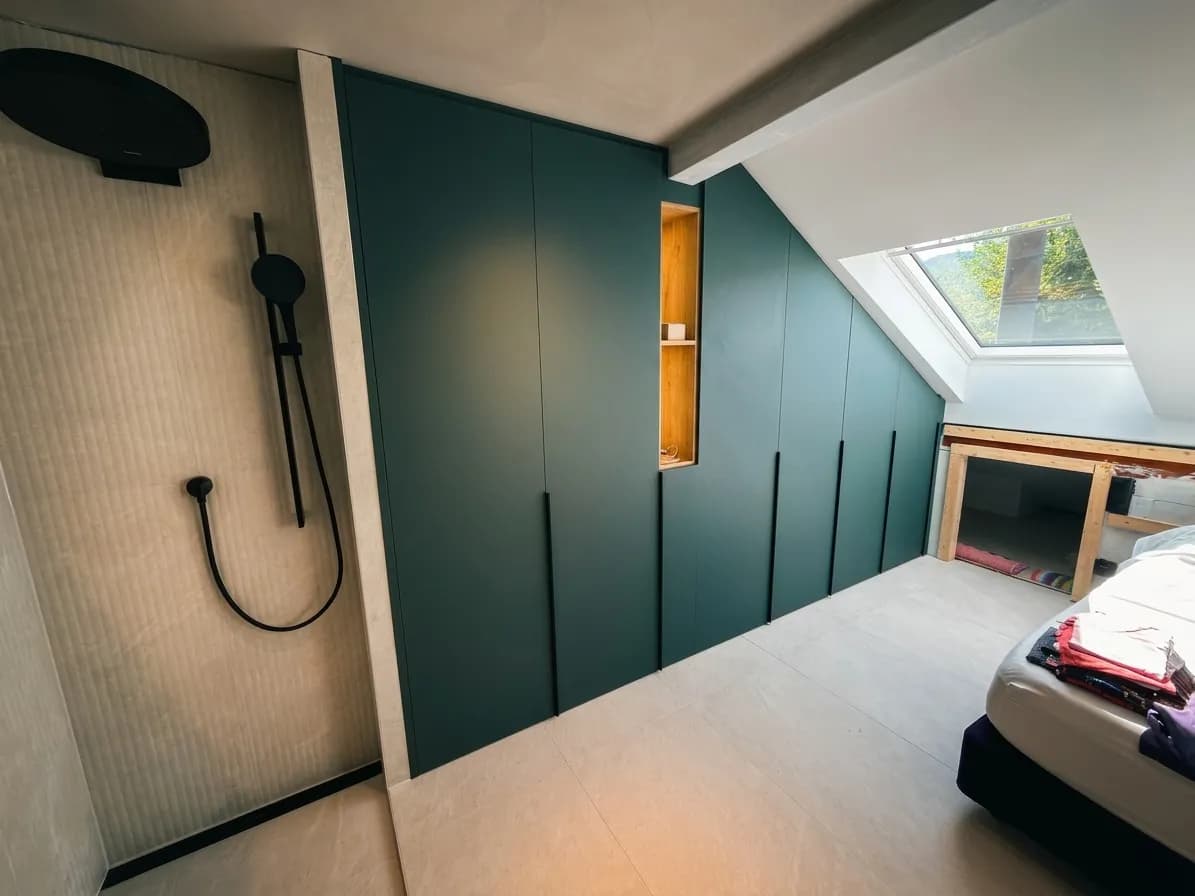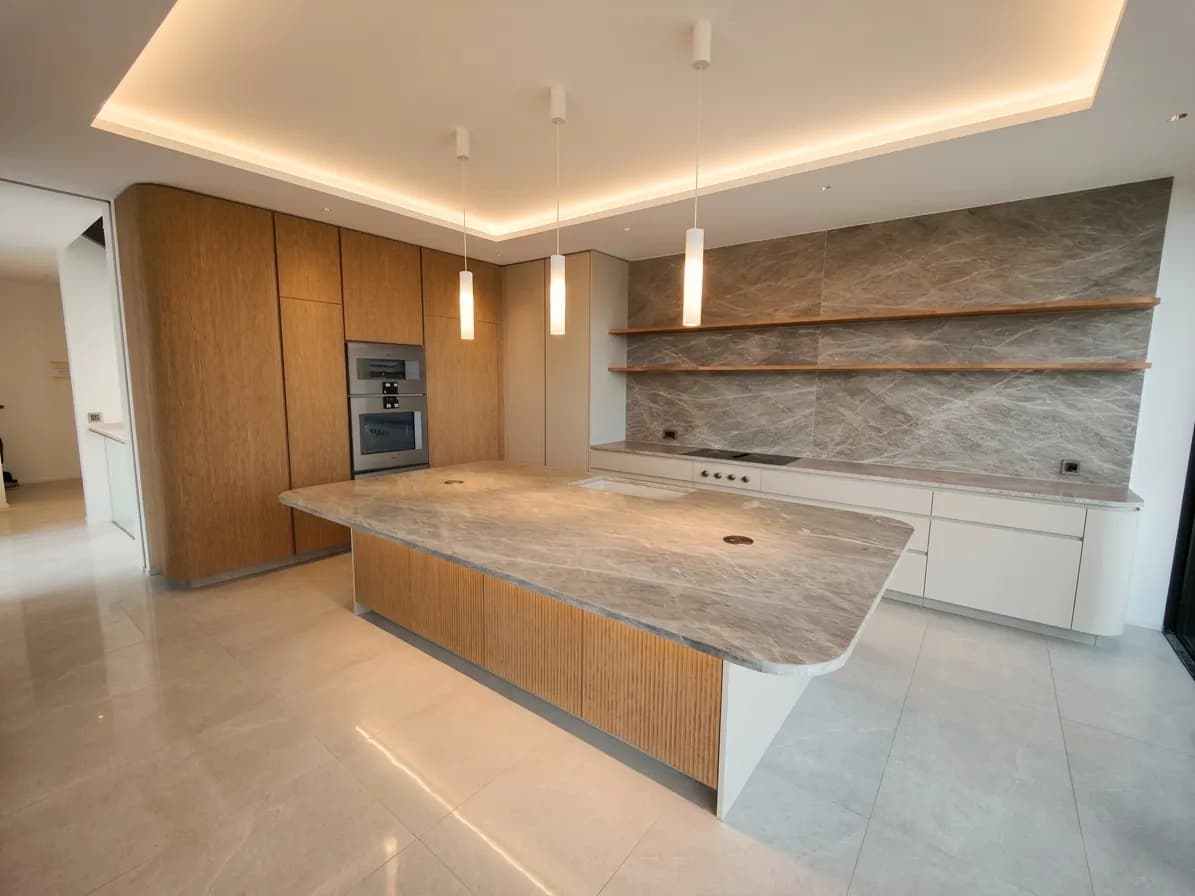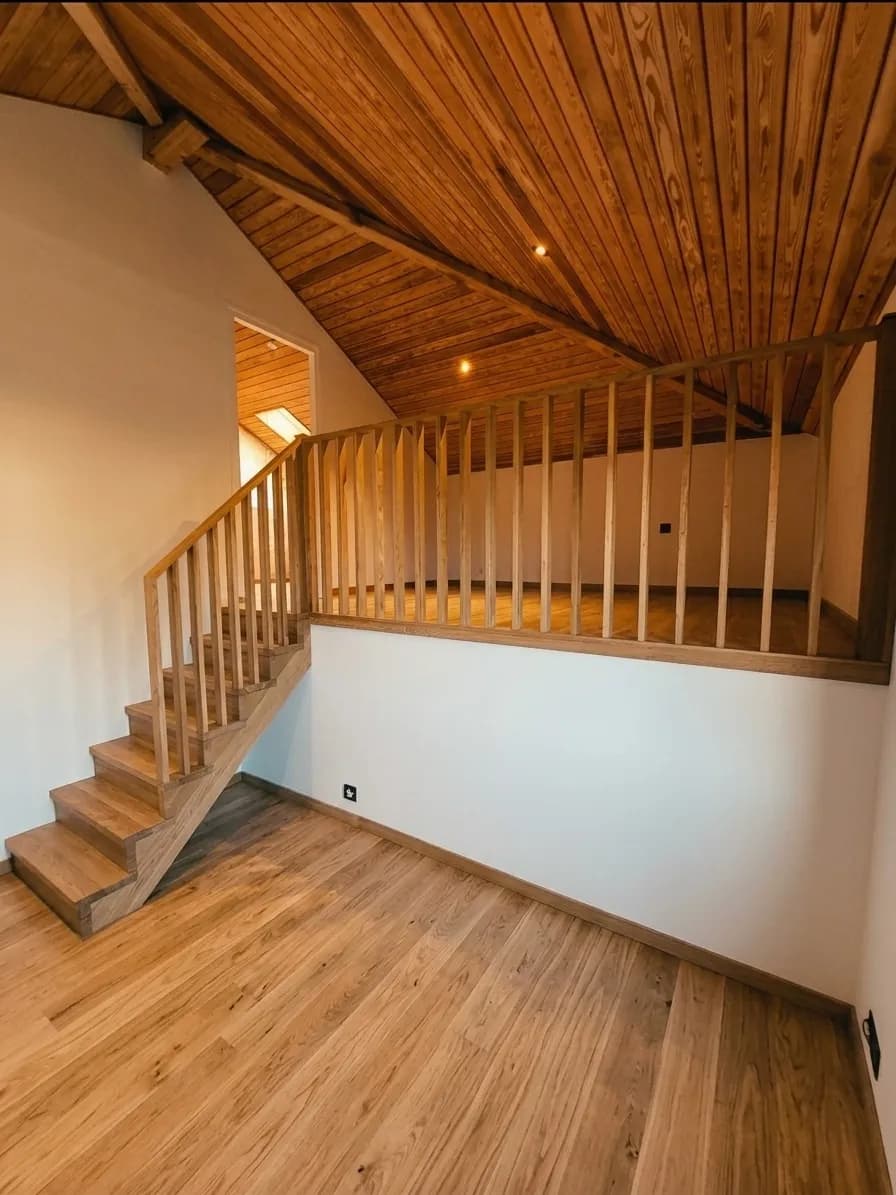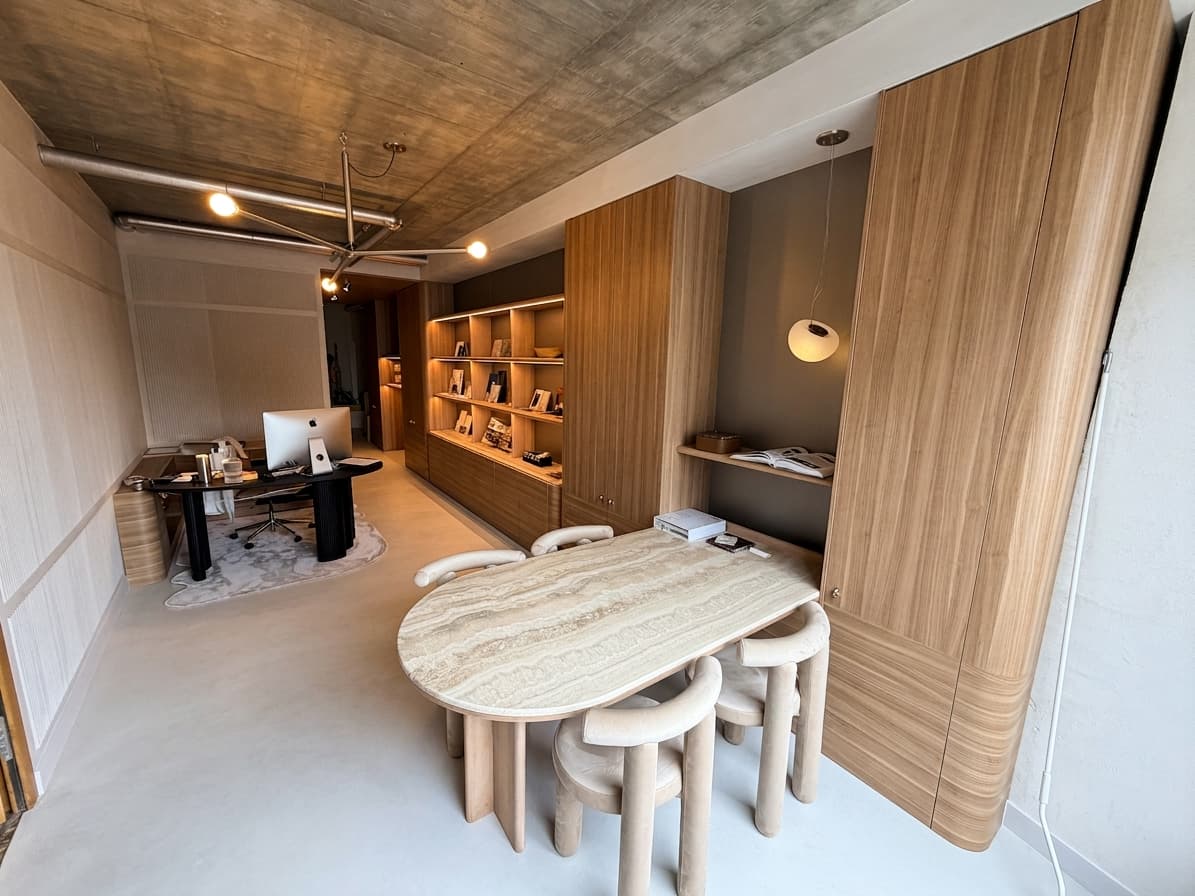
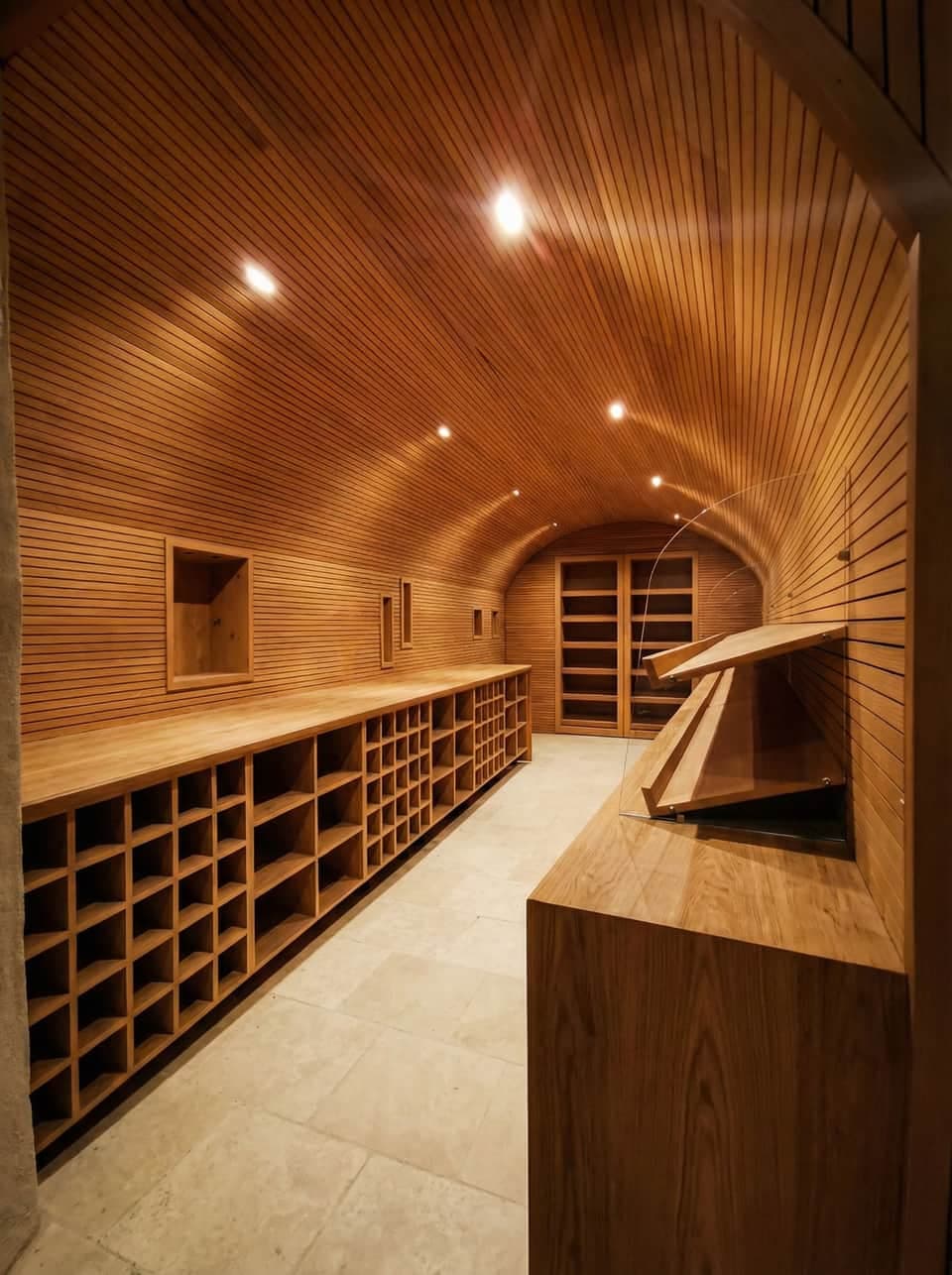
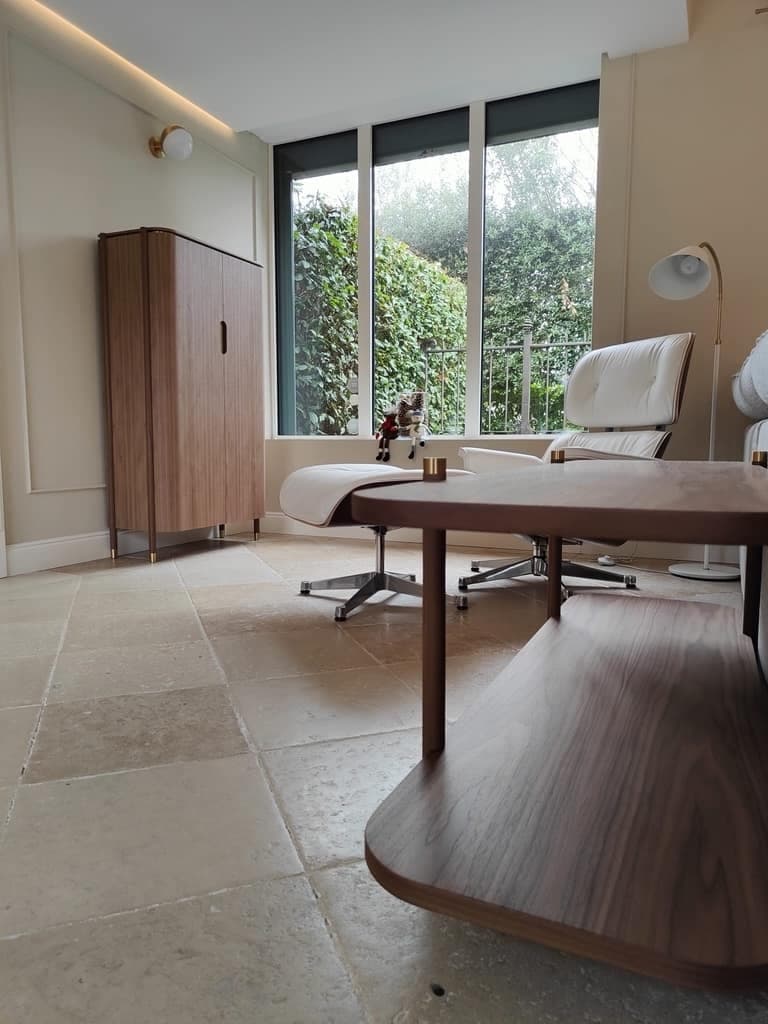
Summary: American walnut (Juglans nigra) stands apart for its dimensional stability — superior to most European hardwoods — its close grain, and its tones ranging from chocolate brown to deep violet, which lighten slightly over the years. At our workshop in Gingins, we select it plank by plank for tables, bookcases, dressing rooms, and wall panelling where the legibility of the grain matters as much as long-term performance.
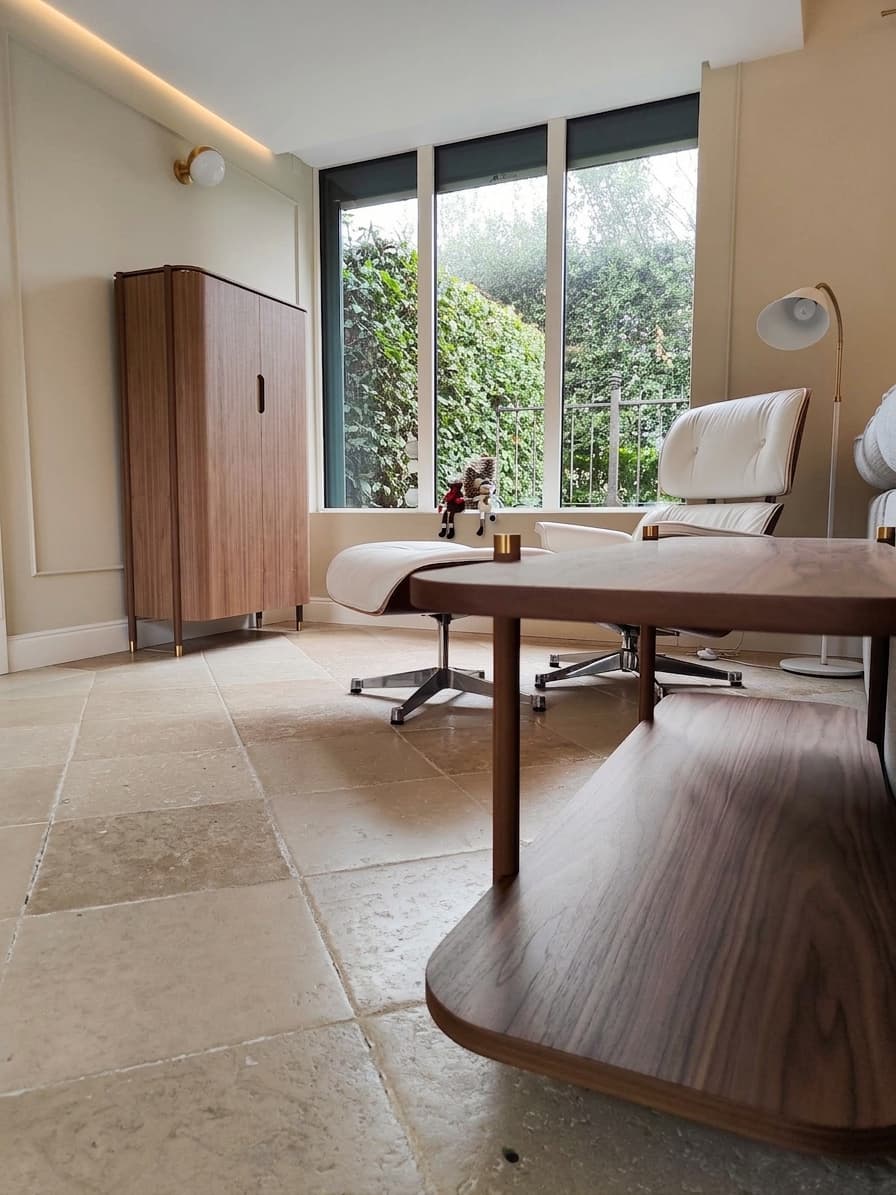
When a client walks into our workshop with a plank of American walnut in hand, the conversation always takes a different turn. There is something about this timber that needs no lengthy explanation: the colour speaks for itself, the figuring reads at a glance, and the feel — fine grain, a slightly silken surface even before any finishing — already gives a sense of what the piece will look like in ten years. It was on one particular project, a set of furniture and wall panelling in American walnut made in Mies, that we understood just how much this timber deserved an article of its own.
American walnut is not always in stock at our workshop: it costs more than European oak or beech, and sourcing it demands greater care in selection. But when a project calls for it — a dining table that needs to feel dense and warm, a full-height double-volume bookcase, a wall lining that must age thirty years without visual fatigue — few timbers do it better.
Juglans nigra: botanical characteristics and physical properties
American walnut, Juglans nigra, is native to the eastern United States and Canada, in areas where deep, well-drained soils promote slow, steady growth. It is precisely this measured growth that accounts for the density of its grain and the mechanical strength of the wood.
Its properties make it a leading material for precision cabinetmaking:
- Density: between 600 and 700 kg/m³ in the dry state — heavier than standard European oak (~680 kg/m³ along the grain), which gives it good rigidity in use.
- Dimensional stability: American walnut moves little with the seasons. Its tangential shrinkage is moderate (~7.8%) and its radial shrinkage even lower (~5.5%), giving it a favourable anisotropy coefficient — a decisive quality for tabletops and wide-format panels.
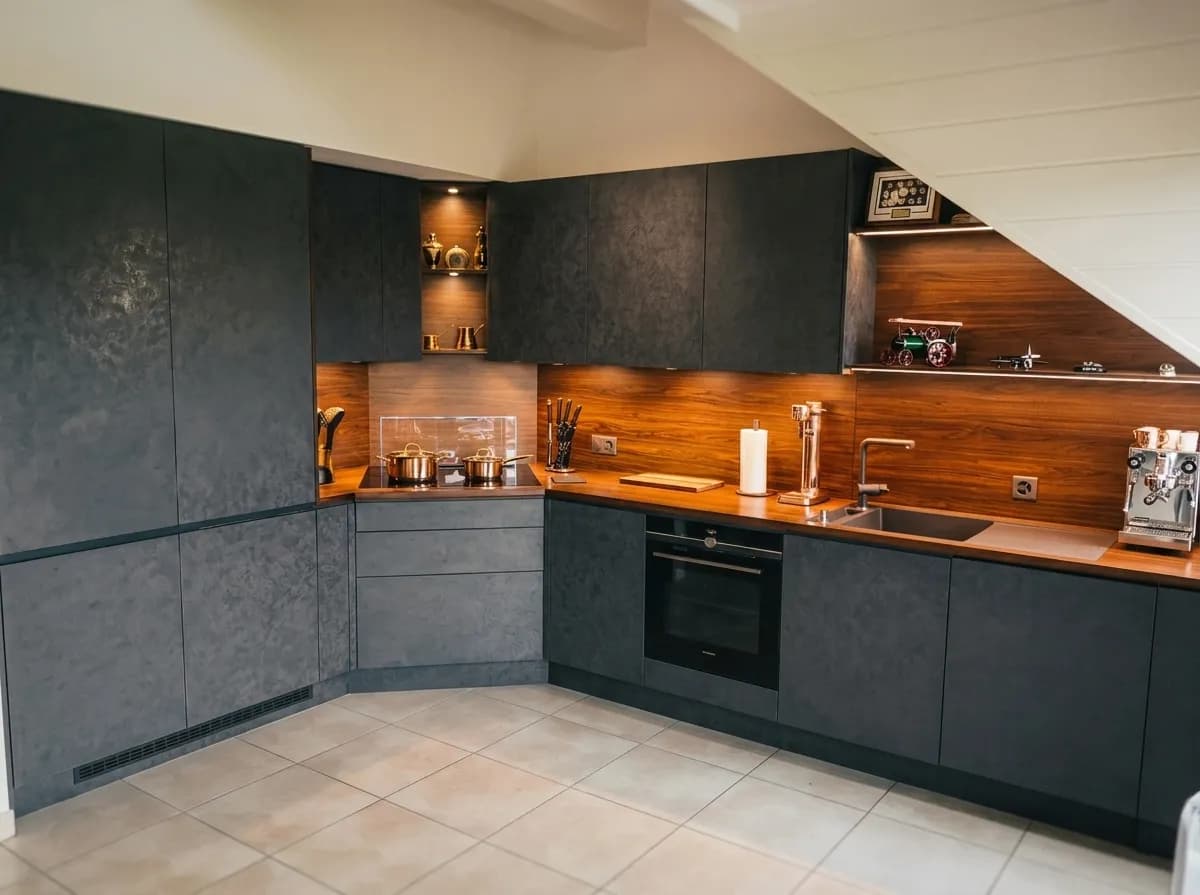
- Janka hardness: approximately 4,200 N, lower than oak (~5,900 N) but sufficient for light work surfaces, panels, and everyday furniture. On a kitchen worktop exposed to daily impacts, a harder timber is preferable; for a dining table or bookcase, its hardness is perfectly suited.
- Grain: fine to medium, regular, occasionally slightly wavy near the crotch — the source of the most sought-after figures.
These figures are not abstractions: in practice, a solid walnut tabletop 40 mm thick and 900 mm wide will move far less between a dry summer and a heated winter in a Swiss Romand flat than a top of the same dimensions in ash or beech, two timbers far more reactive to humidity.
The grain tells the story of each plank
What truly sets American walnut apart visually is the legibility of its grain. Each plank carries the traces of its growth: tight rings where cold winters slowed the sap, slightly more open zones where summers were generous. This natural variety means that two pieces of furniture identical on paper, made from two different batches, will never look quite alike.
In our selection work, we distinguish several grain configurations:
- Straight grain — the most common, ideal for large, uniform surfaces such as kitchen panels or wall linings. Visual consistency is strong, and joins between planks can be made almost invisible.
- Wavy grain — appears mainly in the lower parts of the trunk or at forks. It creates a chatoyant effect under raking light, much prized for one-off furniture pieces — a desk, a living room sideboard.
- Crotch or walnut burr — figure found in trunk bifurcation zones. Extremely decorative, used as veneer for statement panels or prestigious furniture panels. Available in limited quantities and at a significantly higher price.
This is why, at TOMÉ, we do not order American walnut from a catalogue: we select planks batch by batch, taking the current project into account — its geometry, the reading direction of the panels, the light effects in the destination room.
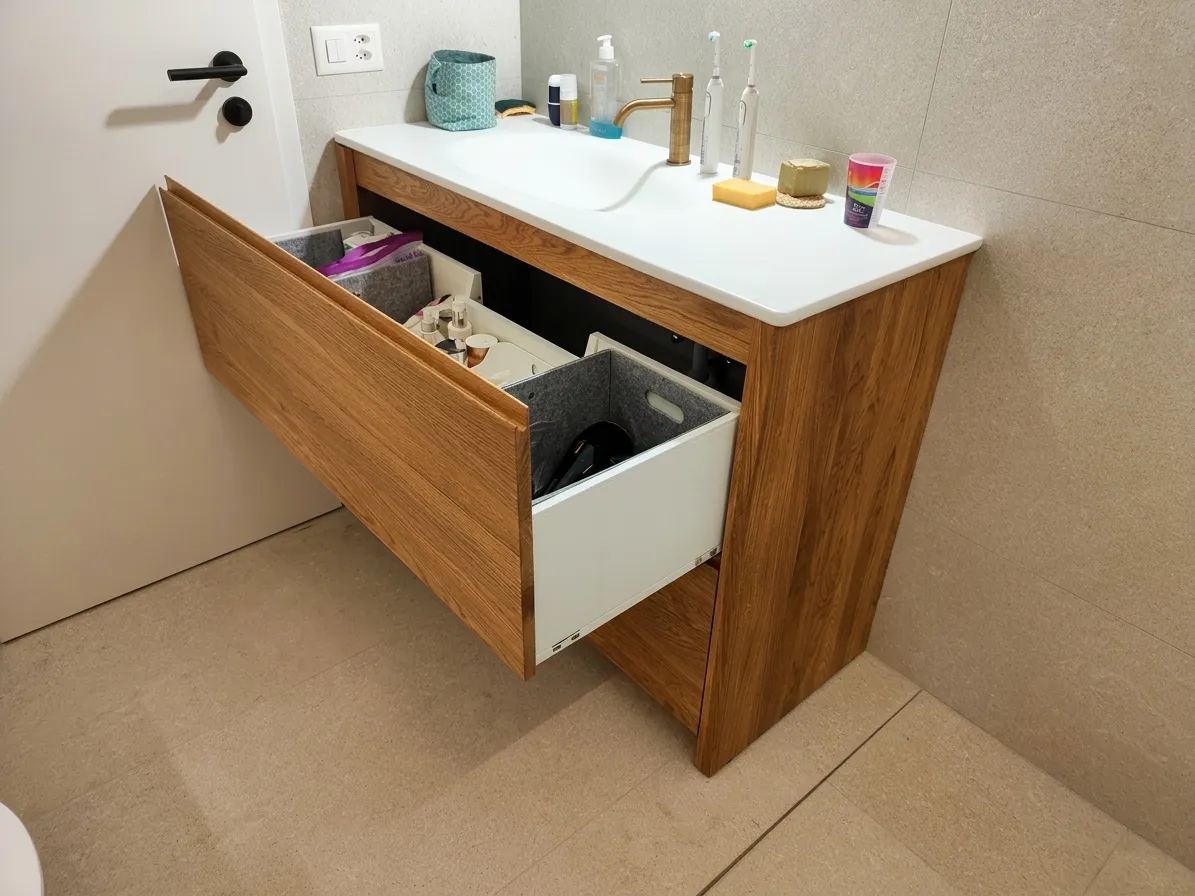 real project photo
American walnut vs European walnut: why we choose one over the other
The question comes up regularly during project consultations. European walnut (Juglans regia) is a fine timber, with lighter and slightly warmer tones, often associated with traditional gunstock-making and rustic furniture. But for contemporary precision cabinetmaking, American walnut offers several concrete advantages:
- Availability in large widths: Juglans nigra trees reach greater girths, making it possible to obtain wide boards from a single piece — an asset for large tables or seamless panels.
- Grain consistency: American walnut offers a more predictable regularity of grain, which makes composing symmetrical panels or matching veneers considerably easier.
- Superior stability: shrinkage data confirms that American walnut is slightly more stable than its European counterpart, particularly useful in rooms with central heating during Swiss winters.
European walnut remains entirely relevant for projects with a craft-led character or where locally sourced timber is a priority — a criterion that carries weight in certain low-carbon projects. For a solid wood furniture piece where grain regularity and board width are decisive, we most often recommend American walnut.
How it ages: a timber that lightens with time
Most timbers darken over the years under the effects of light and oxidation. American walnut does the opposite: its initial tones — deep chocolate brown, sometimes violet in the sapwood — gradually lighten, evolving towards warmer, more luminous browns.
This phenomenon is caused by the photolysis of natural chromophores contained in the wood's tannins. In practice, a piece of walnut furniture finished in matt varnish and delivered in very dark tones will, twenty years later, carry a warmer and more even patina — never yellowed like a poor-quality lacquer, never dull. This is an evolution that cannot be reproduced by staining or accelerated artificially.
For clients weighing up their choice of finish, this has a direct bearing:
- A natural hard oil (such as Rubio Monocoat or Osmo) lets the grain breathe and makes local touch-ups straightforward if the wood is scratched. It amplifies the natural variations in tone.
- A matt lacquer applied in a spray booth — our most common finish — gives a perfectly even surface, resistant to splashes and humidity fluctuations. The initial colour is set in the first few weeks, after which the wood evolves gently beneath the film.
- Opaque lacquer is not recommended on raw walnut; it conceals the grain rather than revealing it.
Our common applications of American walnut in the workshop
In our practice, we use American walnut in three main configurations, each with its own technical constraints:
Dining tables
This is the most natural application. A solid walnut top, 38 to 50 mm thick depending on the span and leg type, offers an immediate visual presence. We frequently work with tops with live or slightly eased edges, which accentuate the sense of material. The stability of the timber allows tops up to 1,000 mm wide in a single board without excessive risk of warping, provided the drying has been correct and storage well managed. For bespoke solid wood tables, American walnut is one of the timbers we recommend as a first choice.
Bookcases and storage fittings
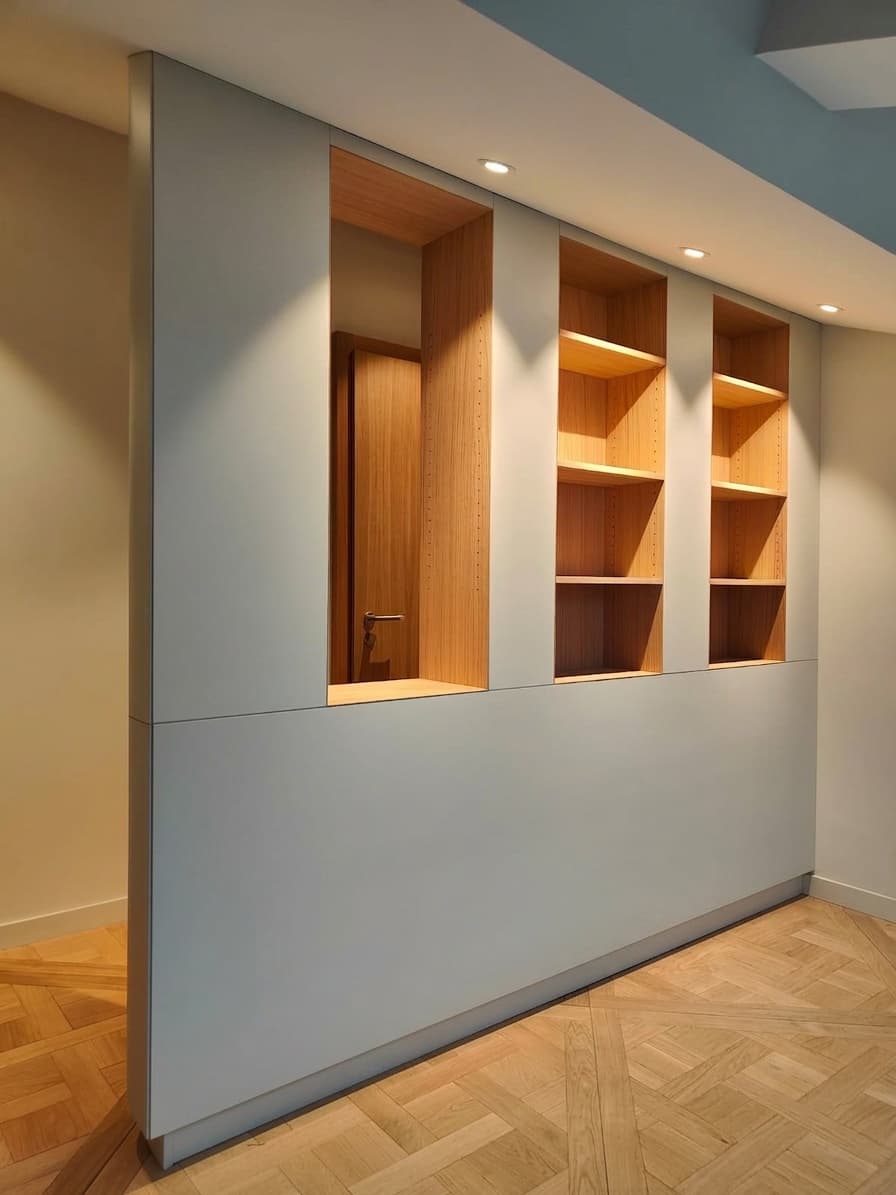
In a bookcase, the warmth of walnut contrasts pleasingly with the whites or greys of contemporary walls. We most often use it with an MDF or plywood carcase clad in walnut veneer, with solid uprights and shelves in the visible zones. This combination — a lightweight structure, solid timber at the face — allows spans of 900 to 1,200 mm between supports without visible deflection, while keeping the overall weight of the fitting manageable. For more on our approach to bespoke fittings and furniture, the dedicated page sets out our methods in detail.
Wall linings and panelling
This is the most technically demanding application. A walnut wall lining — such as the project carried out in Mies — must absorb hygrometric variations without cracking or delaminating. We work exclusively with floating slats rather than bonded panels, and we manage tongue-and-groove assemblies with the necessary expansion clearances (approximately 1 mm per 100 mm of width under normal Swiss interior conditions). The spray-booth finish, applied in the controlled environment of our Gingins workshop, evens out moisture uptake at the surface and reduces the risk of differential movement.
Sourcing and plank selection
American walnut is imported into Europe from the United States and Canada; there is no local production in Switzerland. We source from certified timber merchants, giving preference to batches from forests managed according to FSC or PEFC principles — a requirement we state systematically in our procurement conditions.
Selection takes place plank by plank, at the workshop, before any work begins. We check:
- Moisture content — we aim for between 8% and 10% for interior use in Swiss Romand, where heated flats drop to 35–45% relative humidity in winter.
- The absence of through-knots, hidden shakes, and unwanted sapwood zones (walnut sapwood is much lighter than the heartwood — its inclusion or exclusion is an aesthetic choice to discuss with the client).
- Grain consistency between the planks destined to form a single panel or top.
This sorting work has a real cost: it implies a higher offcut rate than we would accept for a widely available timber such as beech or pine. This is one reason why a project in solid American walnut costs noticeably more than an equivalent project in another timber — and it is a reality we prefer to explain upfront rather than have it surface at the quotation stage.
American walnut and bespoke projects: what to plan for in advance
If you are considering a project involving American walnut, a few points are worth clarifying before you begin:
- Sourcing lead time is added to the usual schedule. Depending on the batches available from our suppliers, you should allow one to two additional weeks compared with a standard oak or beech order. Our usual lead times for a fitting — six to twelve weeks from order to installation — remain valid, but sourcing is initiated as soon as the quote is signed.
- Sapwood can account for up to 30% of a plank. Depending on the client's preferences, we exclude it (loss of material, impact on price) or integrate it as a graphic element — some contemporary projects deliberately play on the light-dark contrast between sapwood and heartwood.
- The finish cannot be improvised. Tannic walnut reacts to certain treatment products. We always test the chosen finish on a sample from the timber batch before final application.
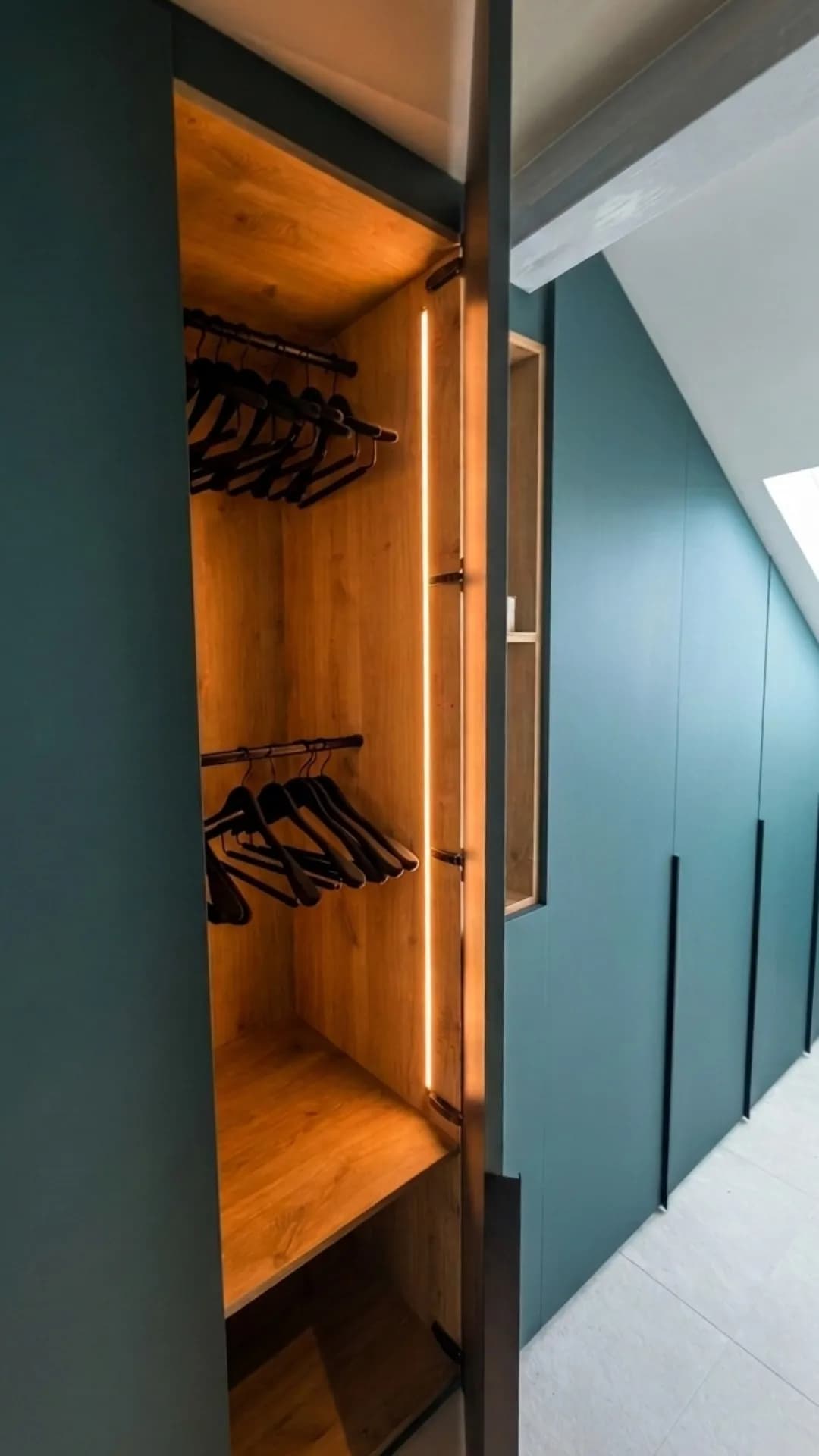
For projects where overall budget is a central question, our article on budget and lead times for a bespoke furniture project provides useful reference points. And if the project forms part of a broader interior scheme — kitchen, dressing room, panelling — the projects page illustrates how we combine these timbers within coherent ensembles.
Key points to remember
American walnut is a timber that rewards patience: patience in selecting the planks, in the drying, in the choice of finish, and in the long arc of ageing. Its stability makes it a material of choice for furniture pieces that must hold for twenty or thirty years without intervention — tables, bookcases, wall linings. Its grain is sufficiently expressive that a simple piece, without ornament, is already something out of the ordinary. It is not the least expensive timber, but it is one of those where the investment still reads clearly two decades after delivery.
Discuss your project
At TOMÉ, every project begins with a conversation. If you are considering a piece of furniture or a fitting in American walnut — or if you are still weighing up different timbers — tell us about your project in a few lines via our contact form. We will get back to you within 48 hours with an initial direction or a proposal to visit the workshop in Gingins. You will be able to see the planks in stock, compare finishes on real samples, and gain a concrete understanding of what this timber can bring to your space.