Summary: The renovation of a wooden staircase by a cabinetmaker can range from the simple replacement of worn treads to a complete overhaul of the structure: nosings, risers, handrail, balusters and finishes are addressed separately or together depending on the actual condition of the work. In the French-speaking part of Switzerland, the most commonly used timbers for this type of intervention are European oak, ash and beech, with oil or matt lacquer finishes applied in a spray booth. The typical lead time for a partial renovation is six to ten weeks between first contact and installation.
In many houses along La Côte or the Pied-du-Jura, the staircase is the first piece of woodwork you see when you walk in. After twenty or thirty years of daily use, the treads sag slightly in the centre, the varnish cracks, a baluster works loose in its housing. The owner hesitates: replacing the entire staircase is expensive and involves several trades; ignoring the problem allows the wear to progress. Between these two extremes, targeted renovation by a cabinetmaker offers a third way — intervening precisely where the work needs it, with the right materials and joints, without dismantling what is still sound.
This article describes what a cabinetmaker can concretely do on an existing wooden staircase, how he assesses the condition of the structure, which timbers and finishes are suited to the constraints of a staircase enclosure in Switzerland, and what lead times to expect.
Assessing the Condition of the Staircase Before Any Intervention
An initial site visit is essential. A cabinetmaker cannot quote for a wooden staircase renovation from a photograph: he must probe the treads, test the rigidity of the strings, check the baluster joints and measure any play in the handrail. Two staircases that look similar may require very different interventions depending on whether the load-bearing structure is sound or has been affected by water ingress, settlement or successive amateur repairs.
The standard checks we carry out in our workshop:
- Treads: residual thickness (a solid oak tread at 40 mm can tolerate sanding; below 28 mm, replacement is preferable), condition of the nosing, fixing to the string.
- Risers: presence or absence, movement, creaking caused by differential movement between solid timber and the substrate.
- Strings: cracks, separation from the wall, loss of stiffness — this is the key component; if the strings are compromised, the rest of the renovation will not hold.
- Handrail and balusters: horizontal play, fixing of balusters at head and foot, condition of tenons or dowels.
- Existing finish: aged epoxy varnish, oxidised oil, blistered lacquer — each finish requires a different surface preparation.
This diagnosis directly informs the quotation: a partial renovation (treads plus finish) does not require the same resources as a full refurbishment with replacement balusters and a new handrail.
Replacing Treads and Risers
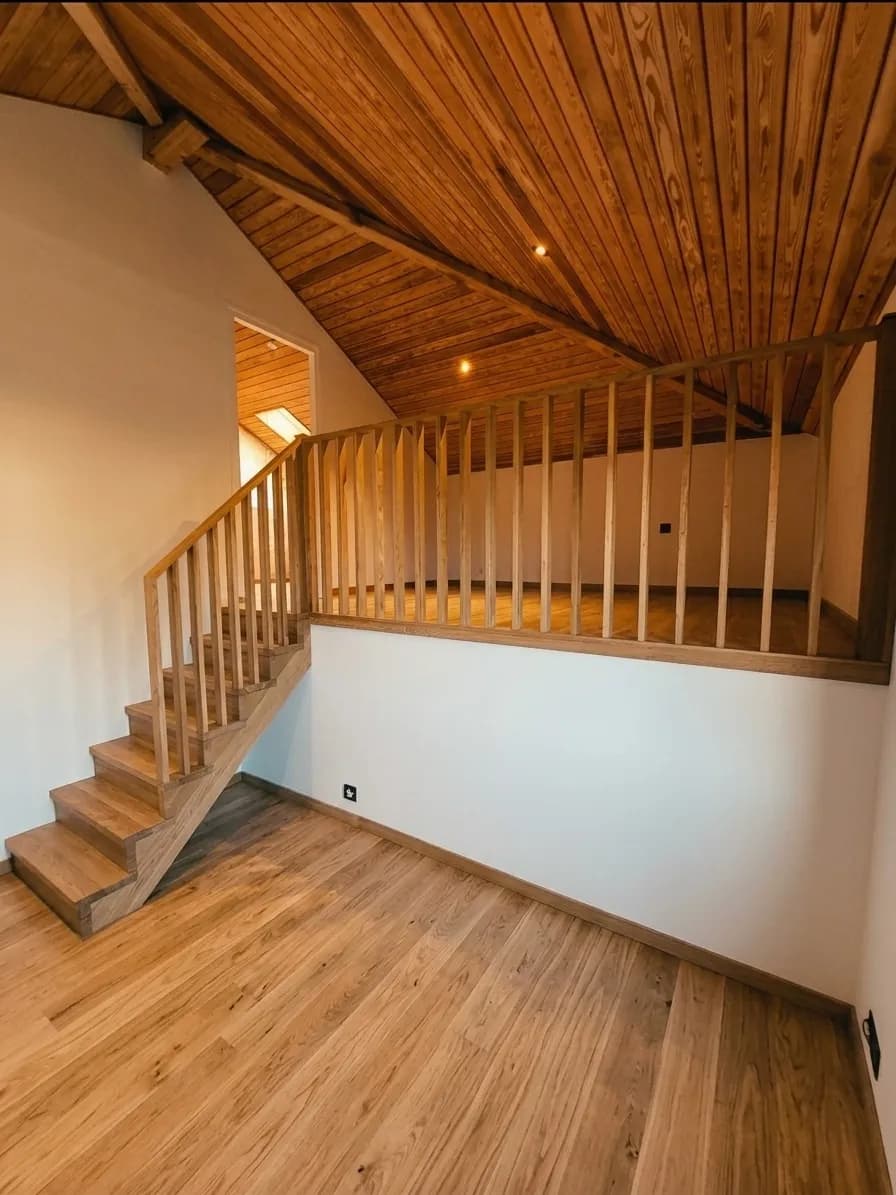
This is often the most common intervention. One or more treads show pronounced wear, a broken nosing or moisture-related distortion, while the rest of the staircase is in good condition. The cabinetmaker removes the failing elements, re-fixes them to the string and fits new treads cut to the exact dimensions of the existing work.
The choice of timber determines the durability of the result. For a staircase in heavy daily use, European oak remains the reference: a Janka hardness of around 5.9 kN, tight grain, a good response to sanding and to both oil and lacquer finishes. Beech is well suited to protected interior staircases; it is less tolerant of varying ambient humidity, which in an unheated hallway during a Vaud winter can cause movement. Ash offers a pronounced grain and a fair, warm tone that works well with contemporary interiors; its hardness is comparable to oak.
The moisture content of the delivered timber is something we check systematically: for a staircase tread fitted in a heated Swiss dwelling (relative humidity between 35% and 55% in winter), the timber should be in equilibrium at between 8% and 11% moisture content. Timber that is too wet at the time of installation will move as it dries and the joints will work loose.
New treads are machined in the workshop, then fitted on site to the millimetre. The nosings receive a softened profile — rounded or chamfered — which limits wear and improves safety. Where the staircase has risers, these are also attended to in order to prevent creaking caused by differential movement between solid timber and the substrate.
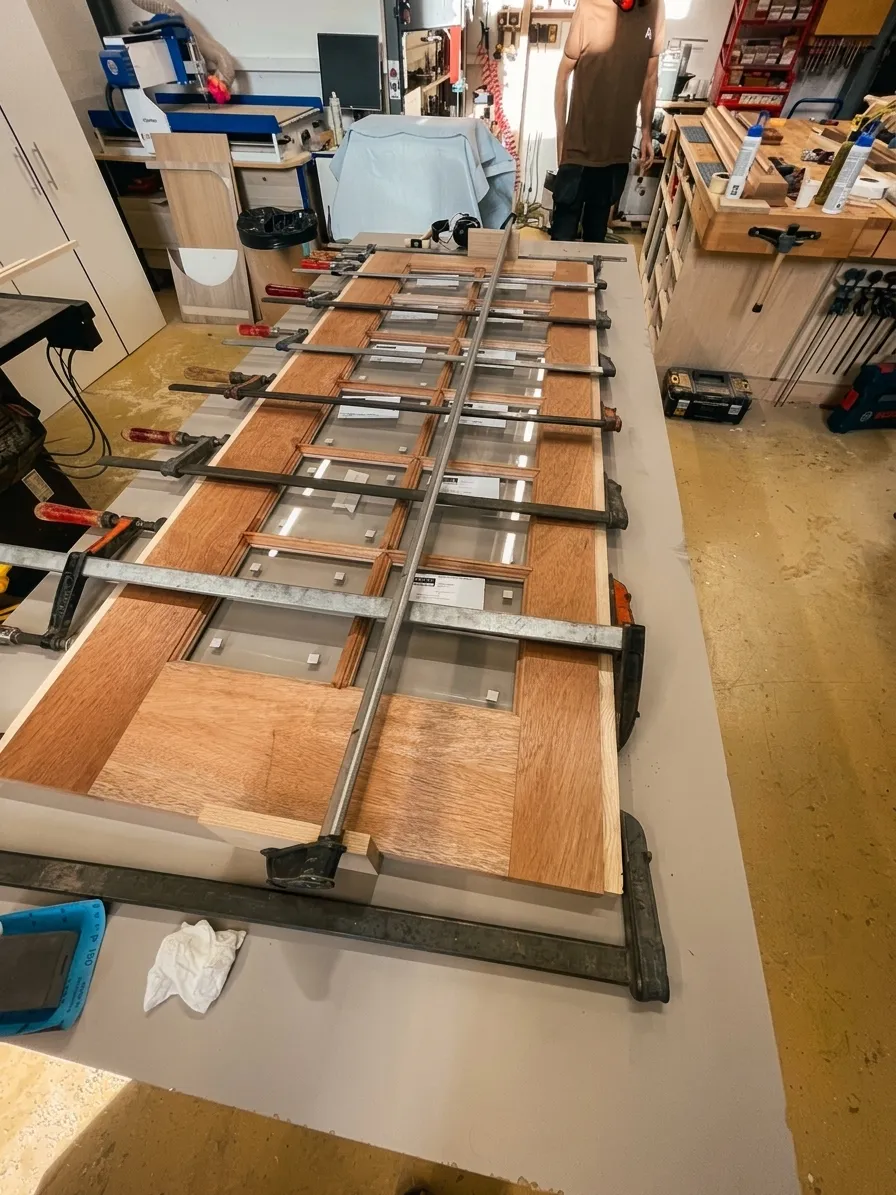 real project photo
Repairing the Handrail and Balusters
A loose handrail is a safety issue before it is an aesthetic one. In Switzerland, standard SIA 358 sets the minimum requirements for balustrades and handrails in buildings: height, resistance to horizontal loads, spacing of balusters. These criteria apply to new construction and to renovations subject to planning permission; for a straightforward renovation in an existing dwelling, common sense requires returning the staircase to at least a functionally safe standard.
Depending on the condition of the existing balusters, two approaches are available:
- Consolidation: re-dowelling of tenons, injection of wood glue into loosened housings, reinforcement of fixings at head and foot. Cost-effective if the timber is sound.
- Replacement: the balusters are removed, the housings are cleaned and made good, and new turned or grooved balusters are fitted. The cabinetmaker can introduce a different design — a flat baluster in oak board, a turned profile in beech — while respecting the existing dimensions of the handrail.
The handrail itself can be retained if it is structurally sound, stripped of its old finish and refinished. If it is to be replaced, bending work in the workshop is required for curved flights: the handrail is cut into strips, glued to shape on a jig, then profiled. This is one of the most demanding operations in a wooden staircase renovation, and it cannot be subcontracted: it requires a lathe, a precise jig and experience.
Finishes: Oil, Lacquer or Varnish — and Their Practical Implications
The finish on a renovated staircase deserves careful thought, as it determines how the surface will be maintained over the following ten or twenty years. Three families dominate:
Oil or Wax
Penetrates the timber, nourishes the fibres, leaves the grain visible and the surface warm to the touch. Locally repairable: a worn area can be retreated without stripping the whole staircase. Well suited to oak and ash. Drawback: the staircase absorbs soiling more readily and requires annual maintenance (one refresher coat of oil). In a busy hallway with children, resistance to staining is lower than with a lacquer.
Matt or Satin Lacquer in a Spray Booth
A protective surface film, highly resistant to impact and abrasion. At TOMÉ, lacquers are applied in a spray booth in a controlled environment, guaranteeing a uniform thickness and the absence of embedded dust. A clean, low-maintenance result. Drawback: in the case of a deep scratch, a localised repair is more visible than with an oil; a full sanding and recoating may be required after ten to fifteen years of heavy use.
Polyurethane Varnish
A hard film, gloss or satin. Widely used on older staircases; the gloss version has dated stylistically. Its main limitations are progressive yellowing on light-coloured timbers (beech, maple) and the difficulty of spot repairs. For a contemporary wooden staircase renovation, we generally steer clients towards matt lacquer or oil depending on the intended use.
Whatever finish is chosen, surface preparation is critical: progressive sanding (80, 120, 180 grit), thorough dedusting, application in stable temperature and humidity conditions. A staircase sanded and oiled in a cold hallway in January will give a different result from the same work carried out at 18 °C with 50% relative humidity.
Partial Renovation or Full Overhaul: How to Choose
The question often comes up at our first meeting: is it better to invest in a renovation or to start again with an entirely new staircase? The answer depends on the condition of the strings and the load-bearing structure, not on the surface appearance.
Sound strings, treads worn at the surface Sanding and new finish Sound strings, treads too thin or broken Tread replacement, structure retained Loose handrail, slack balusters Consolidation or replacement of balusters, handrail refinished Cracked strings, compromised structure Full overhaul with new strings, treads and handrail Staircase outside current dimensions or not compliant with current use New bespoke project, to be studied with the architectA cabinetmaker who examines a staircase thoroughly will tell you honestly whether the renovation makes financial sense. It sometimes happens that the structure has been patched so many times that a new staircase, designed and built in the workshop to the exact dimensions of the enclosure, works out cheaper over twenty years than repairing a fragile existing one. We encountered this situation on a site in Rolle: the strings had been notched when underfloor heating was installed, and renovation made no structural sense. A bespoke staircase in European oak was built and fitted in its place.
For more on the design of a completely new wooden staircase, the article on bespoke timber treads and staircases covers the typologies and timber choices available.
Lead Times and the Course of a Renovation Project
A wooden staircase renovation follows the same process as a bespoke furniture project: site visit, measurements, drawings, approval, workshop fabrication, installation. Lead times depend on the scale of the work.
- Partial renovation (replacement of a few treads plus finish): 6 to 8 weeks between first contact and installation. Fabricating the treads takes one to two weeks; finishing in the spray booth requires two to three days of drying between coats.
- Full renovation (treads, risers, balusters, handrail, finish): 8 to 12 weeks. The work on the curved handrail and turned balusters accounts for most of the workshop time.
- Complete overhaul with new strings: to be treated as a new staircase, i.e. 10 to 14 weeks depending on complexity.
Fitting a renovated staircase typically takes one to two days depending on the volume of work. The staircase must remain usable during the works if the property is occupied: we plan the installation in stages where possible, or agree an alternative means of access with the client.
These are indicative ranges; the workshop order book influences the start date. We share the schedule as soon as the quotation is approved, with no surprises.
What a Cabinetmaker Offers Compared to a Flooring Fitter
There is a clear difference between cladding a staircase — laying a laminate covering over existing treads — and renovating its timber structure. The cabinetmaker works on the wood itself: he replaces, shapes, assembles, finishes. He can remake a mortise-and-tenon joint, fit a tread to a tolerance of 0.5 mm, bend a handrail from several glued strips, or adapt the profile of a nosing to an invisible anti-slip insert.
This precision has a direct bearing on durability: a staircase properly renovated by a cabinetmaker will not creak two years later because the movement of the timber has been anticipated, the joints are solid and the finishes penetrate the material rather than forming a fragile surface film. The work is designed to be repaired piece by piece, without having to dismantle the whole assembly.
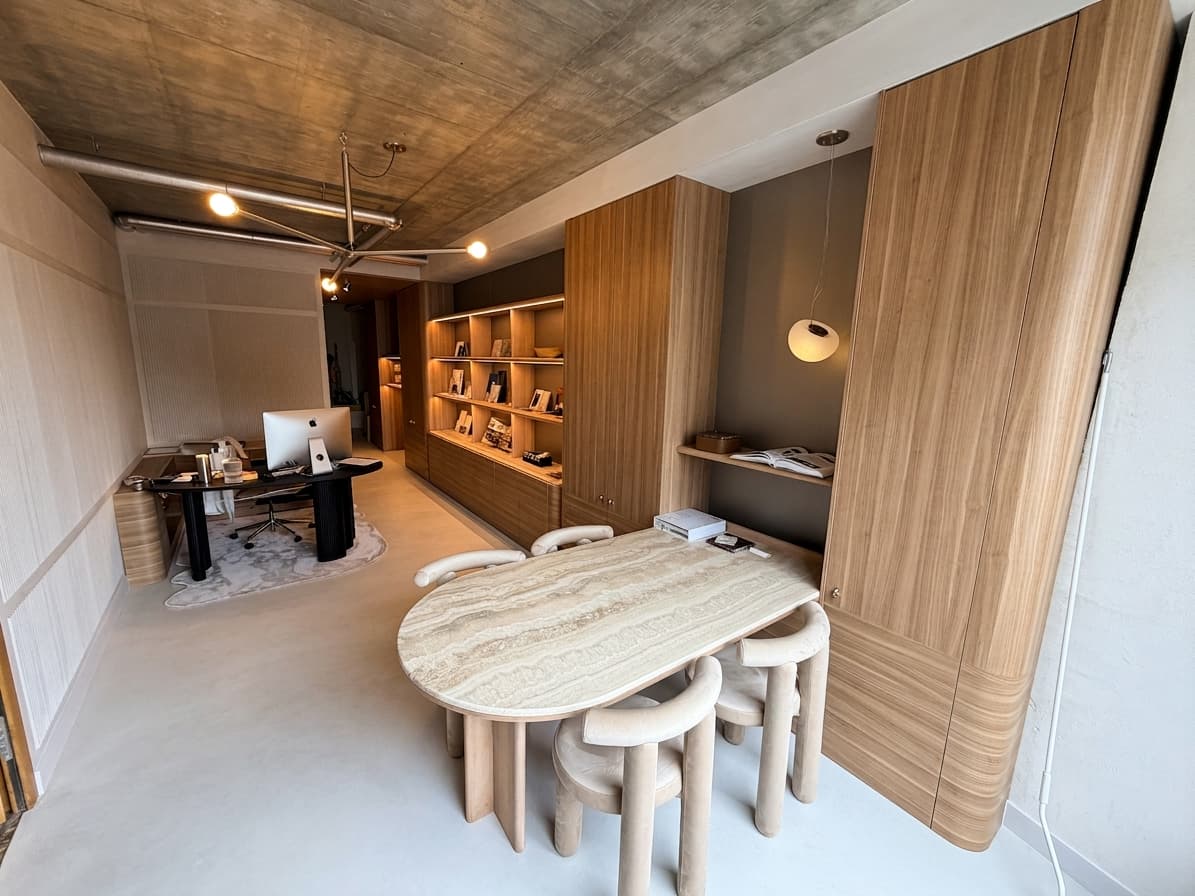
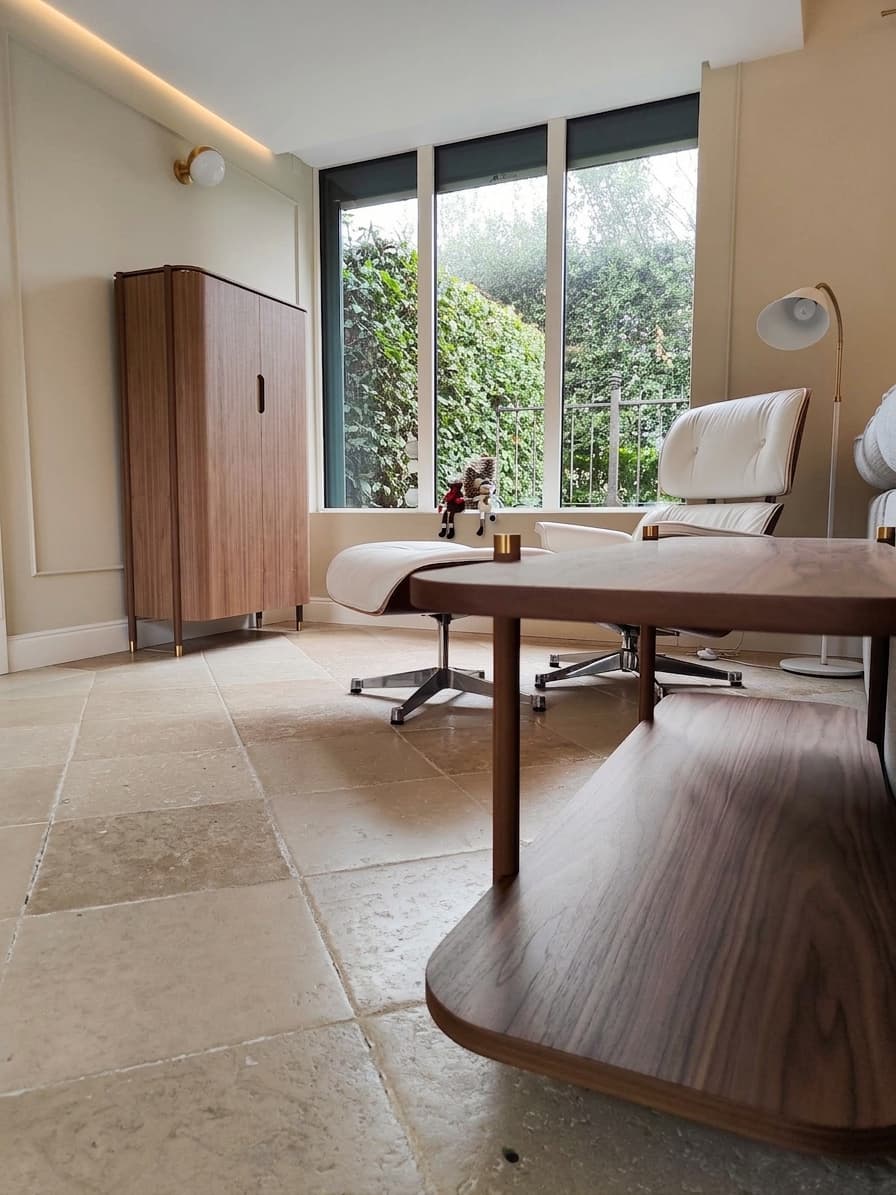
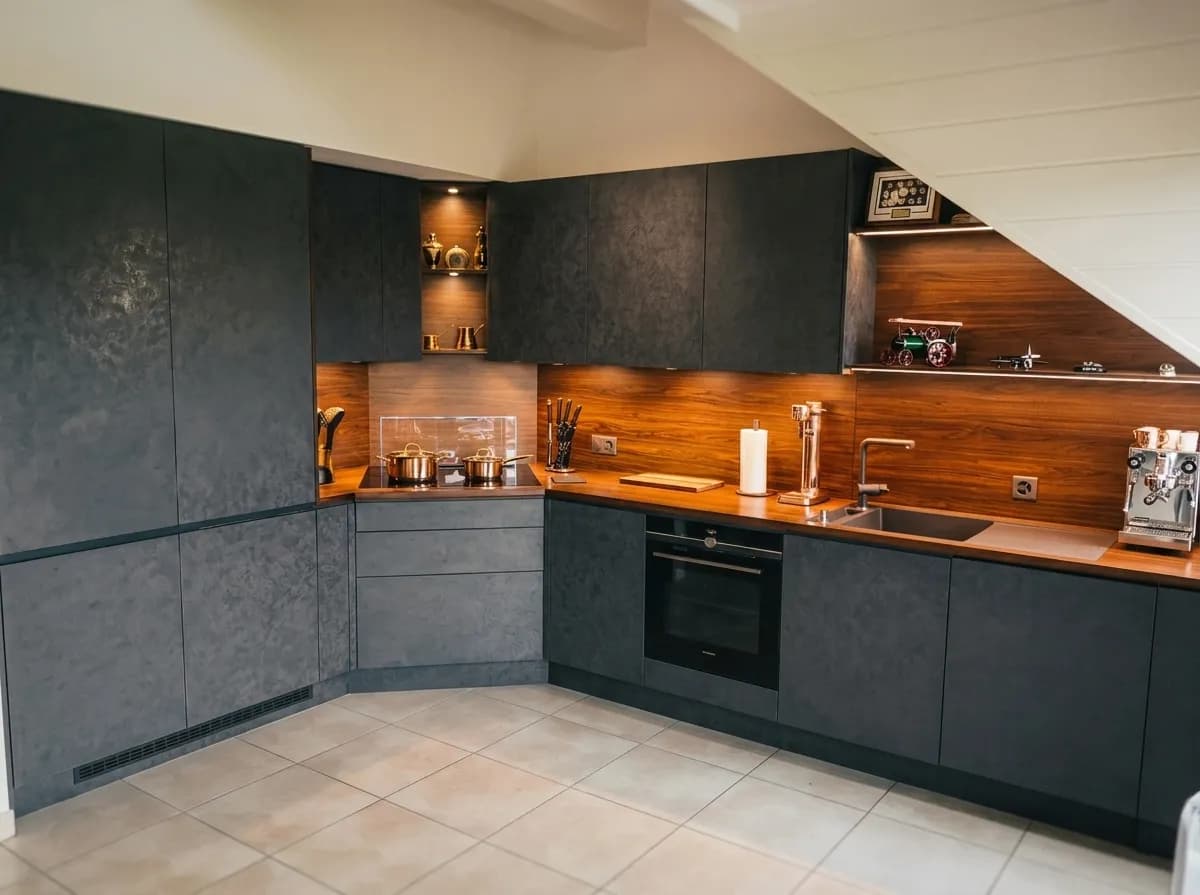
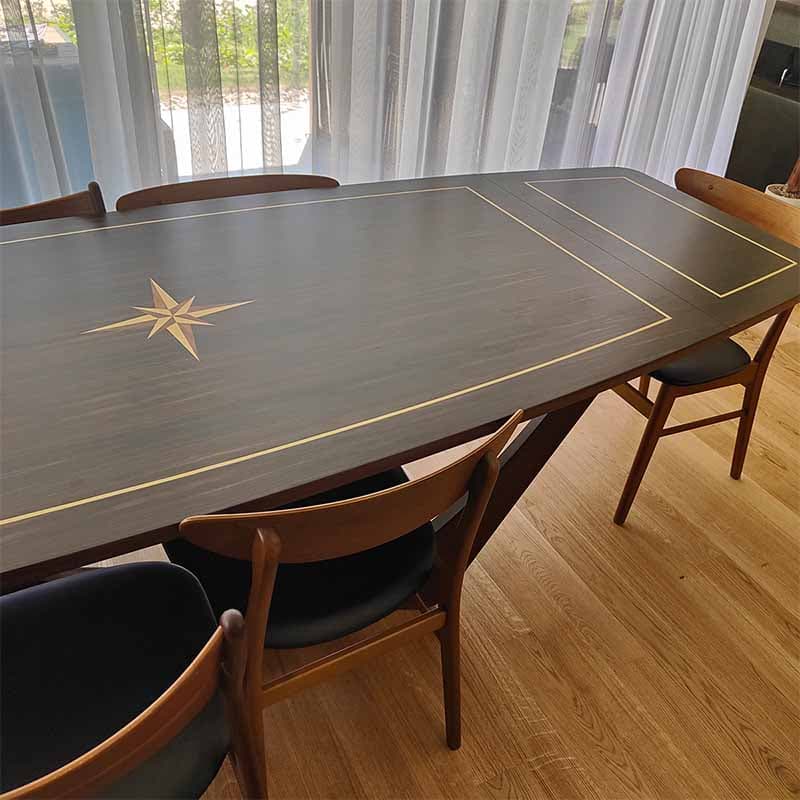
On our sites, we also ensure consistency with the rest of the fitted work: if the house has bespoke oak furniture, a staircase renovated in the same timber and with the same finish sits naturally within the whole, without any visual break.
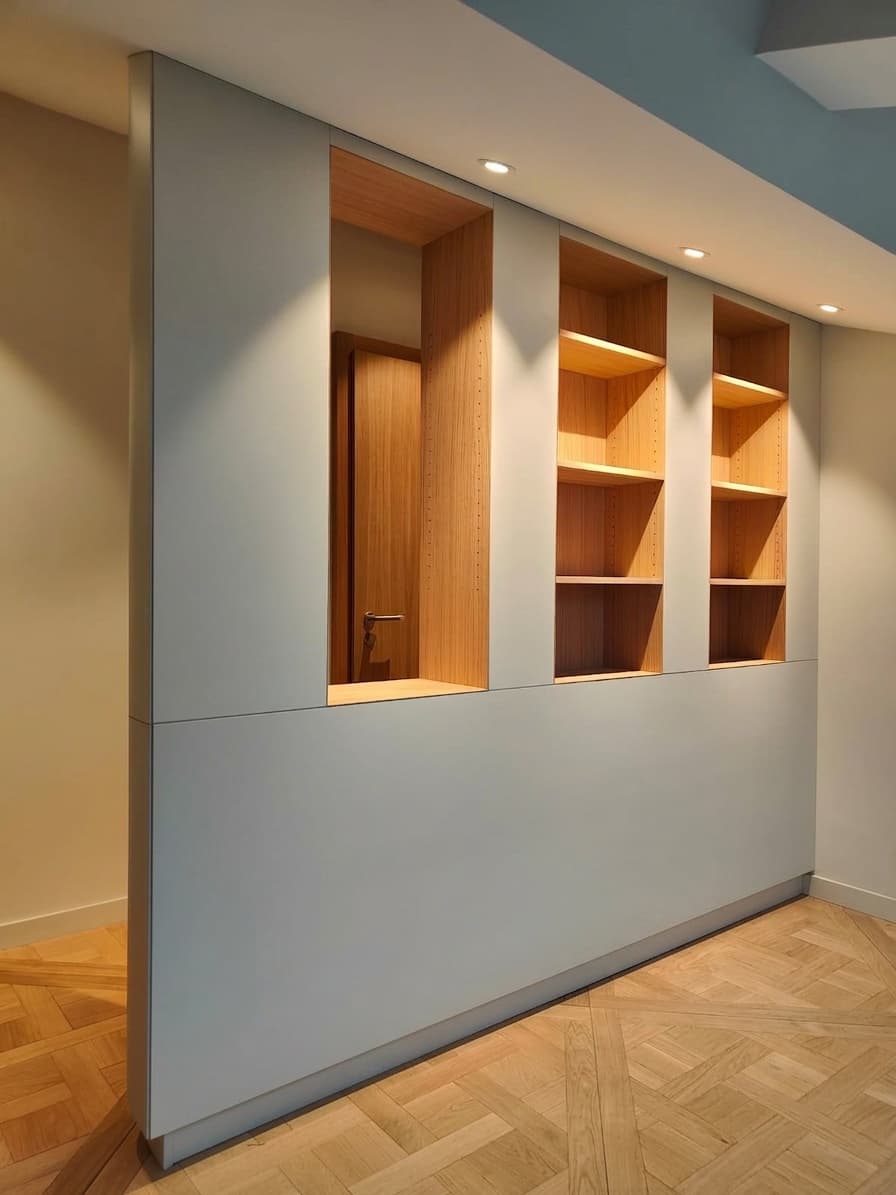
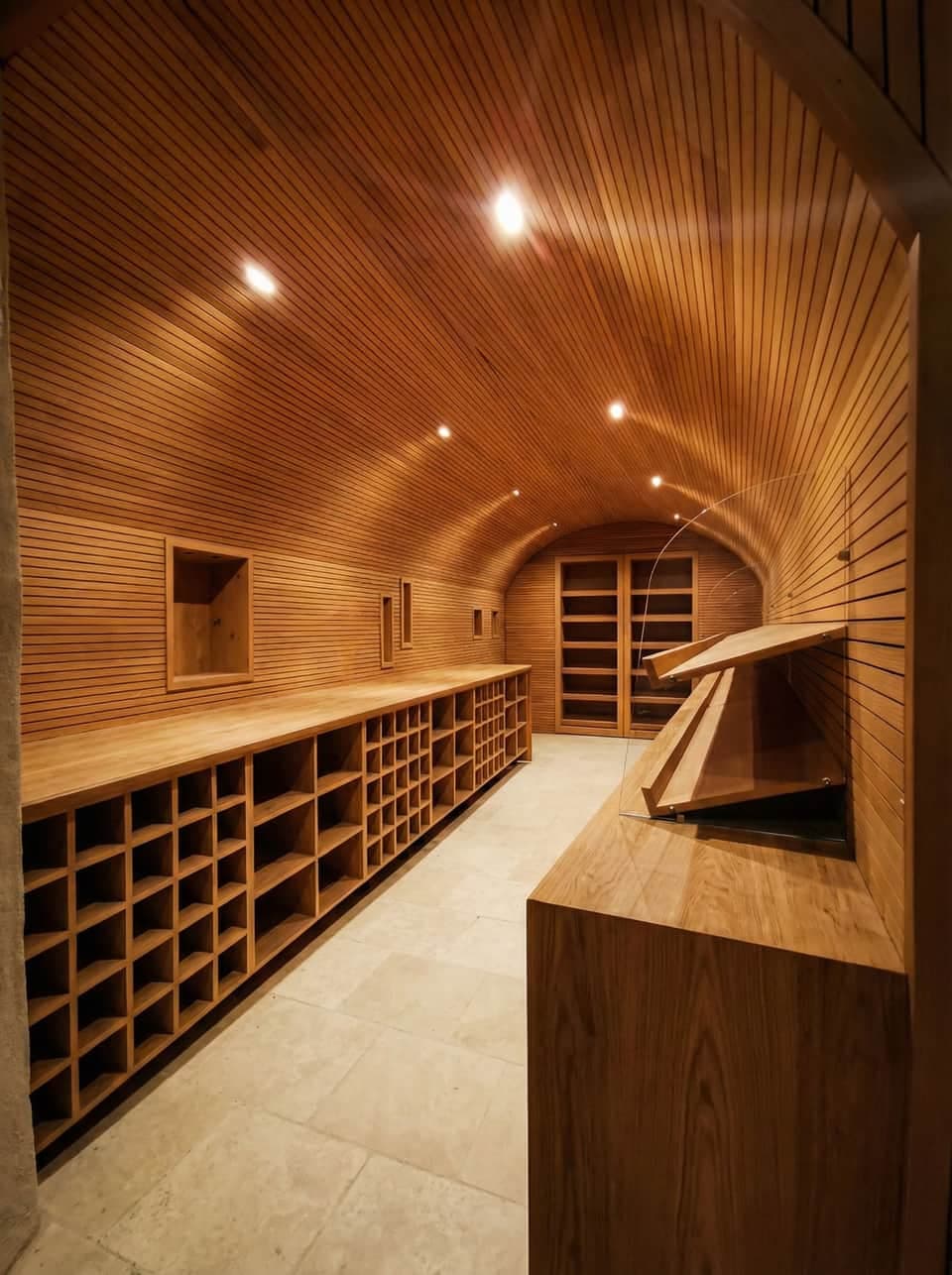
For projects where the staircase forms part of a wider renovation — panelling the enclosure, a mezzanine bookcase, a screen partition — our design office draws the whole scheme in 3D before any cutting begins, as it does for any other bespoke fitted work. This makes it possible to validate proportions, timbers and finishes in their real context before fabrication starts.
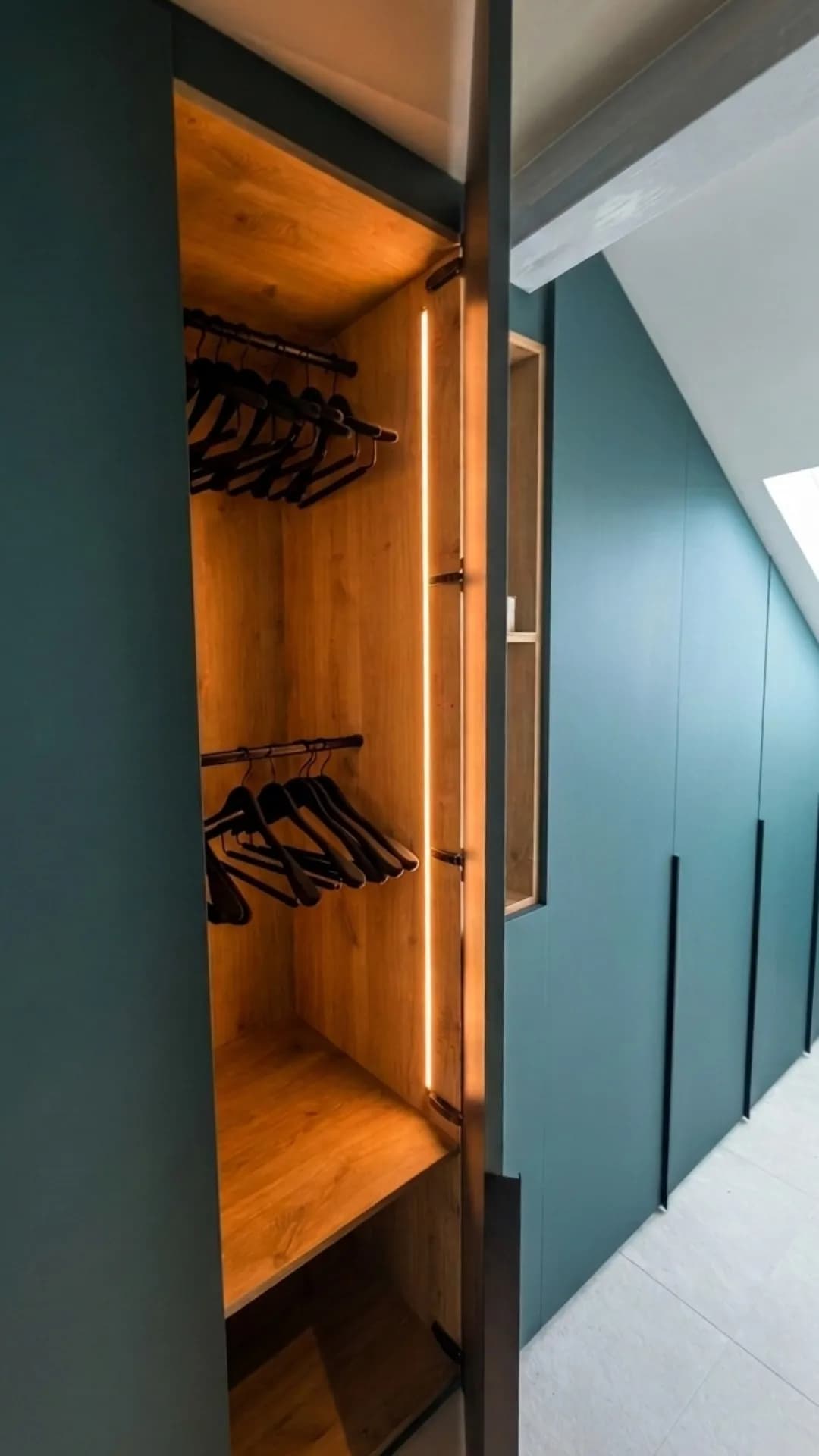
If you are also thinking about arranging the rest of the room around a renovated staircase, the articles on under-eaves storage and on 2026 interior design trends may complement your thinking.
Key Points to Remember
Three points to keep in mind: the condition of the strings determines whether a renovation is worthwhile or whether a new staircase is required; the chosen timber (oak, ash, beech) must suit the level of traffic and the humidity conditions of the enclosure; and the finish — oil, spray-booth lacquer or varnish — shapes the maintenance requirements for the next ten to twenty years. A partial renovation takes six to eight weeks; a full overhaul takes eight to twelve. In both cases, an on-site assessment is the essential first step, and it cannot be done remotely.
Discuss Your Project
At TOMÉ, every project begins with a site visit: we come to measure the enclosure, probe the strings and understand how the staircase is actually used before proposing anything. A single point of contact follows the project from assessment through to installation. If your wooden staircase is showing signs of wear — hollowed treads, a loose handrail, blistered finish — describe its condition in a few lines via the contact form or call us on +41 79 367 26 99, Monday to Friday, 08:00 to 18:00. We respond within 48 hours with an initial assessment or a proposal for a site visit.