Summary: Bespoke furniture differs from off-the-shelf by its precise adaptation to a room's dimensions and its occupants' needs. The choice rests on four pillars: the timber species or material, the hardware, the finish, and the profile of the workshop that makes it. In French-speaking Switzerland, lead times run from six to twelve weeks for a complete fitting, and every project is signed off on 3D plans before any cutting begins.
A room four and a half metres long with a ninety-degree internal corner and an exposed beam at two metres ten: that is exactly the kind of configuration that furniture retailers cannot solve. At our workshop in Gingins, projects like this are the norm, not the exception. The question is therefore not "bespoke or not?" but rather: which material, which timber species, which hardware, which workshop — and for what actual use?
This guide brings together the criteria that allow you to make an informed choice before contacting a cabinetmaker, reading a quote, or approving plans. It is no substitute for a site visit, but it will give you the foundations to ask the right questions.
Why bespoke furniture succeeds where retail falls short
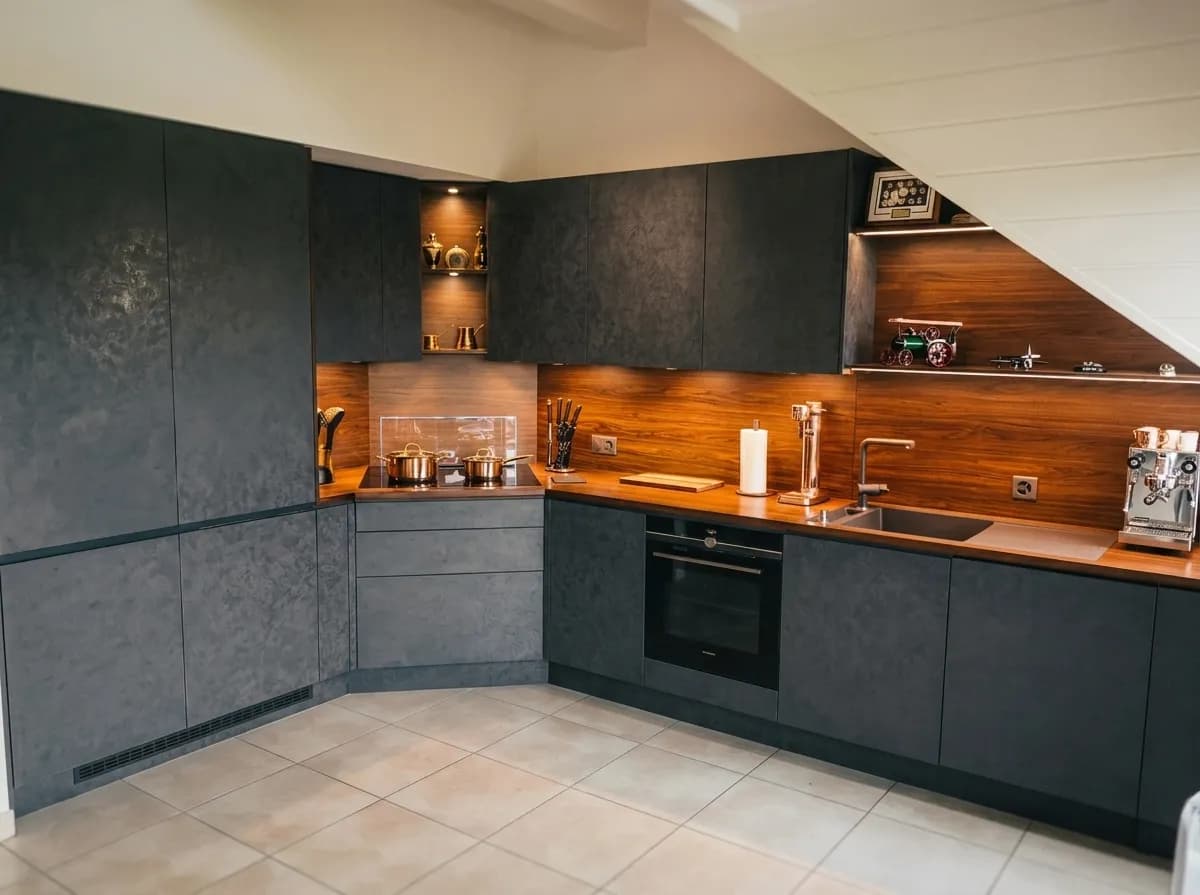
A catalogue piece of furniture is designed to sell in large volumes. Its dimensions are standardised, its materials chosen to meet a target cost price, its finish conceived to appeal to the widest possible audience. Nothing wrong with that — but as soon as a space steps outside the ordinary — loft conversions, under-stair nooks, alcoves between two walls, unusual ceiling heights — the catalogue shows its limits.
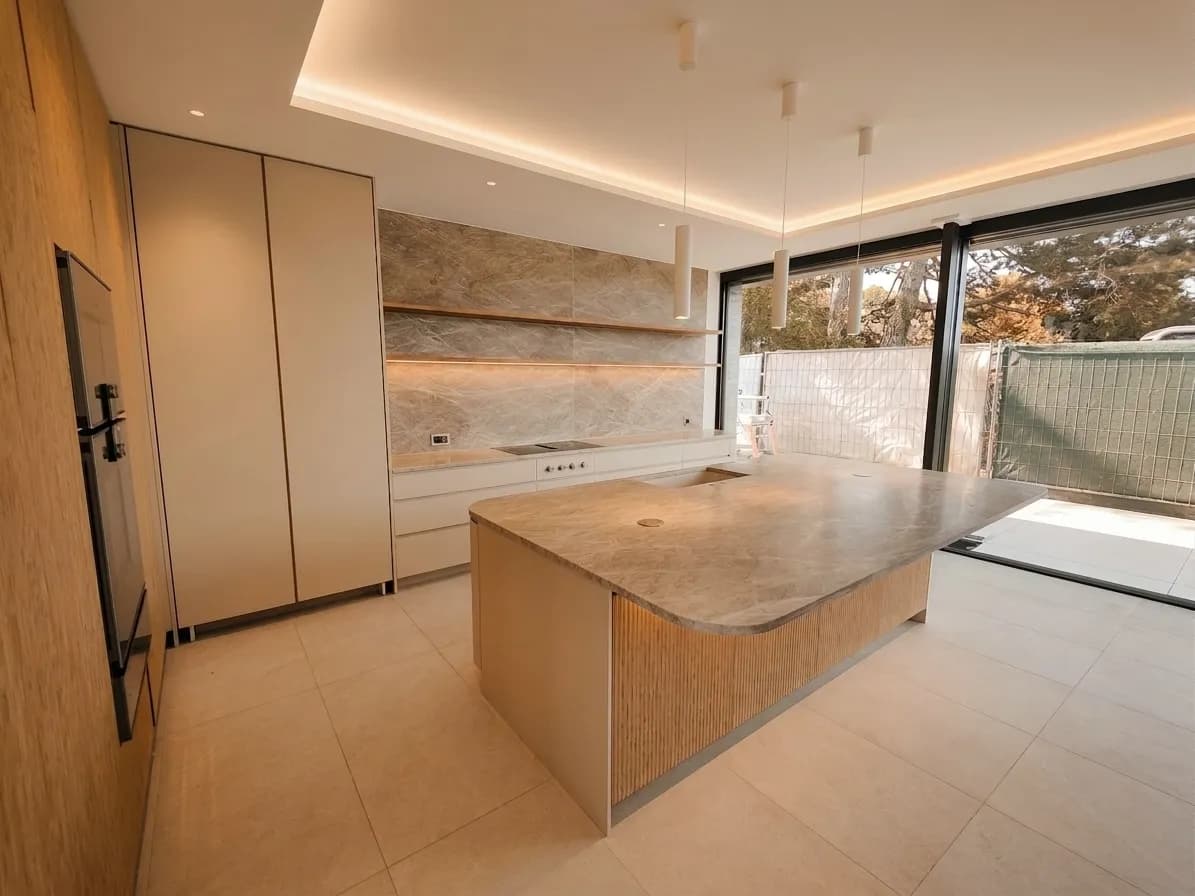
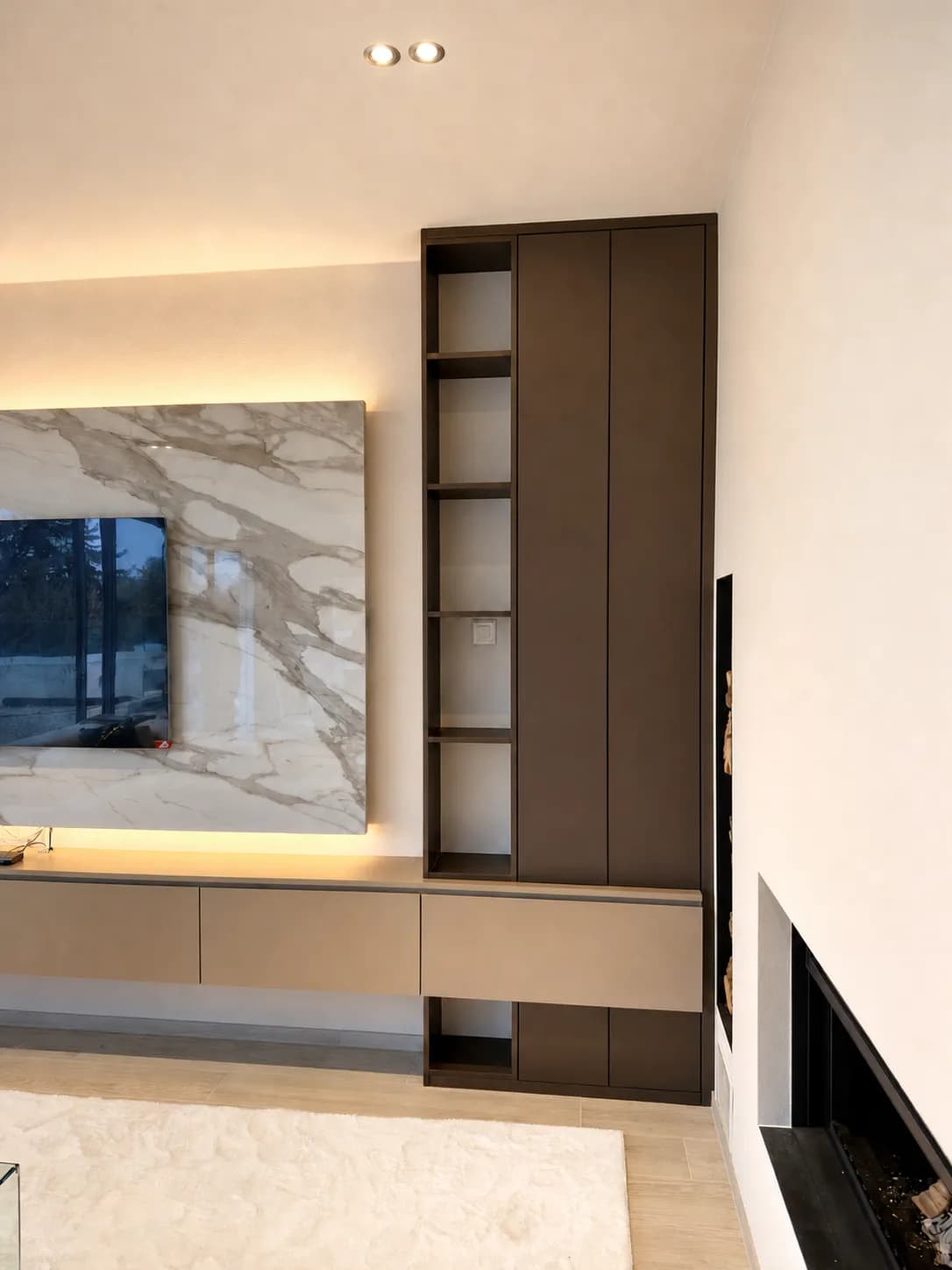
Bespoke furniture works in the opposite direction: first come the room's dimensions, the occupants' habits, the light, the materials already in place. Design follows from there. This is what makes it possible to exploit a forty-centimetre recess, to bring a wardrobe all the way down to the floor with no ungainly plinth, or to align a sideboard perfectly with the reveal of a window.
On our projects across French-speaking Switzerland, we often find that the price difference between a retail piece and a bespoke one is far smaller than people expect once the space is irregular — because catalogue solutions require fill-in units, gap-fillers and cladding that accumulate in both cost and visual clutter.
To explore this further, our article on the bespoke solid-wood table compared to its retail counterpart sets out the concrete differences, piece by piece.
Choosing the timber species or material: what it actually changes
The choice of material is often the first topic raised, and rightly so: it determines the appearance, the lifespan, and the budget. In cabinetmaking, the options fall into three broad families.
Solid timber
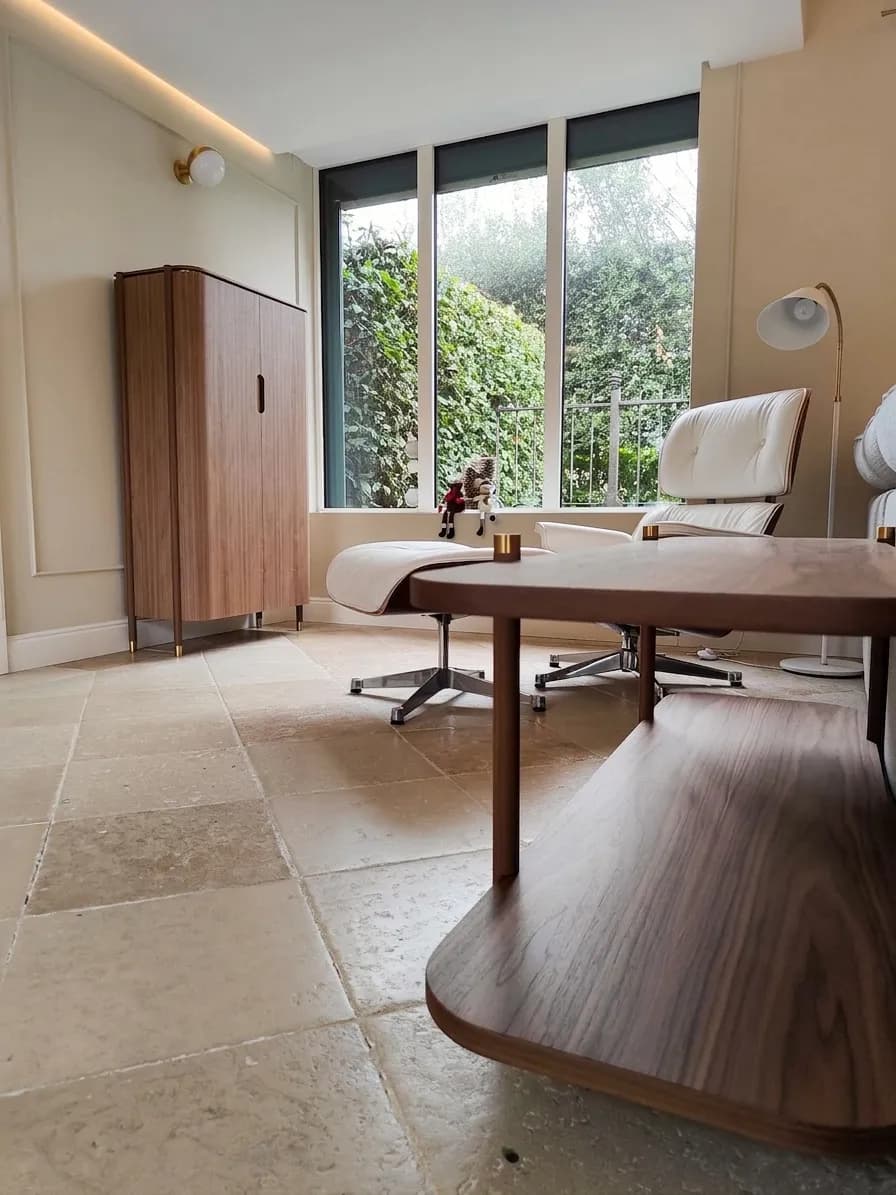
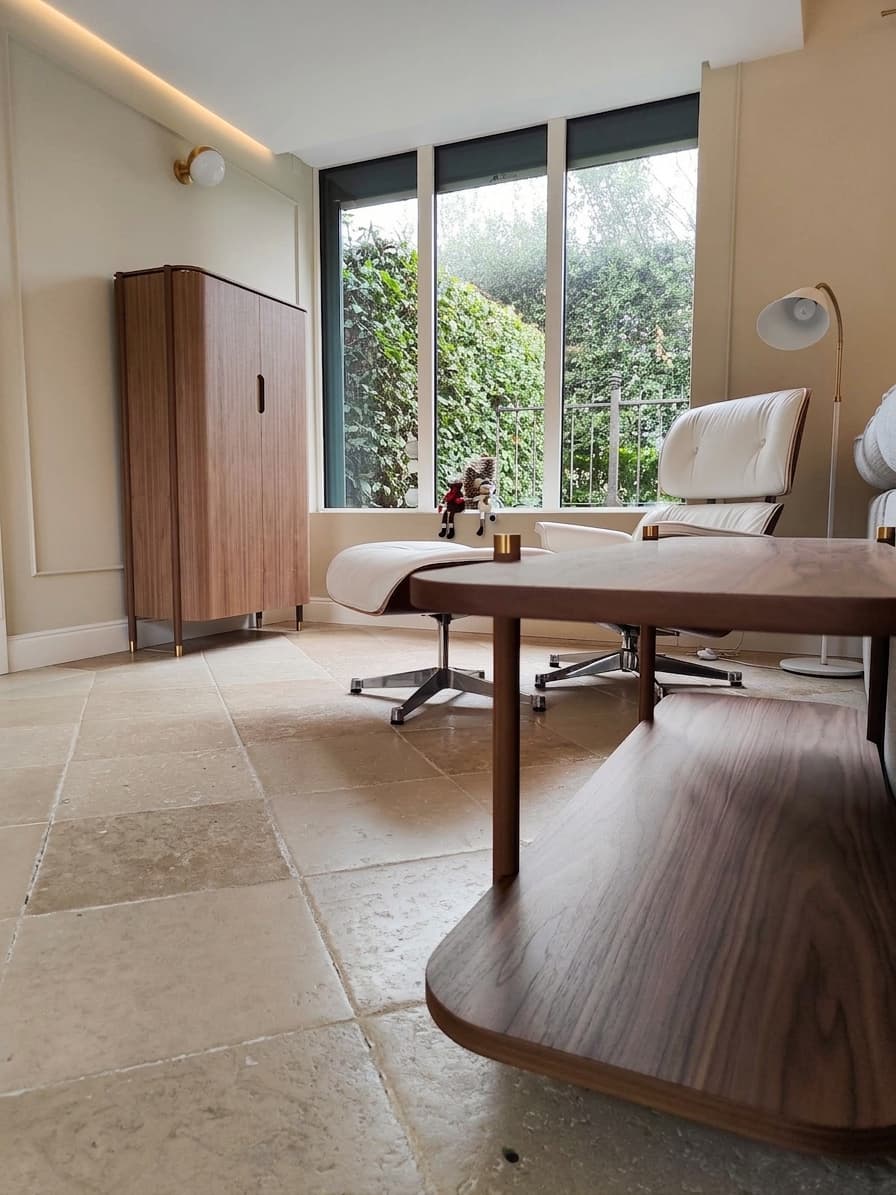
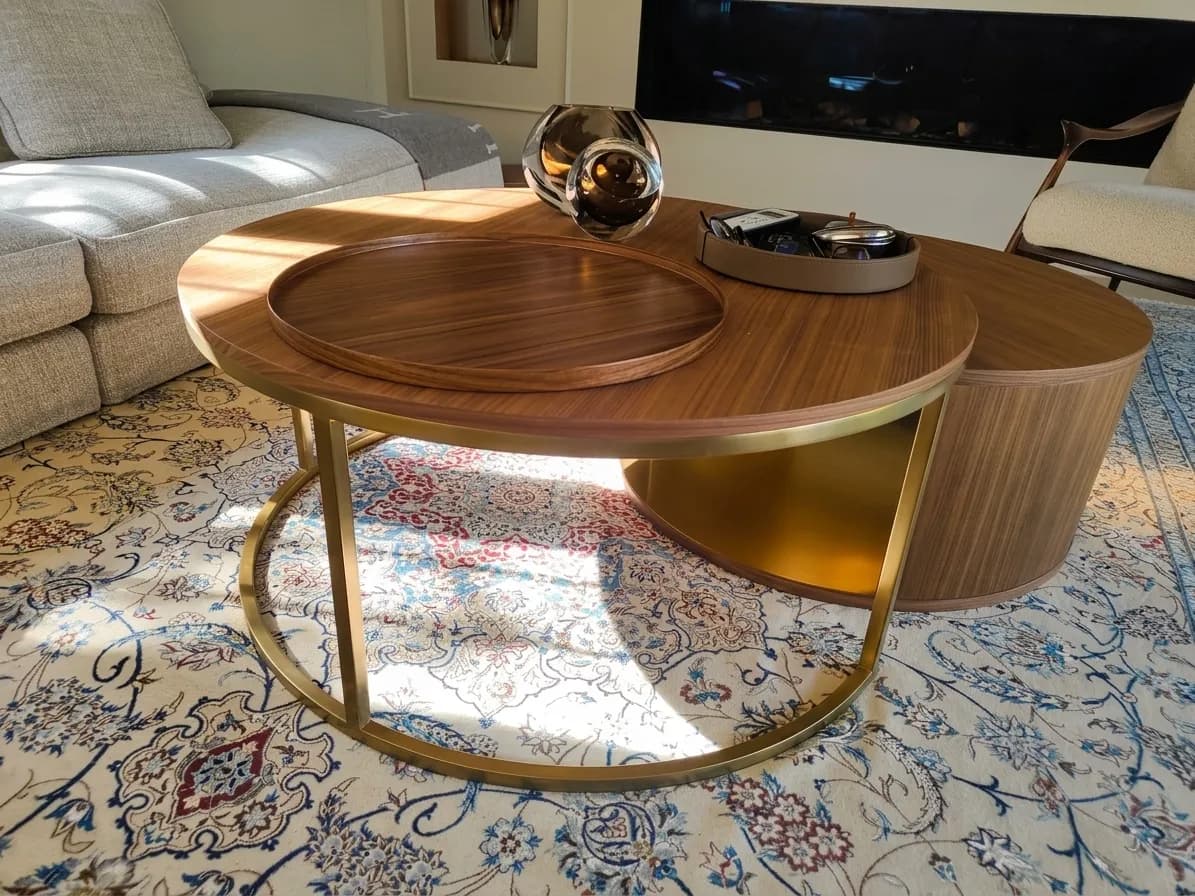
Solid timber offers the most honest material: a living grain, complete repairability, and graceful ageing. In French-speaking Switzerland, European oak is the most widely used species for everyday furniture: stable, available from local suppliers such as BWF – Bois et Forêt, and equally suited to a natural oil or a matt lacquer. Walnut — American walnut in particular — brings warm tones and a highly decorative figure, ideal for a reception room or a desk. Our article on the art of American walnut details its properties and uses in cabinetmaking.
Ash, maple and cherry round out the palette depending on the desired effect: ash for its visual lightness, maple for a very regular grain, cherry for its rosy hues that evolve beautifully over time.
Veneered board
Veneering onto an MDF or plywood core produces the look of a fine timber species over large surfaces, with better dimensional stability than solid timber in rooms where humidity varies — common in well-insulated flats or kitchens. This is the solution we favour for wide door fronts or wall-panelling on exposed walls.
Melamine-faced board and lacquered MDF
For storage fittings, wardrobe interiors or kitchen carcasses, a quality melamine-faced board (Egger, Kronospan) offers genuine durability and an easy-to-maintain surface. Lacquered MDF, sprayed in a booth to a matt or satin finish, delivers a very clean result for contemporary door fronts, without the additional cost of solid timber.
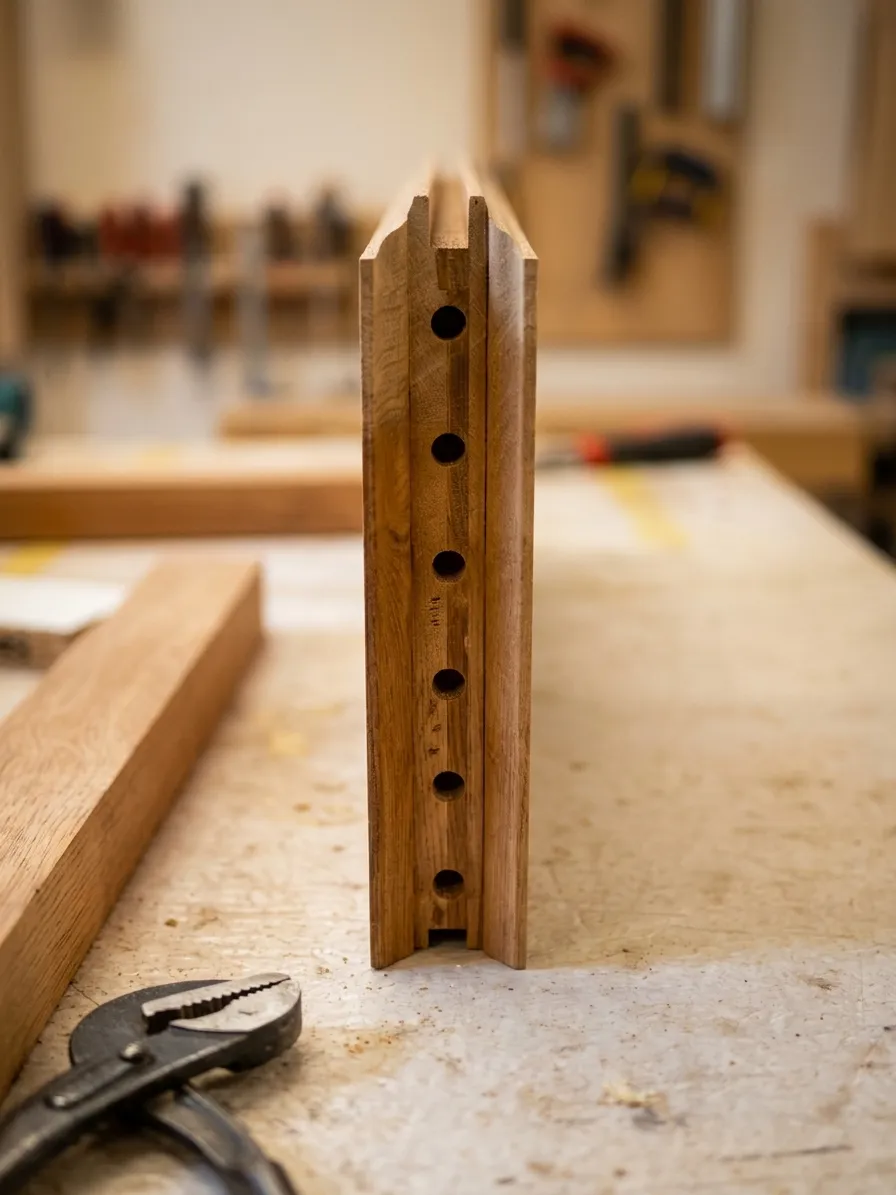 real project photo
Hardware and mechanisms: the long-term crux of the matter
A bespoke piece of furniture only delivers long-term value if its hardware matches the quality of its carcass. This is often where workshops differ most — and where savings prove most costly over time.
In our workshop, we work primarily with Blum for drawer systems (Tandembox, Legrabox) and hinges: their three-dimensional adjustment allows perfect alignment even after years of use, and their manufacturer's guarantee is a reference point in the trade. For sliding-door runners, Hettich offers reliable systems suited to the great heights often found in wardrobes in Vaud villas.
Decorative hardware — handles, raw or chrome-plated brass fittings — is chosen in keeping with the overall finish. Unlacquered raw brass will patinate with time and complement an oiled timber; chrome-plated brass will stay crisp alongside a white matt lacquer.
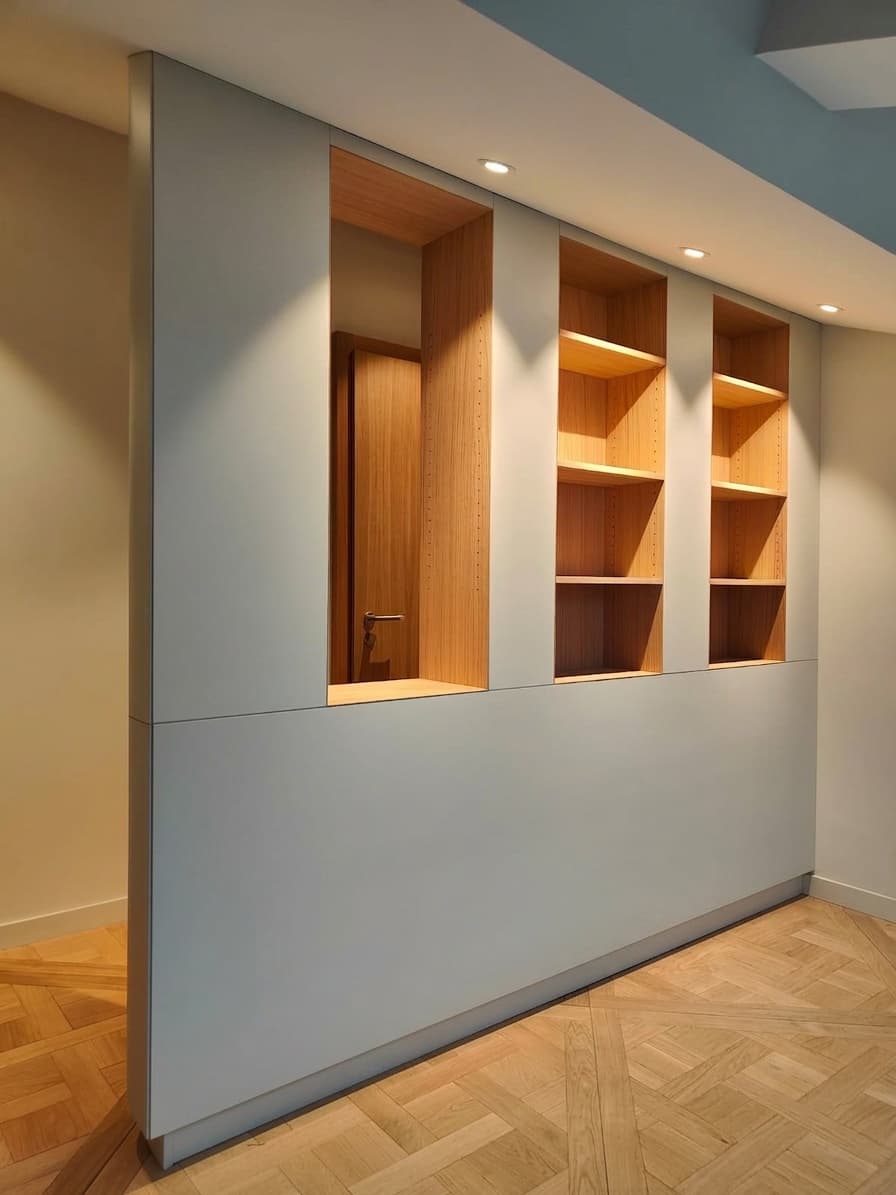
For bookcases, repositionable shelves on metal studs allow the storage layout to evolve without tools. It is a functional detail we recommend as a matter of course, particularly for rooms that will hold books of varying formats.
Finishes: oil, varnish, lacquer — what each one brings
The finish determines the final appearance, stain resistance, and how the piece will age. Here are the most common options in bespoke cabinetmaking:
- Natural oil: penetrates the timber, nourishes the fibres, and leaves a tactile, living surface. Re-oiling every two to five years depending on use. Ideal for tables, worktops and furniture that is touched frequently. Repairable locally if scratched.
- Matt or satin varnish: a surface protective film, more resistant to liquids. Suited to furniture exposed to variable humidity. Less straightforward to repair in the event of a localised knock.
- Matt or satin lacquer: applied in a spray booth for a uniform surface, free of runs and roller marks. The result is clean and contemporary. Available in the full RAL or NCS range to match the project's colour palette.
In our workshop, all liquid finishes are applied in a spray booth in a controlled environment, which ensures a consistent surface quality and the absence of airborne dust — a marked difference from finishes applied in an open workshop or on site.
Bespoke furniture: the pieces best suited to cabinetmaking
Everything can be ordered to measure, but some pieces benefit more from cabinetmaking craft than others. Here are the ones we make most often, and why they gain from being designed and built in a workshop:
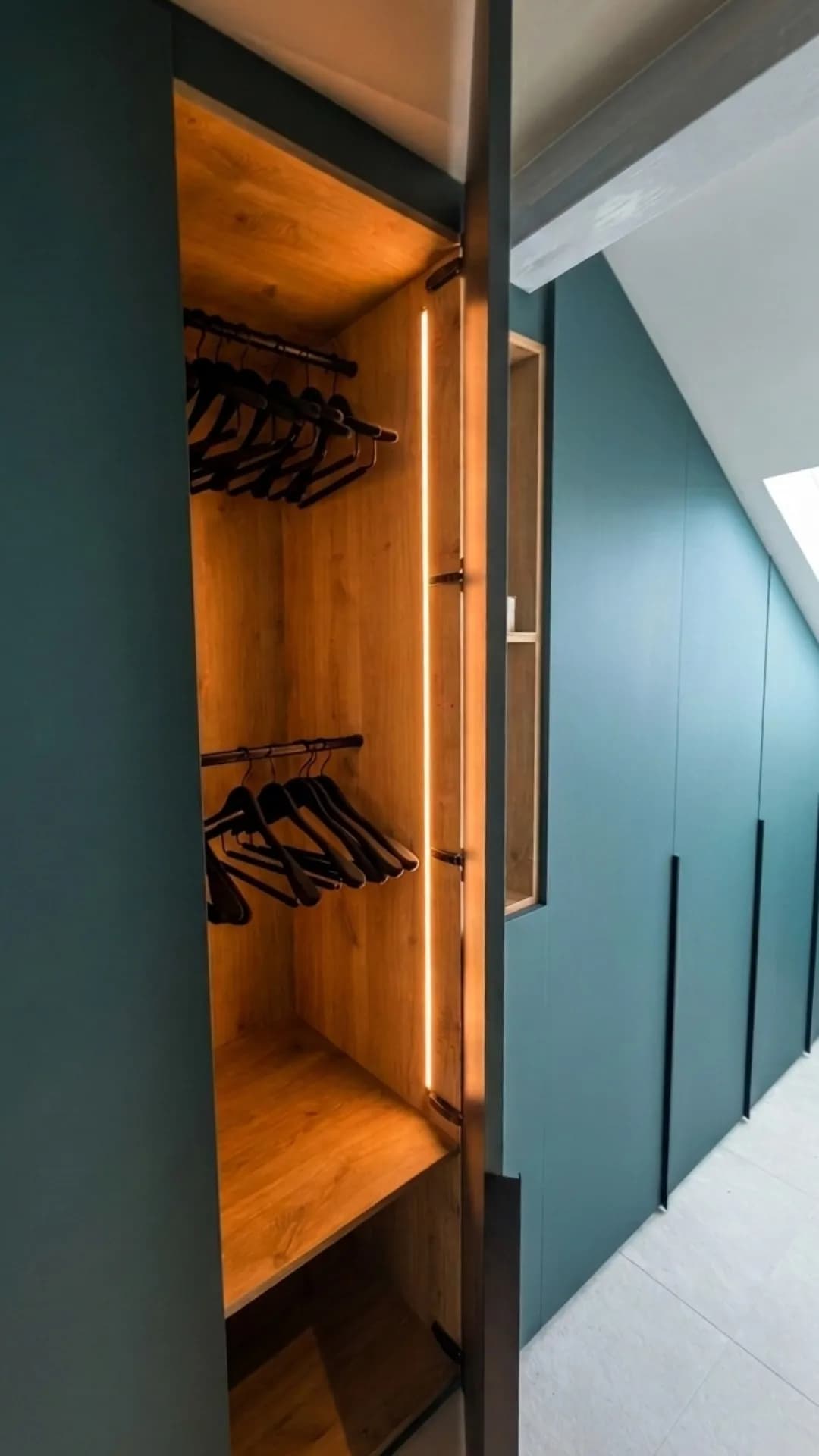
- Wardrobes and fitted hanging spaces: the exact ceiling height, angles, sloping ceilings and door constraints are all handled without compromise. Our article on the price of a bespoke wardrobe in Switzerland sets out the budget ranges.
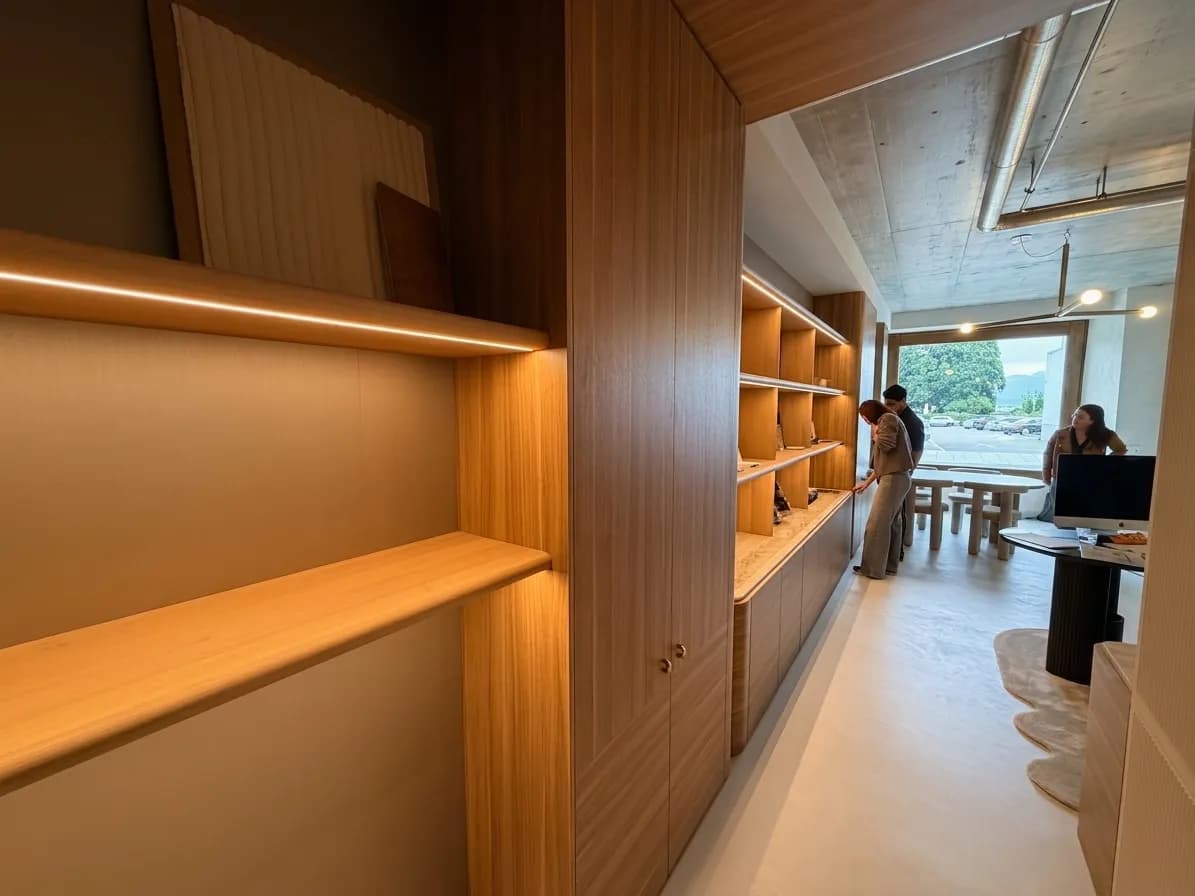
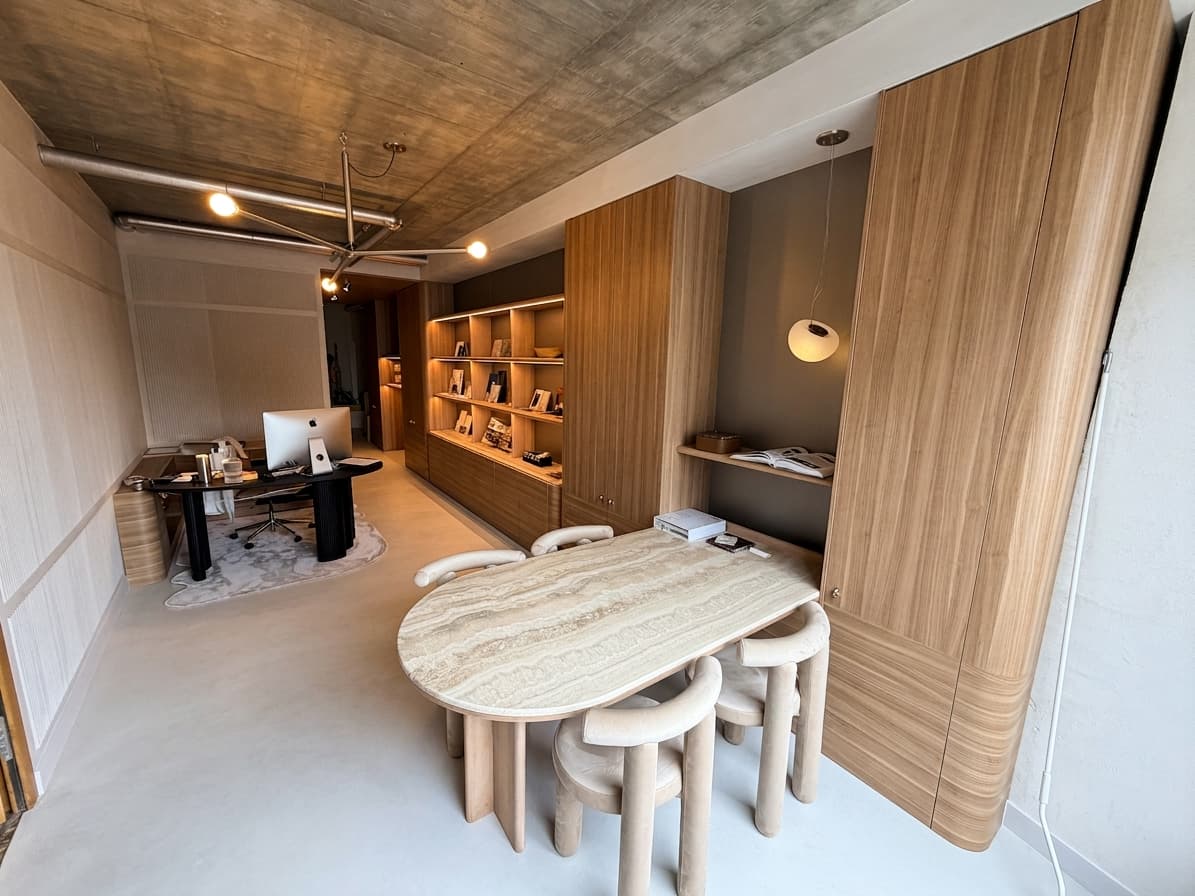
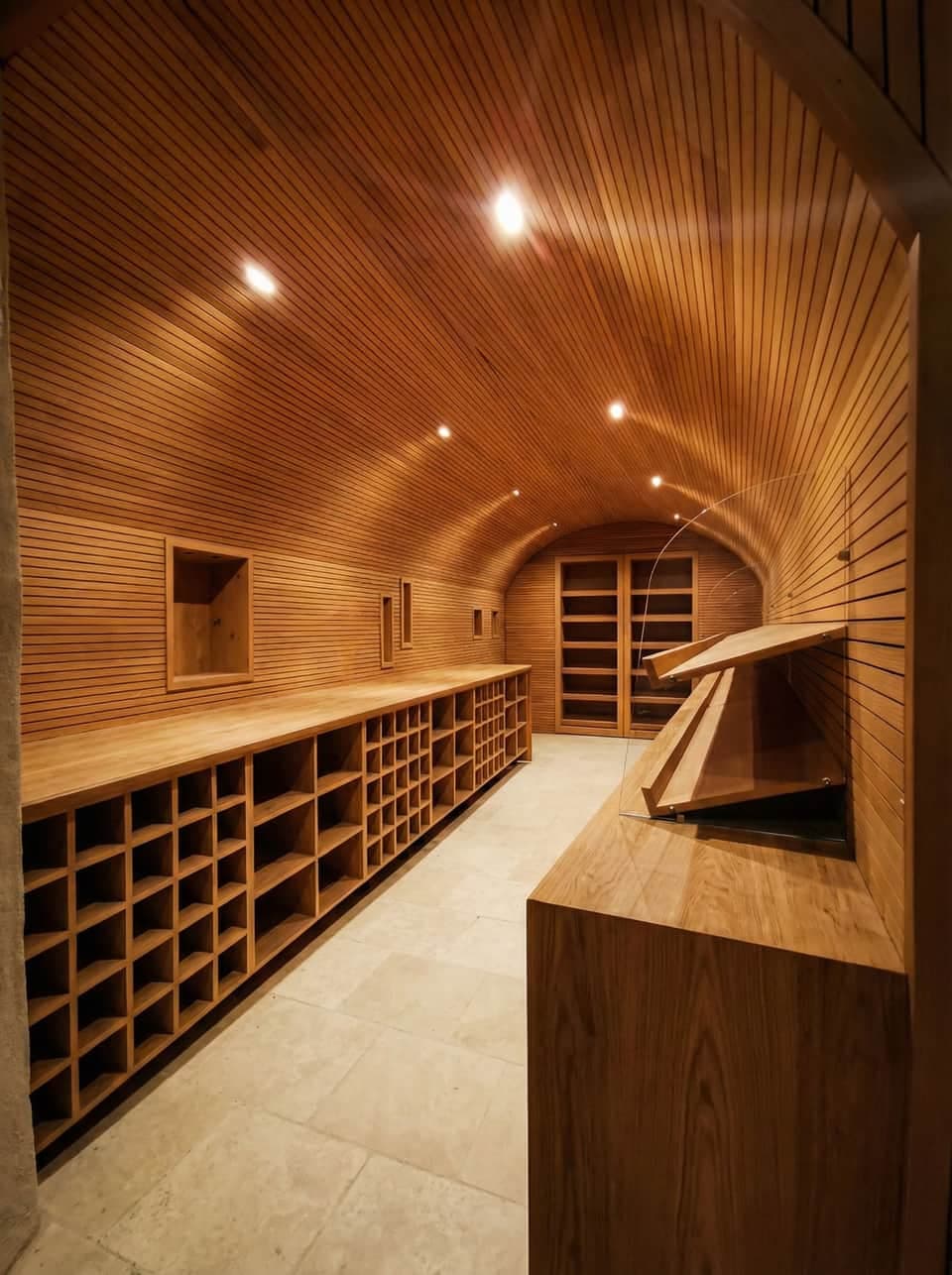
- Bookcases and integrated storage: a perfect fit between two walls, integrated LED lighting, custom niches for hi-fi equipment or decorative objects.
- Dining tables: length, width, height and timber species adapted to the number of diners and the flow of movement around the table. A solid-oak top two metres forty long cannot be sourced anywhere other than a workshop.
- Desks: worktop depth, cable management, corner returns or side storage drawers — elements that cannot be combined from a catalogue.
- Wall cladding and panelling: veneers or timber strips applied directly to the wall to structure an interior, conceal old masonry, or improve acoustics.
- Under-eaves fittings: the loft space is the classic example where bespoke is not a luxury but a necessity. Our guide on the budget for under-eaves fittings in Switzerland provides the key figures.
Lead times and how a bespoke furniture project unfolds
A bespoke furniture project follows a precise sequence. Knowing the stages allows you to plan ahead and avoid unpleasant surprises when scheduling a build or a move.
For a complete fitting — wardrobe, bookcase or integrated TV unit — the realistic range is six to twelve weeks from order to installation:
- Study and 3D plans: two to three weeks. Site measurement visit, dimension survey, design proposal, choice of materials and finishes. The client approves the plans before any cutting takes place.
- Workshop fabrication: four to six weeks depending on complexity and the order book. Cutting, assembly, finishing in the spray booth.
- Installation: one to three days depending on the size of the project. The cabinetmakers who built the piece come to install it — there is no separate fitting team.
For a single piece of furniture — table, desk or sideboard — the range is six to ten weeks. These lead times assume the project is well defined at the time of order; rounds of approval during fabrication will extend them.
For an overview of the full process, our article on the budget and lead times for a bespoke furniture project covers the most frequently asked questions.
What to check before choosing your workshop
Bespoke furniture is an investment that goes well beyond the cost of a standard order. Choosing the workshop that makes it deserves as much attention as choosing the timber species or the finish. Here are the points to check in concrete terms:
In-house fabrication or subcontracting?
Some workshops design but subcontract the fabrication. This is not necessarily a problem, but it complicates oversight and dilutes responsibility. At TOMÉ, design, fabrication and installation are all handled in-house by the same team, which eliminates any misinterpretation between the design office and the workshop floor.
3D plans before fabrication?
A dimensioned two-dimensional drawing is not sufficient to approve a complex fitting. A 3D image allows you to visualise proportions, materials and details before the first board is cut. It is a safeguard for the client and a discipline for the workshop.
References and completed projects accessible?
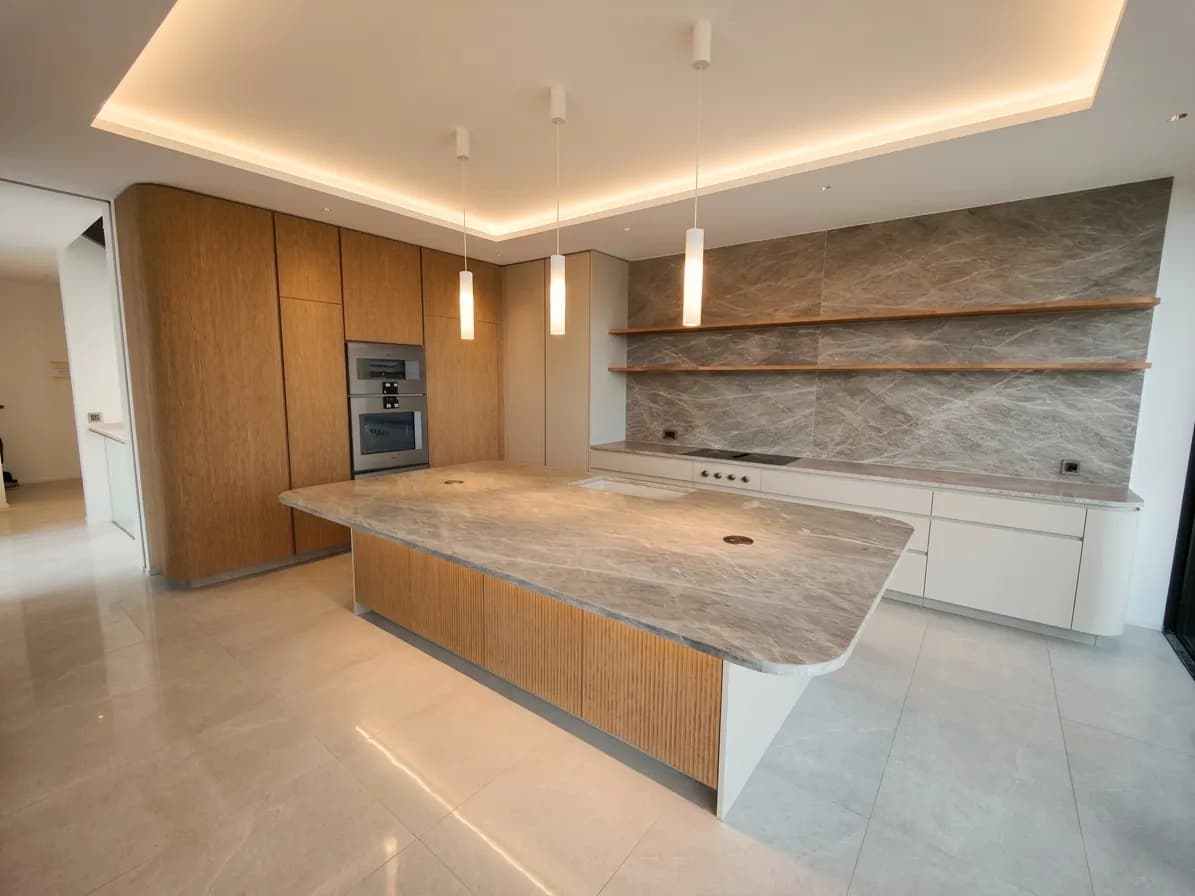
Published projects — on the website or in the workshop — indicate the level of finish and the type of work the team has mastered. A workshop specialising in high-end residential fittings is not necessarily the best choice for contract furniture, and vice versa. Our project gallery gives an overview of TOMÉ's recent work.
A single point of contact or rotating staff?
Rotating contacts are a source of errors on complex projects. Make sure that the person who takes your order will be the one who follows your file through to installation.
Key points to remember
To choose bespoke furniture with confidence, keep four reference points in mind: the timber species or material according to use and space, the hardware for long-term durability, the finish according to the upkeep you are prepared to undertake and the look you want, and the workshop according to how it manufactures and the references it can show. Realistic lead times in French-speaking Switzerland run from six to twelve weeks for a complete fitting, and every project is approved on 3D plans before the first cut — that is the minimum to expect from any serious workshop.
Tell us about your project
At TOMÉ, every project begins with a simple description: the room, the intended use, any constraints. We respond within 48 hours with a first estimate or a proposal for a site visit. The workshop is open Monday to Friday, 08:00 to 18:00, in Gingins (canton of Vaud). Describe your project on the contact page — a few lines are all it takes to get started.