Summary: TOMÉ Ébénisterie is a workshop based in Gingins (VD) that designs and produces bespoke fitted furniture throughout the canton of Vaud — from La Côte to Lausanne and the Riviera. Every project is drawn in 3D plans, made in the workshop and installed by the cabinetmakers who built it, with no subcontracting. Typical lead times run from 6 to 12 weeks depending on the complexity of the project.
A bedroom under the eaves in Rolle, a narrow corridor in Nyon with nothing like a standard width, a kitchen in Lausanne where a concrete pillar falls in exactly the wrong place: these are the constraints that off-the-shelf fittings cannot resolve. In the canton of Vaud, buildings from the 1960s to the 1990s come with variable ceiling heights, non-standard recesses and rooms that fall well outside the standard 60 cm grid. It is precisely for these situations that bespoke work exists — and that the TOMÉ workshop has been operating from Gingins for the whole of the canton.
What custom fitted furniture in the canton of Vaud actually means
The term "bespoke" is often used to describe furniture configured from standard modules. In our workshop, it means something different: every piece is drawn from the actual dimensions of the space, the actual habits of the people who live or work there, and the constraints of the site. No prefabricated module is taken from a catalogue.
The projects we carry out in the canton of Vaud span several categories:
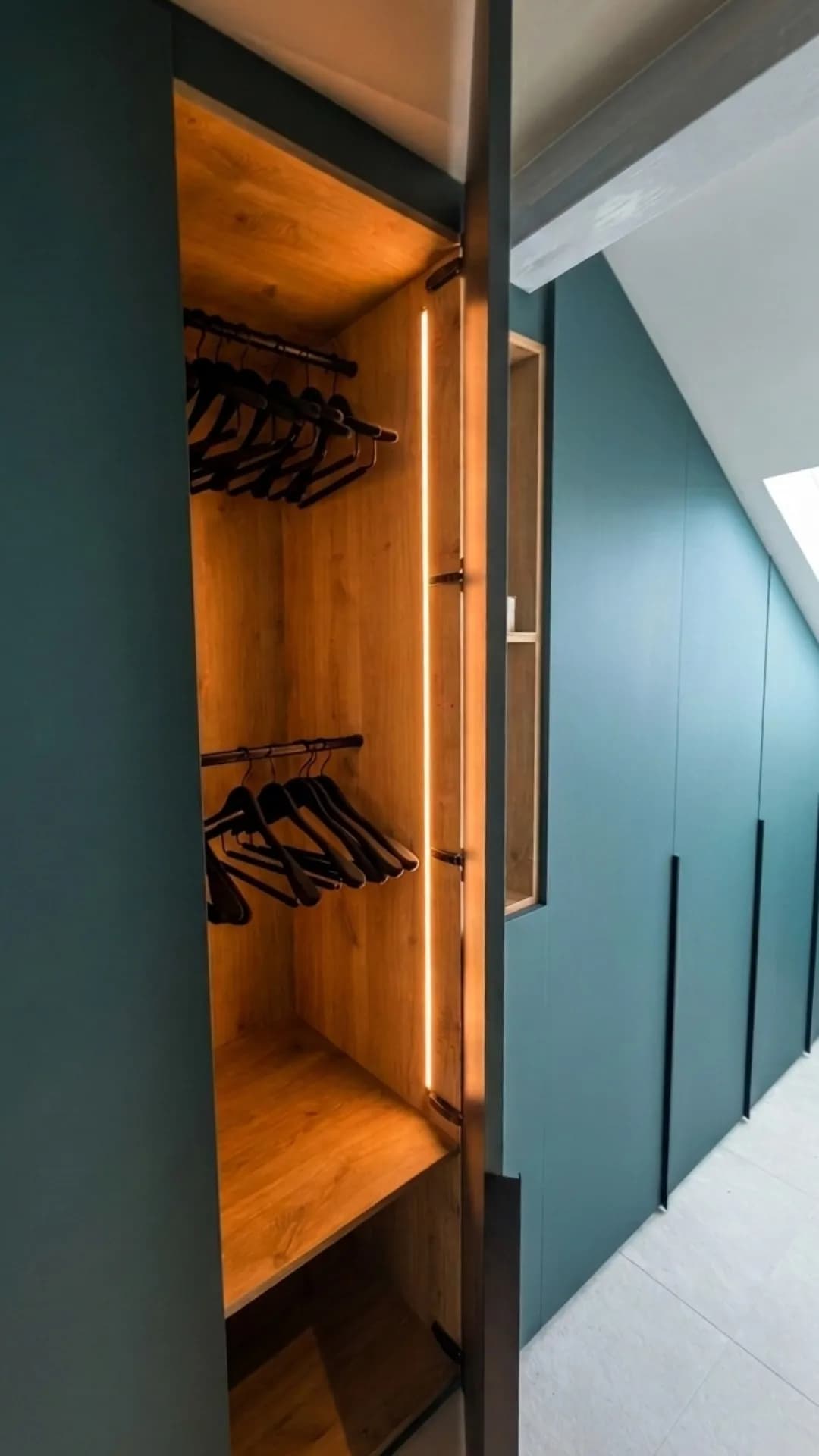
- Wardrobes and fitted storage: under sloping ceilings, along full wall runs, in alcoves or under staircases. Depths, heights and configurations of drawers, hanging rails and shelves are determined during the site visit.
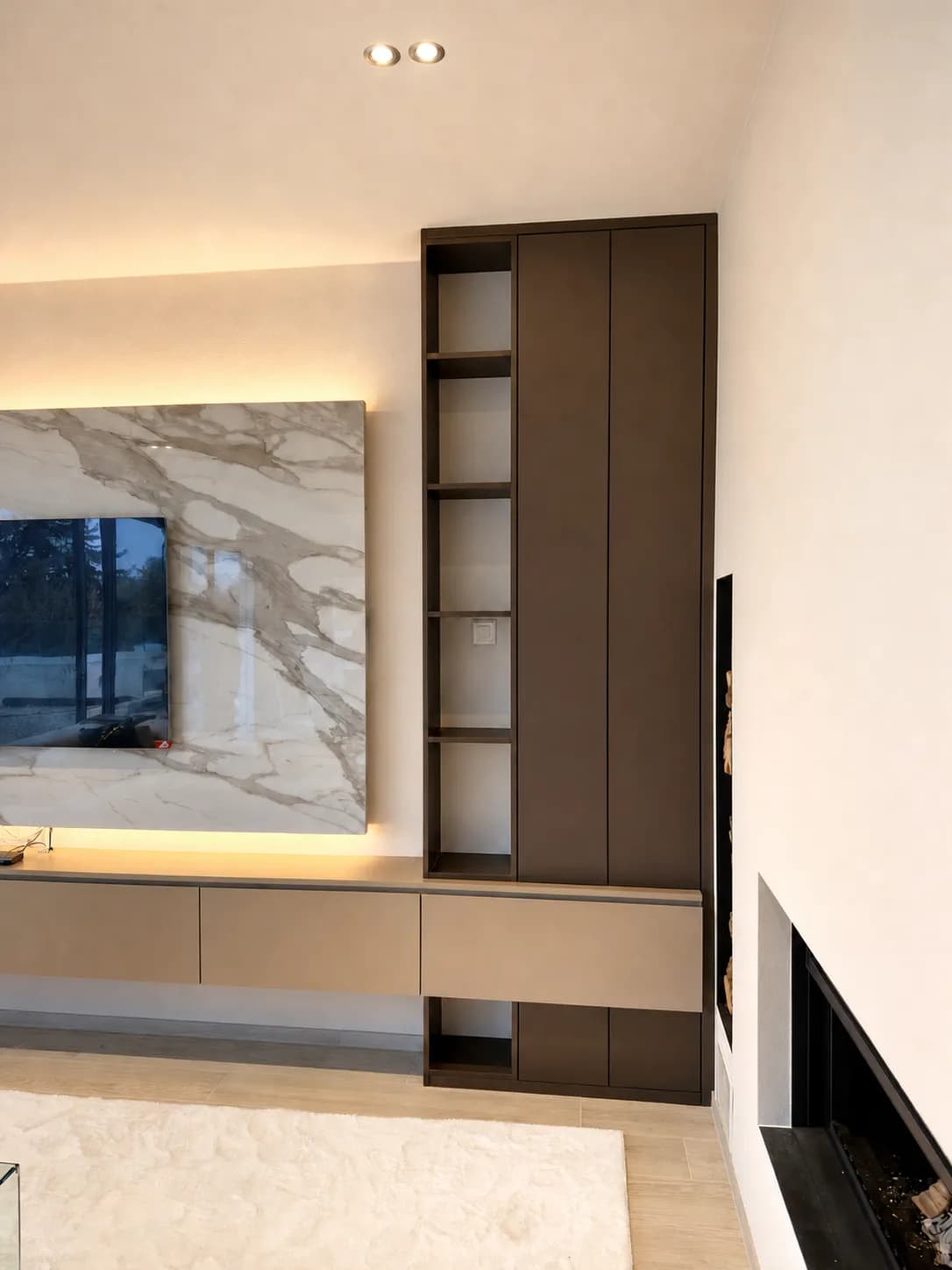
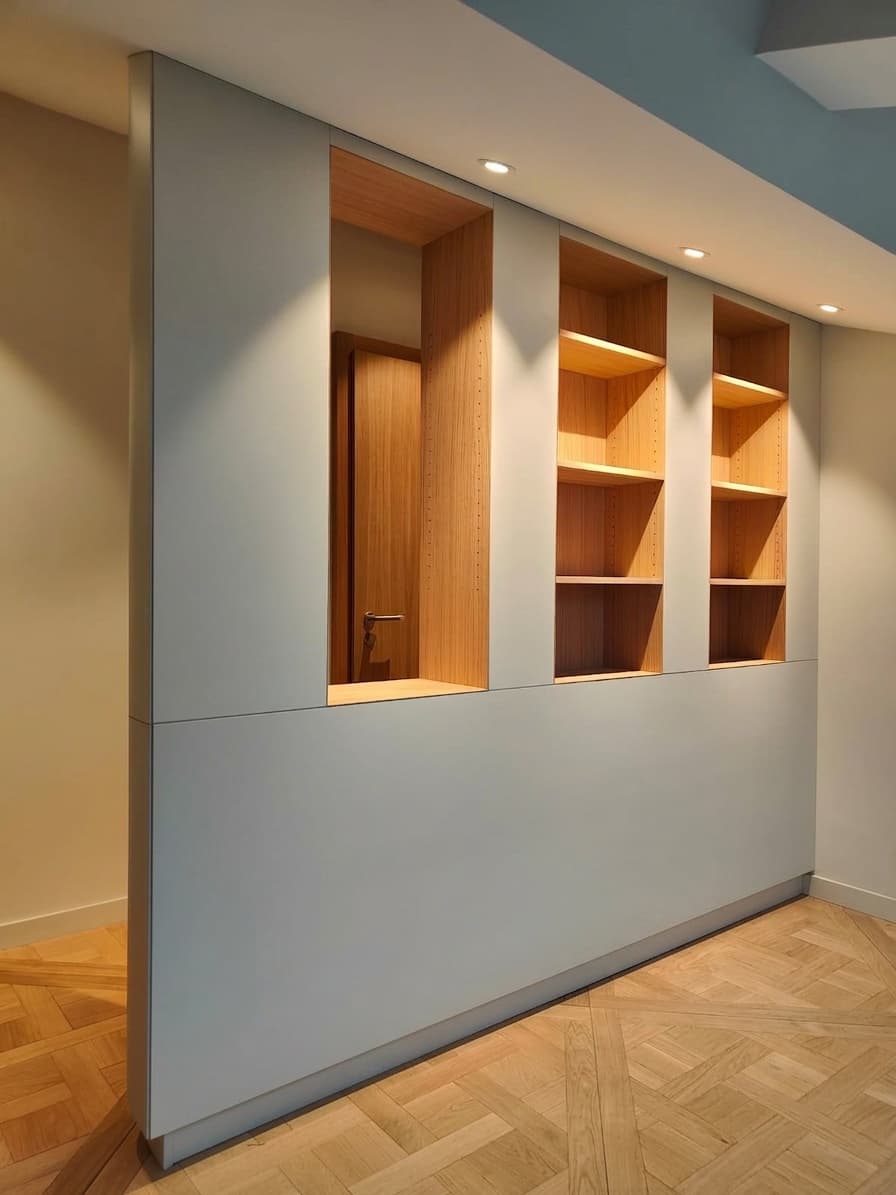
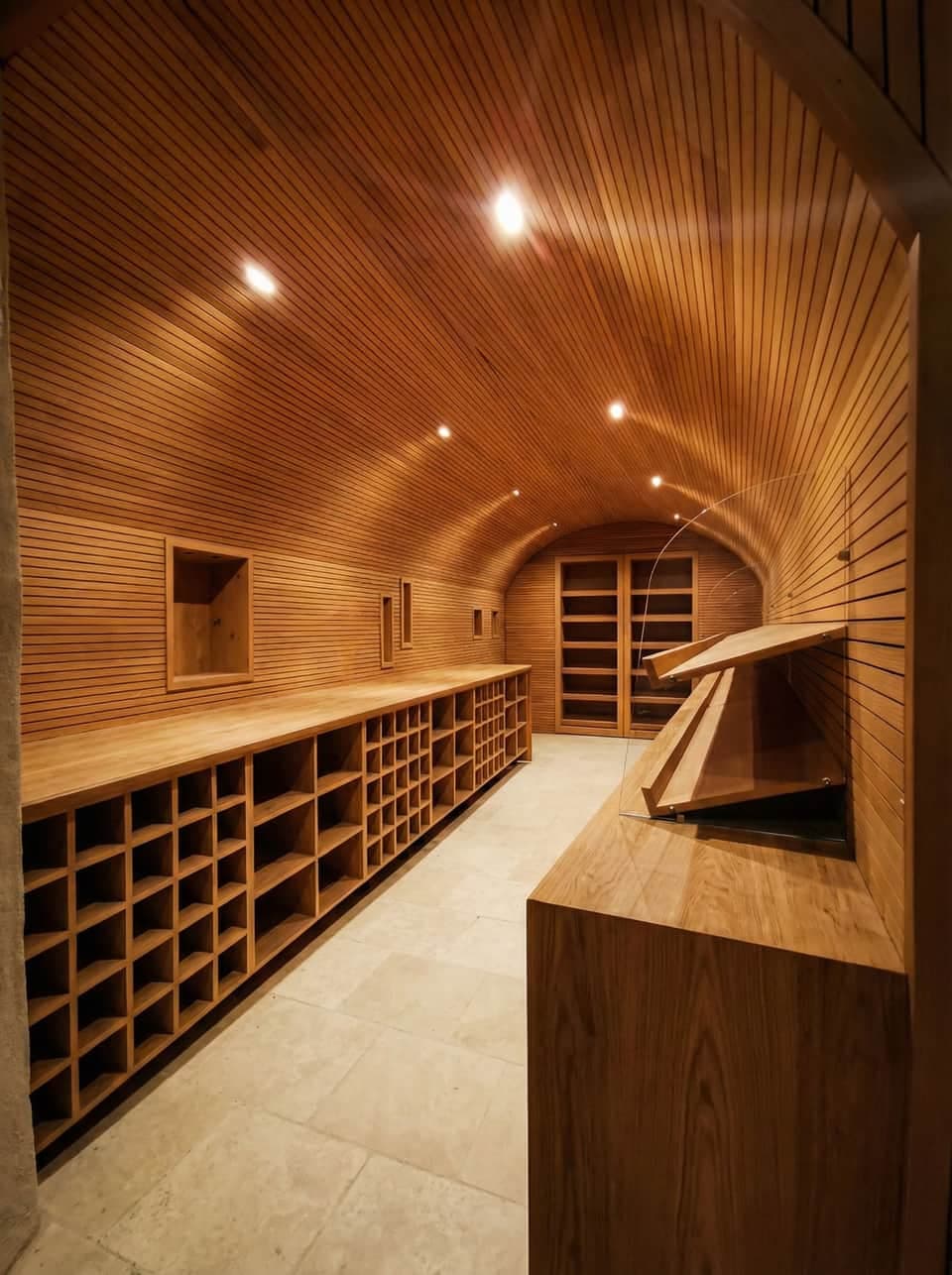
- Bookcases and wall panelling: full walls, door surrounds or living room cladding. Wall fittings can incorporate LED lighting, sliding doors or tinted fronts.
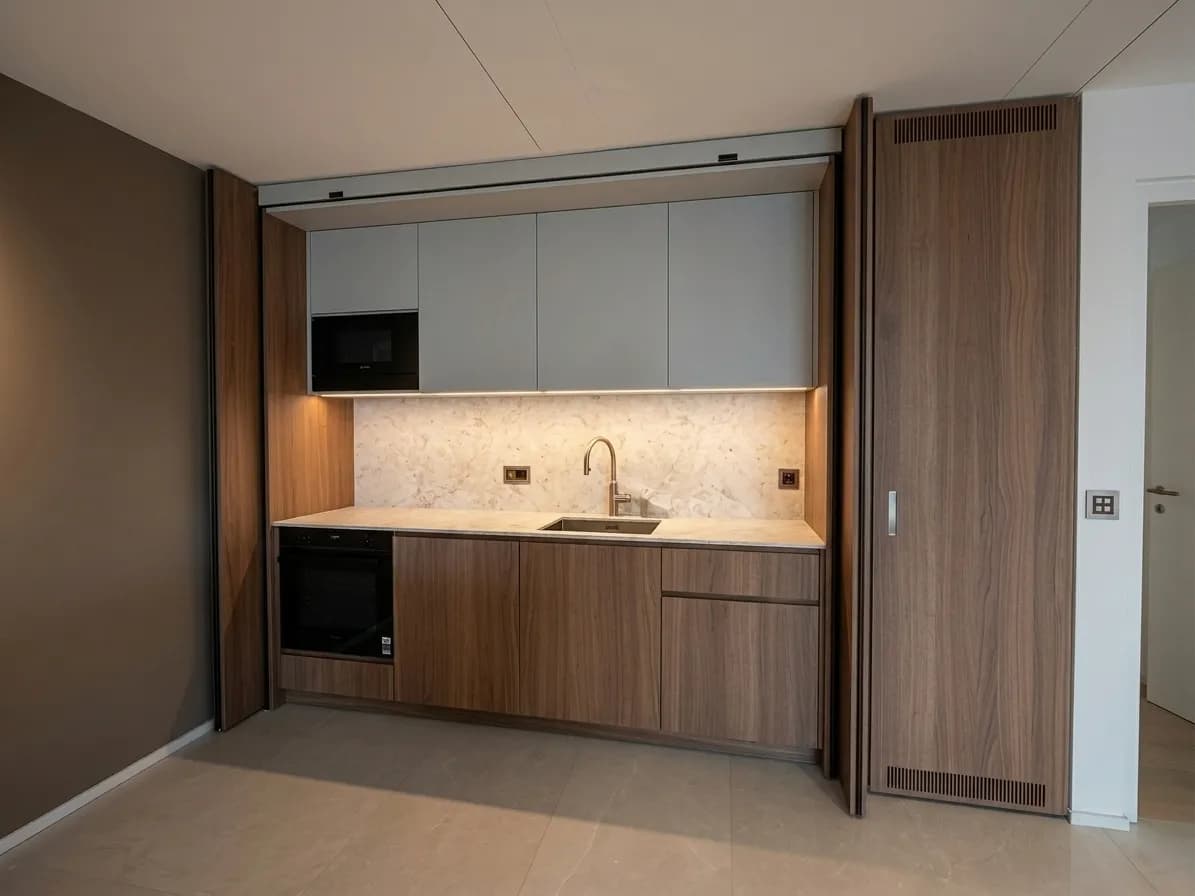
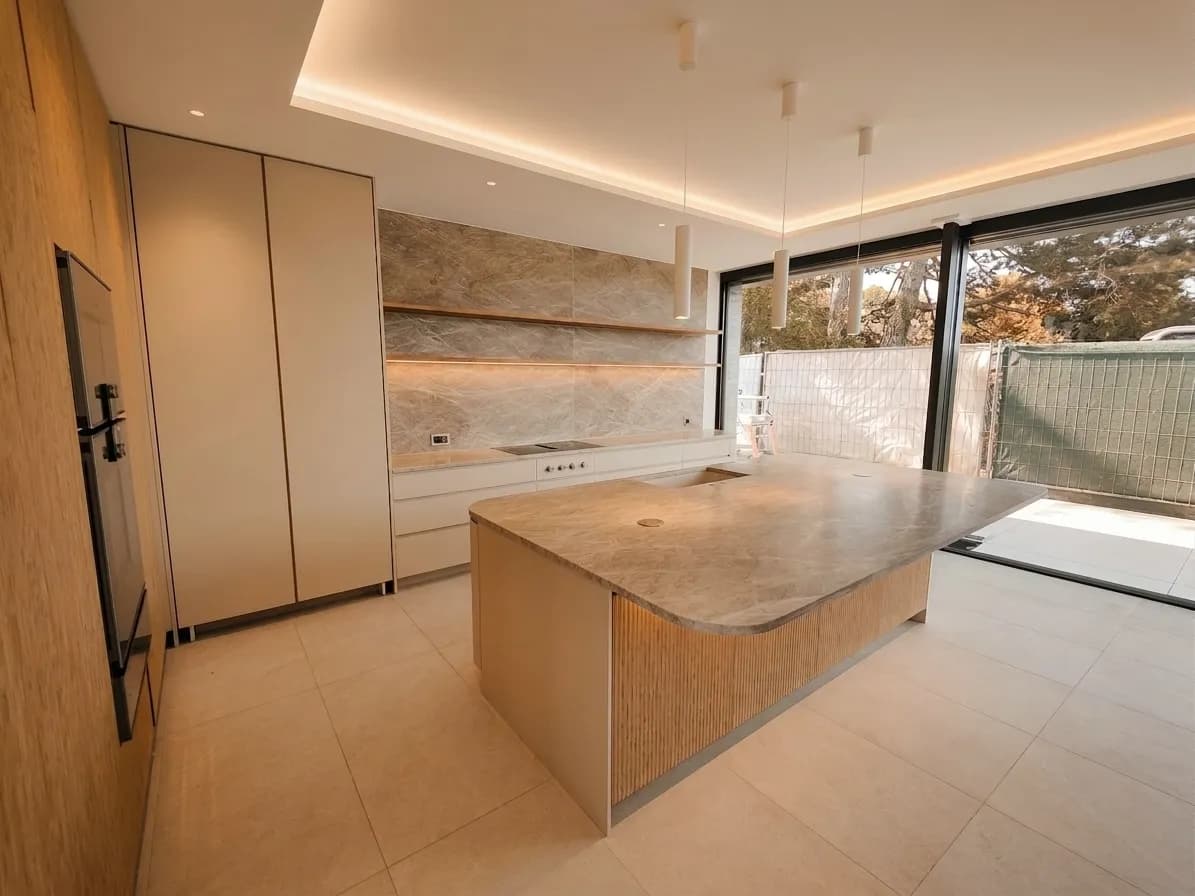
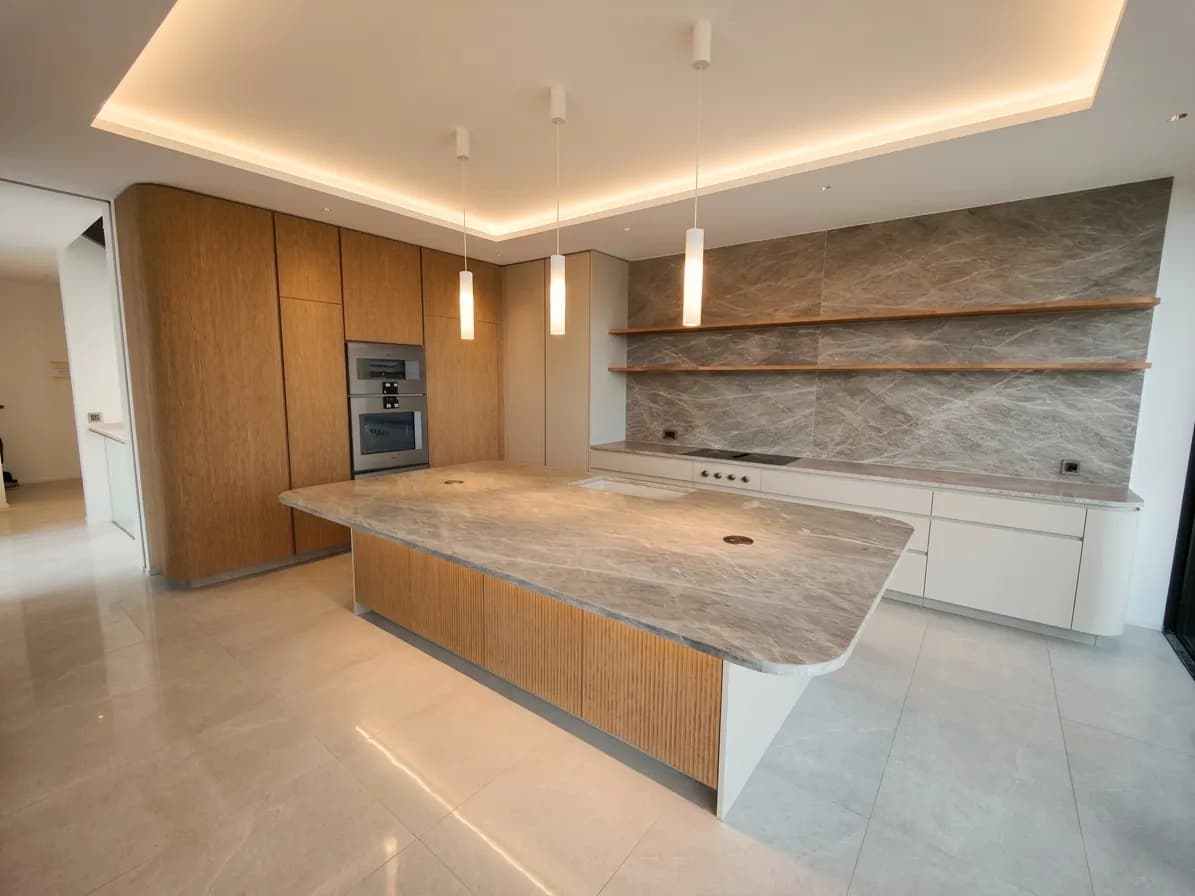
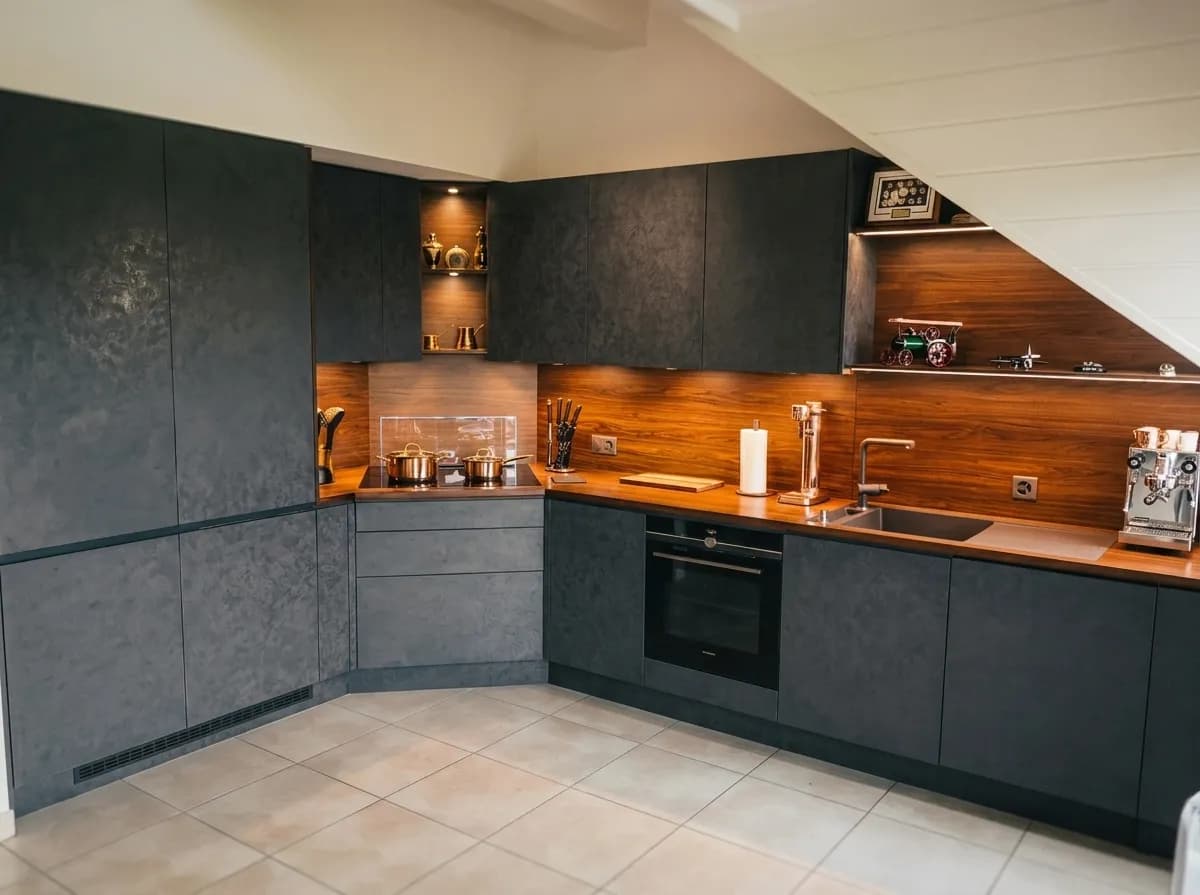
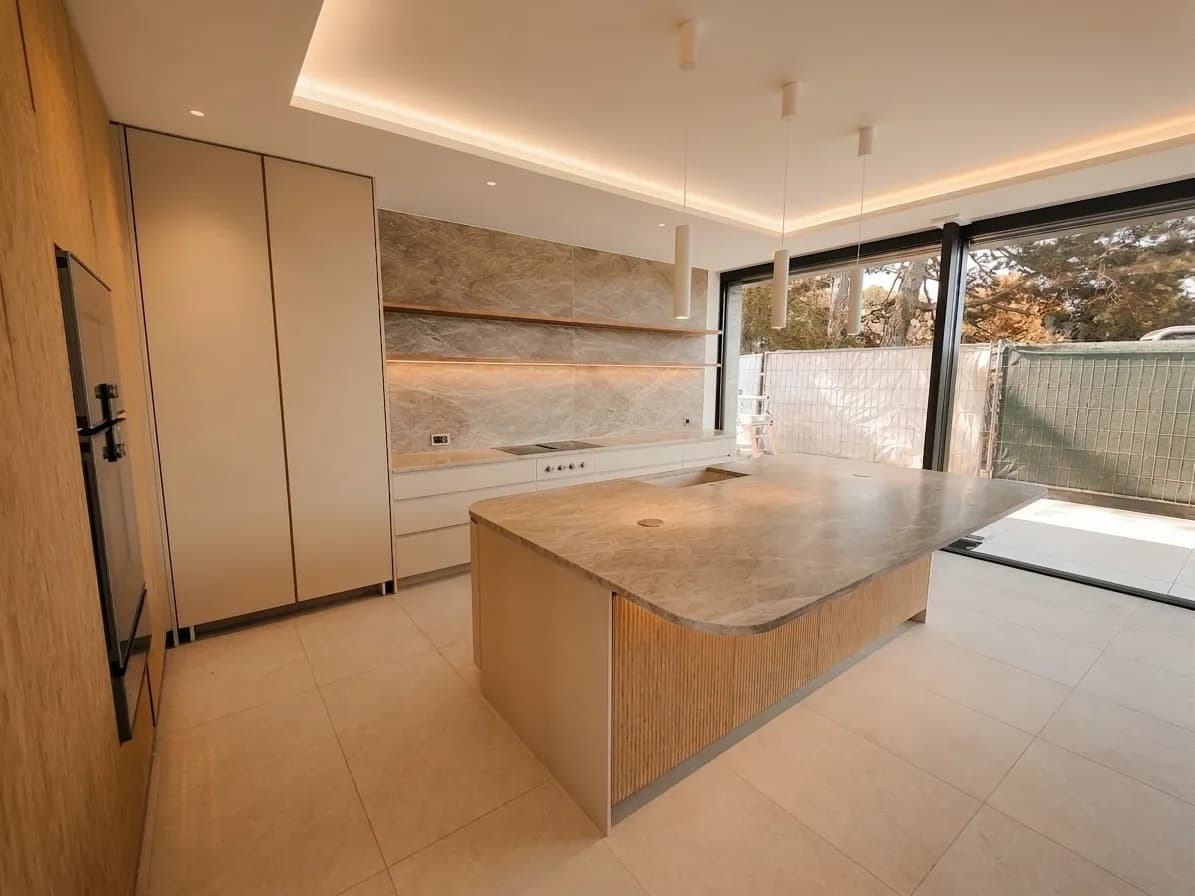
- Complete kitchens: carcasses, doors, worktops and appliance integration. A dedicated article covers the design and ergonomics of a bespoke kitchen for those who wish to go into detail.
- Individual pieces: tables, desks, sideboards, TV units, benches or statement pieces made in solid wood or veneer depending on the desired finish.
In the canton of Vaud, the majority of our installations take place in Nyon, Gland, Rolle, Coppet, Lausanne and across La Côte. More distant projects — Riviera, Chablais, Broye — are considered on a case-by-case basis.
Why the characteristics of Vaud's built environment make bespoke work relevant
The variety of building stock in Vaud is considerable: detached houses from the 1970s with their V-shaped roof spaces, rental apartment blocks from the 1990s with non-load-bearing partitions repositioned by successive tenants, rehabilitated lofts in Lausanne with slightly sloping floors, and wine-growers' houses on La Côte with thick stone walls and deep window reveals.
Each of these configurations presents a specific problem for off-the-shelf furniture. A wardrobe at the standard height of 200 cm meets a ceiling at 197 cm. A kitchen worktop at 90 cm runs into a beam dropping down to 83 cm. A wardrobe fitted under a sloping roof cannot follow the uniform depths of a modular system.
The practical response: during the site visit, we take measurements to the millimetre, note the hard points (service ducts, beams, existing sockets) and incorporate these constraints into the drawings before any fabrication begins. The result adapts to the room, not the other way round.
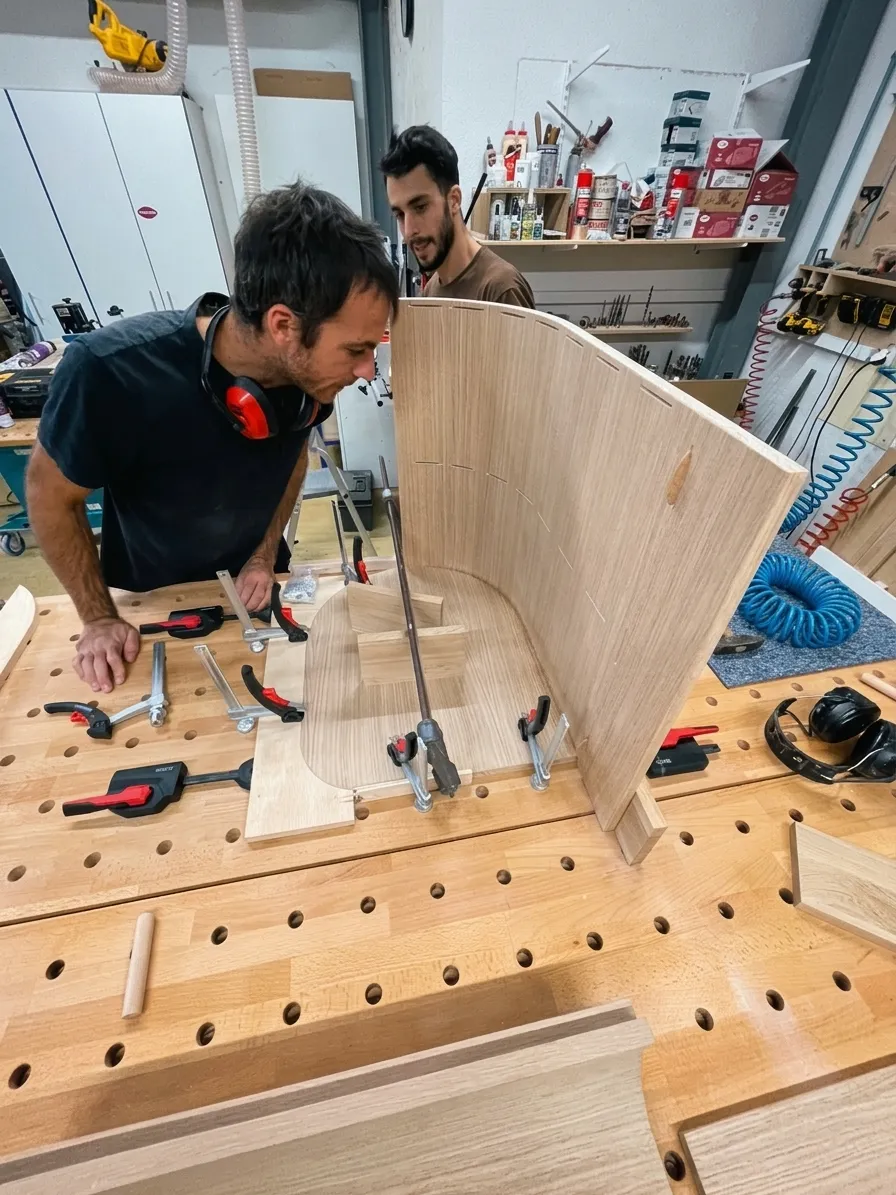 real project photo
Materials and timber species most commonly used on our Vaud sites
The choice of materials depends on the intended use, the budget and the desired aesthetic result. On our sites in the canton of Vaud, three configurations recur frequently:
Solid wood and veneer
European oak remains the most requested species for fitted furniture: stable, readily available and compatible with both oil and matt varnish finishes. Walnut — American or European — is chosen for projects where the warmth of the grain takes precedence; a dedicated article covers the characteristics of American walnut for those interested in this species. Ash, maple and cherry complete the palette according to the ambiance sought.
Lacquered MDF and melamine
For functional fittings — hallway storage, kitchen carcasses, large-volume bookcases — spray-booth lacquered MDF provides a uniform, repairable surface. Fronts are lacquered in our workshop in a controlled environment, which guarantees a finish free of runs or orange peel.
Certified manufacturer boards
Interior carcasses use Egger or Kronospan panels, available in co-ordinated finishes and certified for emission quality. All hardware is exclusively Blum or Hettich: Tandembox drawer runners, Blumotion hinges and Aventos lift systems for overlay fronts.
How a project unfolds, from first contact to installation
The question we hear most often: "What actually happens, step by step?" Here is the typical process for a fitted furniture project in the canton of Vaud.
- First contact: a few lines describing the project, the room and your constraints. We reply within 48 hours with an initial direction or a proposal for a site visit.
- Site visit: we come to your home or premises. We take measurements, discuss how the space is used, and offer initial guidance on species and finishes.
- Plans and 3D view: our design studio produces detailed drawings and a 3D view. You approve every detail before the first board is cut.
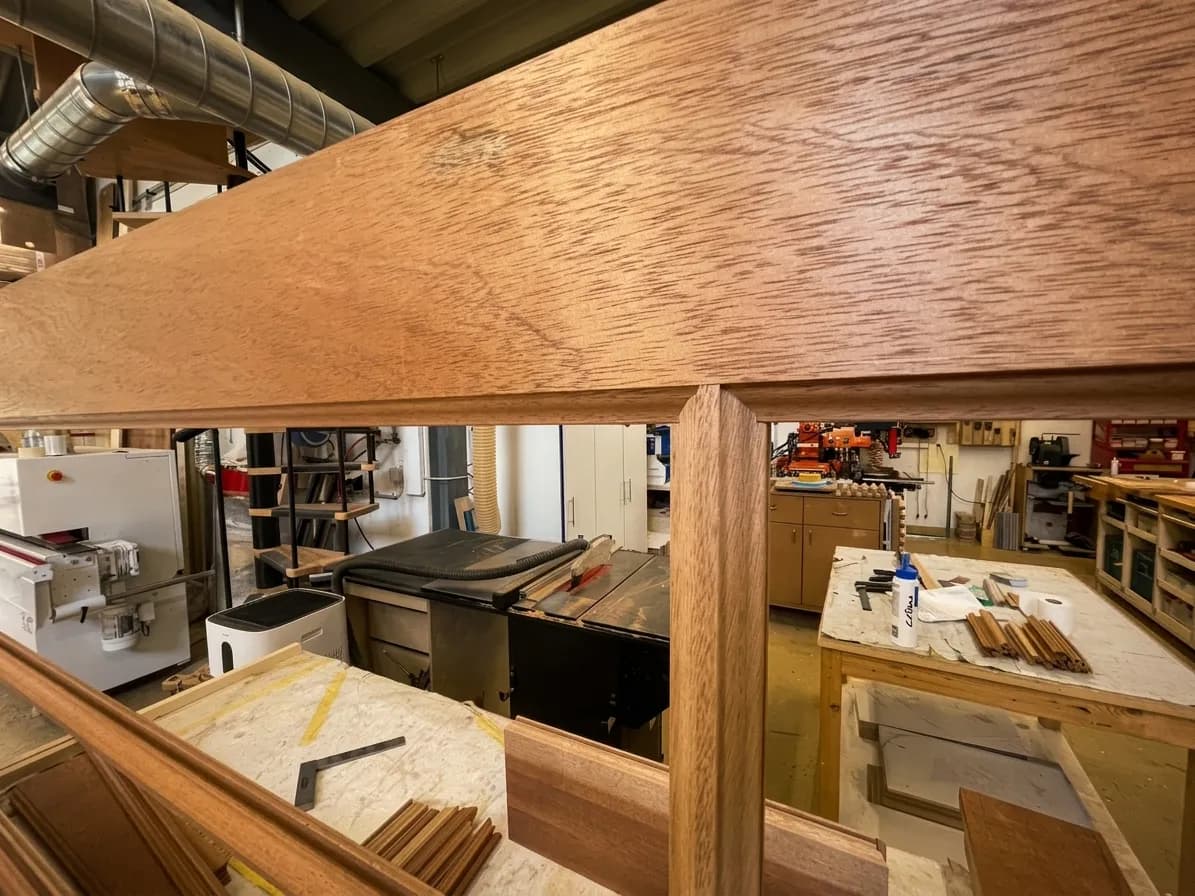
- Workshop fabrication: in Gingins, by the cabinetmakers who will later install the furniture. Duration: 4 to 6 weeks for a standard fitting.
- Installation: 1 to 3 days depending on the scale of the project. The cabinetmakers who built it come to install it; they know every detail of the piece.
The overall lead time between order and installation is generally 6 to 12 weeks for fitted furniture, and 6 to 10 weeks for a single standalone piece. These ranges vary according to the order book and the complexity of the project. A dedicated article details budgets and lead times for a bespoke furniture project to help you plan.
Custom fittings in the canton of Vaud: a few reference projects
Citing real projects helps to convey what bespoke work means in practice. Here are three examples drawn from our recent work in the canton.
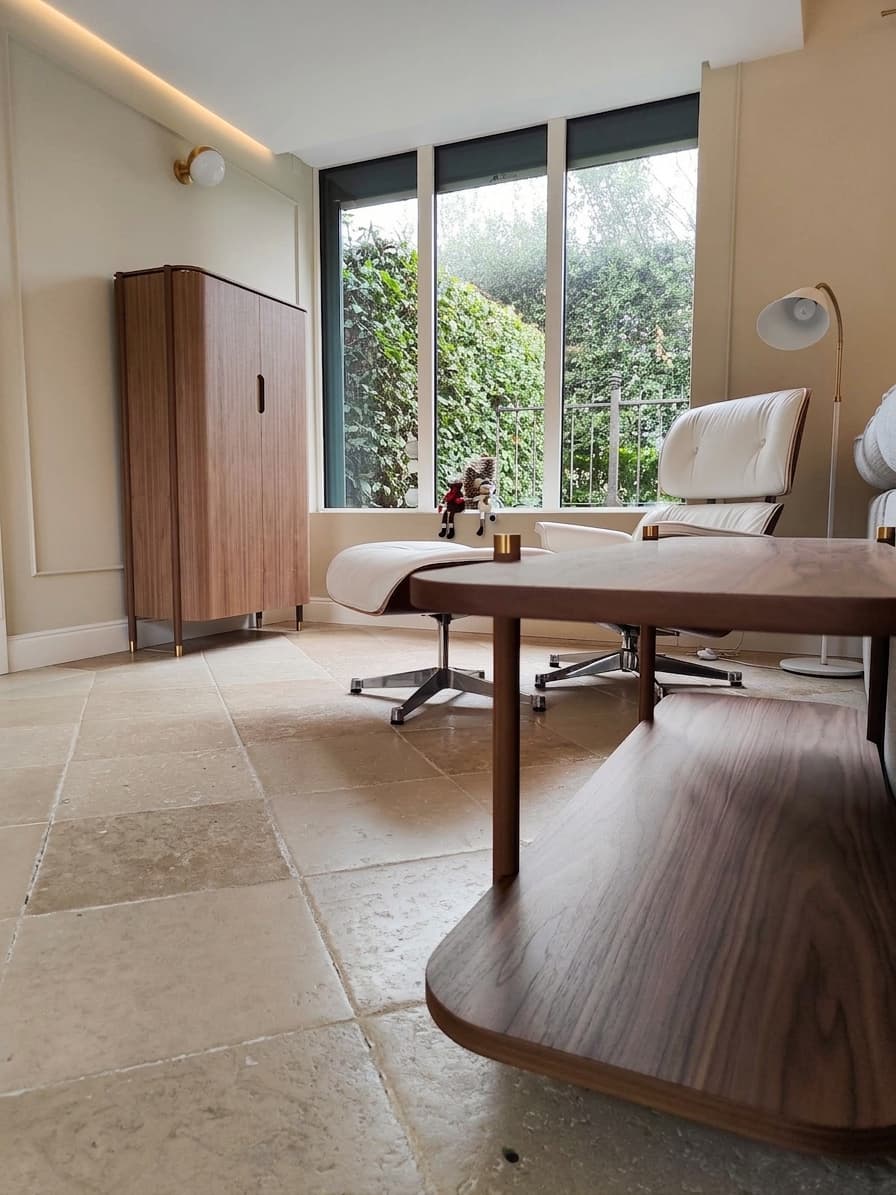
Wall panelling and furniture in American walnut in Mies
A complete ensemble: wall cladding for the living room, an integrated bookcase, a sideboard and a coffee table, all in solid American walnut with co-ordinated veneer. The distinctive challenge: the room had a sloping ceiling on the garden side, which required individual bespoke drawings for each bookcase module.
Fitted wardrobe under a sloping roof in the canton of Vaud
A wardrobe built under an inclined roof structure, with usable heights decreasing from 210 cm to 90 cm across approximately 4 metres of depth. The chosen solution: full-height hanging on the ridge side, drawers and low shelves on the eaves side, hinged doors adjusted to each leaf individually. The article on the budget for a sloping-ceiling storage project in Switzerland provides indicative figures for this type of work.
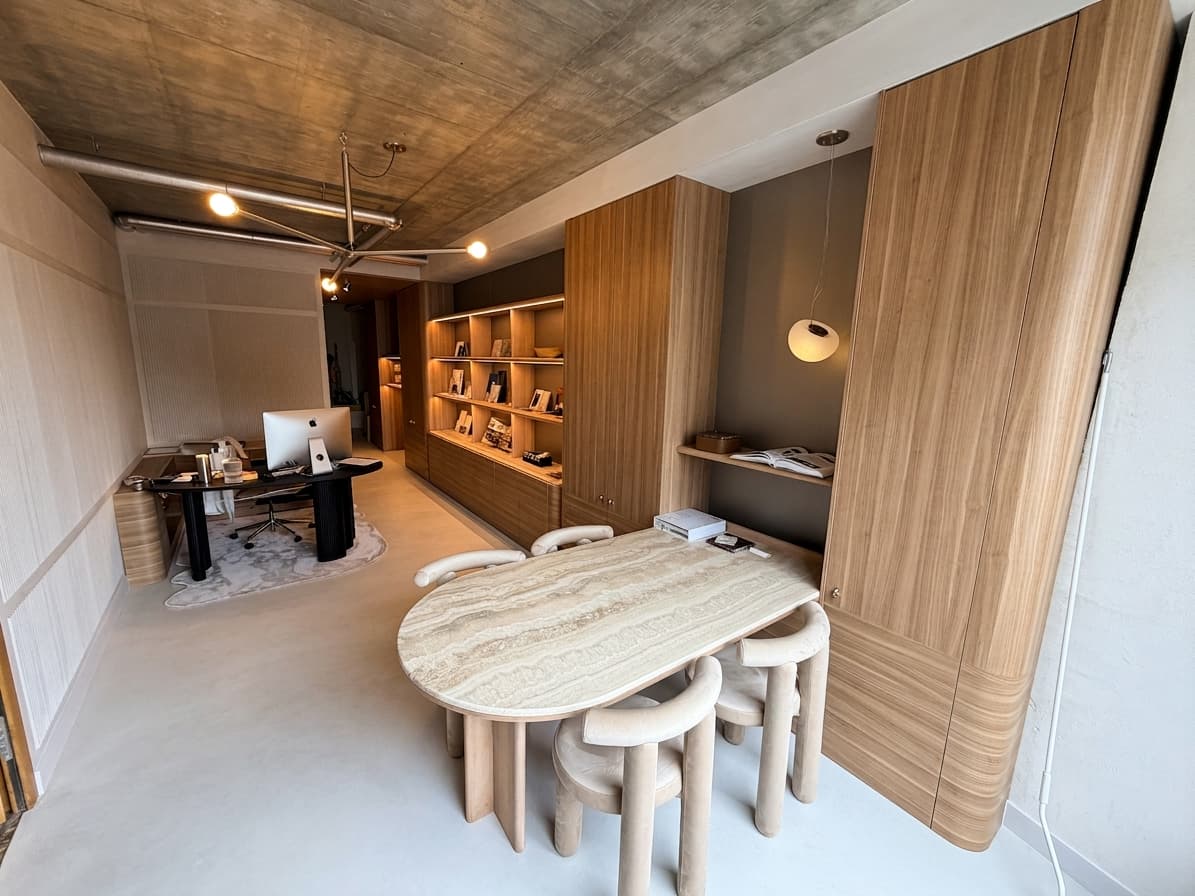
Fitted-out architect's studio in Rolle
A professional working space: reception area, technical storage and an oiled-oak worktop surface, across approximately 45 m². The constraints: heavy daily footfall, surface durability, and co-ordination with the client's architect for the floor tile layout and recessed electrical work.
What bespoke work changes compared with off-the-shelf furniture
The difference is not only aesthetic. It is also functional and economically sound over the long term.
Fit to room dimensions Standard modules, gaps filled with filler panels Made to exact dimensions, no uncontrolled gaps Finishes Melamine film or roller-applied paint Spray-booth lacquer, oil or matt varnish as chosen Repairability Replace the entire module Replace individual components Hardware Varies by range Blum or Hettich throughout Lead time Available from stock or 4 to 8 weeks 6 to 12 weeks after orderThe additional lead time of bespoke work corresponds to the design and fabrication period. It is this time that produces a piece lasting several decades rather than a few years. For a detailed comparison focused on wardrobes, the article on the price of a bespoke wardrobe in Switzerland provides concrete reference points.
Working with an architect or private client in the canton of Vaud
A significant proportion of our projects in Vaud are carried out in co-ordination with an architect or interior designer. In these cases, our design studio works from the drawings provided, produces its own sections and detail views, and submits them for approval before fabrication. This review loop avoids surprises during installation.
For private clients without an architect, we provide the advisory role ourselves: choice of species, orientation of fronts, integration of lighting and co-ordination with other trades where needed. Since an interior designer joined the team in 2026, this advisory dimension has become more firmly embedded in how we work.
If you are managing a high-end property development — residential scheme or individual villa — our dedicated page on property projects describes how we work within that particular context.
Key points to keep in mind
Bespoke fitted furniture in the canton of Vaud begins with a precise survey, validated drawings and workshop fabrication by cabinetmakers who will then install the piece themselves. Typical lead times run from 6 to 12 weeks depending on complexity. Species and finishes — oak, walnut, matt lacquer, oil — are chosen during the site visit. Bespoke work is not necessarily slower or out of reach: it is a different process, one that produces a result calibrated to your room and repairable component by component over the long term.
Tell us about your project
At TOMÉ, every project begins with a few lines describing the room, its use and your constraints. We reply within 48 hours with an initial direction or a proposal to visit the site in the canton of Vaud. If the project moves forward, we come to measure, discuss species and finishes, and then produce the 3D plans. You approve everything before any cutting begins.
Describe your project on the contact page — or call the workshop directly on +41 79 367 26 99, Monday to Friday, 08:00 to 18:00.