Summary: A carpenter designs and installs second-fix elements — windows, doors, staircases — whilst a cabinetmaker specialises in furniture and bespoke interior fittings, with finer finishes and more elaborate veneering and joinery. For bespoke furniture — a wardrobe, bookcase, table or kitchen — it is generally the cabinetmaker who offers the best result in terms of dimensional precision, choice of materials and finish.
Clients regularly call us saying: "I'm looking for a carpenter for some bespoke furniture." It is a perfectly natural turn of phrase, and not an incorrect one — but it actually covers two distinct trades, with different training, tools and areas of expertise. The confusion is all the more understandable given that both professions work with wood, sometimes in neighbouring workshops.
Before launching a project for a bespoke wardrobe, bookcase or kitchen, it is worth understanding who does what — not for reasons of job title, but because it has a direct bearing on the outcome: the materials chosen, the precision of the joinery, the fineness of the finish and the durability of the piece.
Carpenter and cabinetmaker: two qualifications, two fields
In Switzerland, carpenters and cabinetmakers follow distinct vocational training programmes, each leading to a different CFC (federal certificate of competence). The carpenter is trained in second-fix building work: windows, interior and exterior doors, staircases, parquet flooring, structural timber work and partitions. Their work is tied to the building site; they work in coordination with other trades on site.
The cabinetmaker, by contrast, trains in the manufacture of furniture and interior fittings. Their training covers veneering techniques, traditional joinery (dovetails, mortise and tenon), working with solid timber and board materials, as well as applied finishes — oil, varnish and lacquer. They think in centimetres and tenths of a millimetre, because the precision required for a drawer or a hinged door panel tolerates no margin of error.
In practice in the Romandy region, some workshops combine both activities under one roof; others are strictly specialised. What matters is knowing which field your project belongs to.
What "bespoke furniture" actually means
The notion of bespoke furniture is broad. It can refer to:
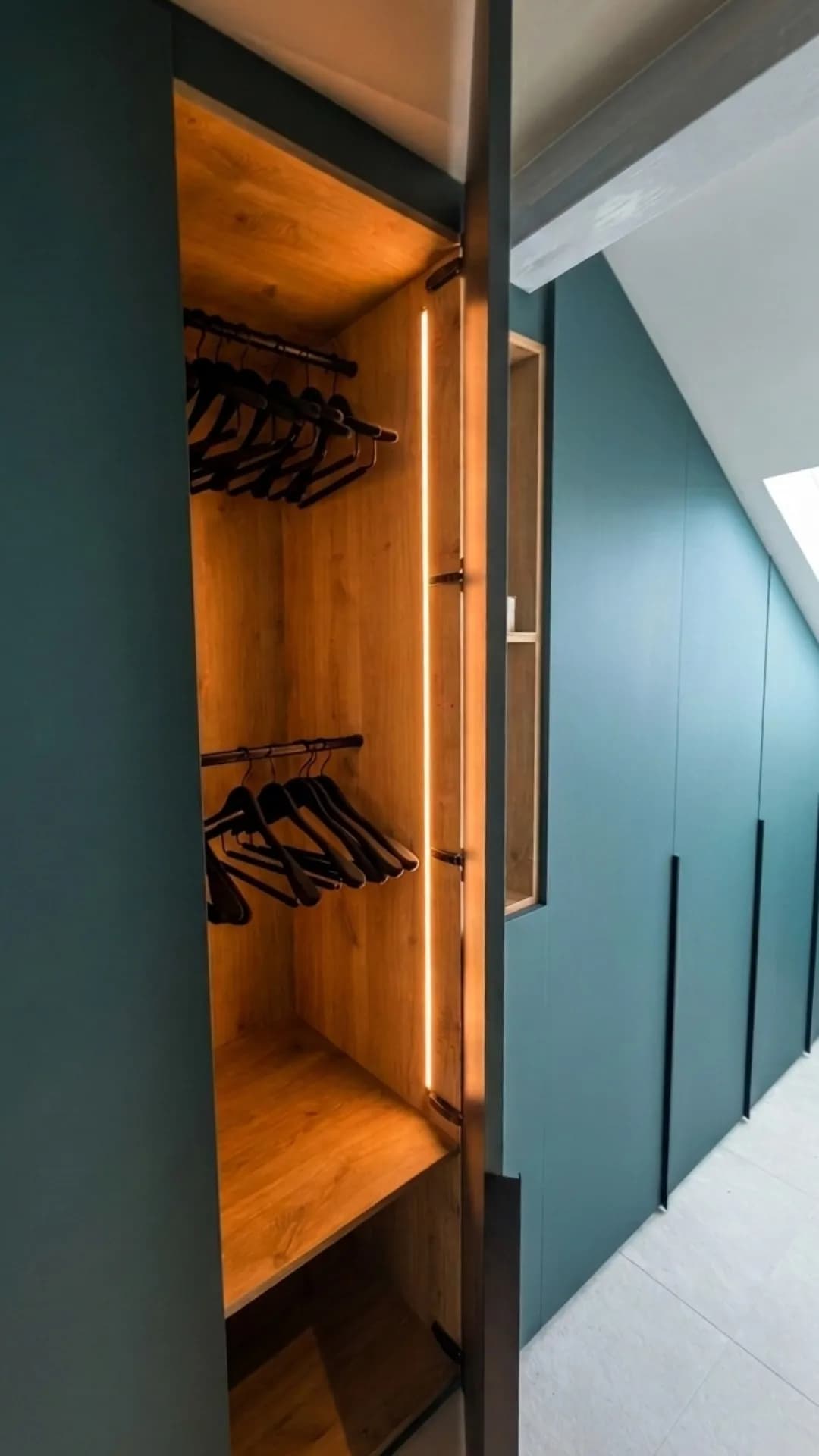
- A fitted wardrobe under a sloping ceiling, with carcasses adapted to every centimetre of available height
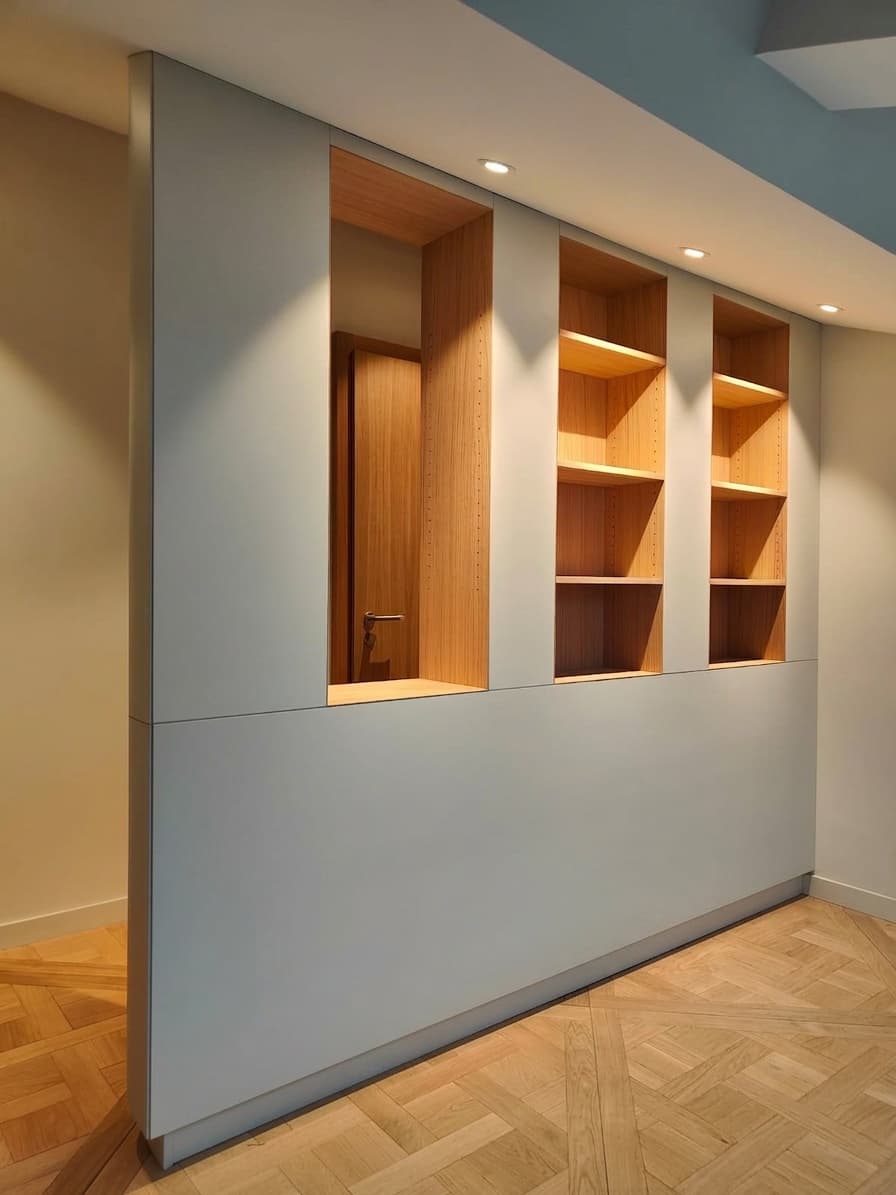
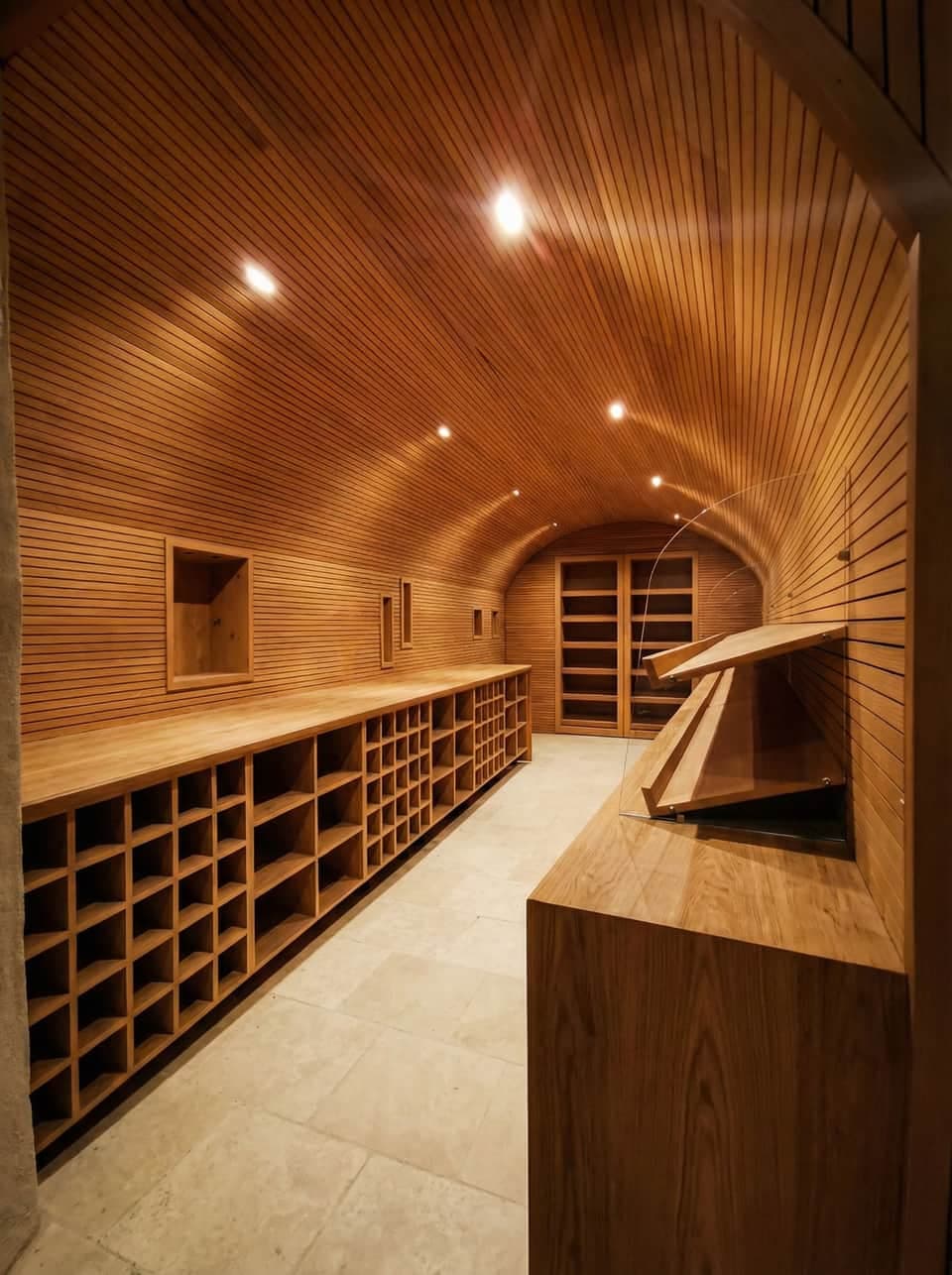
- A bookcase built into an alcove with non-parallel walls
- A solid oak dining table sized for twelve guests
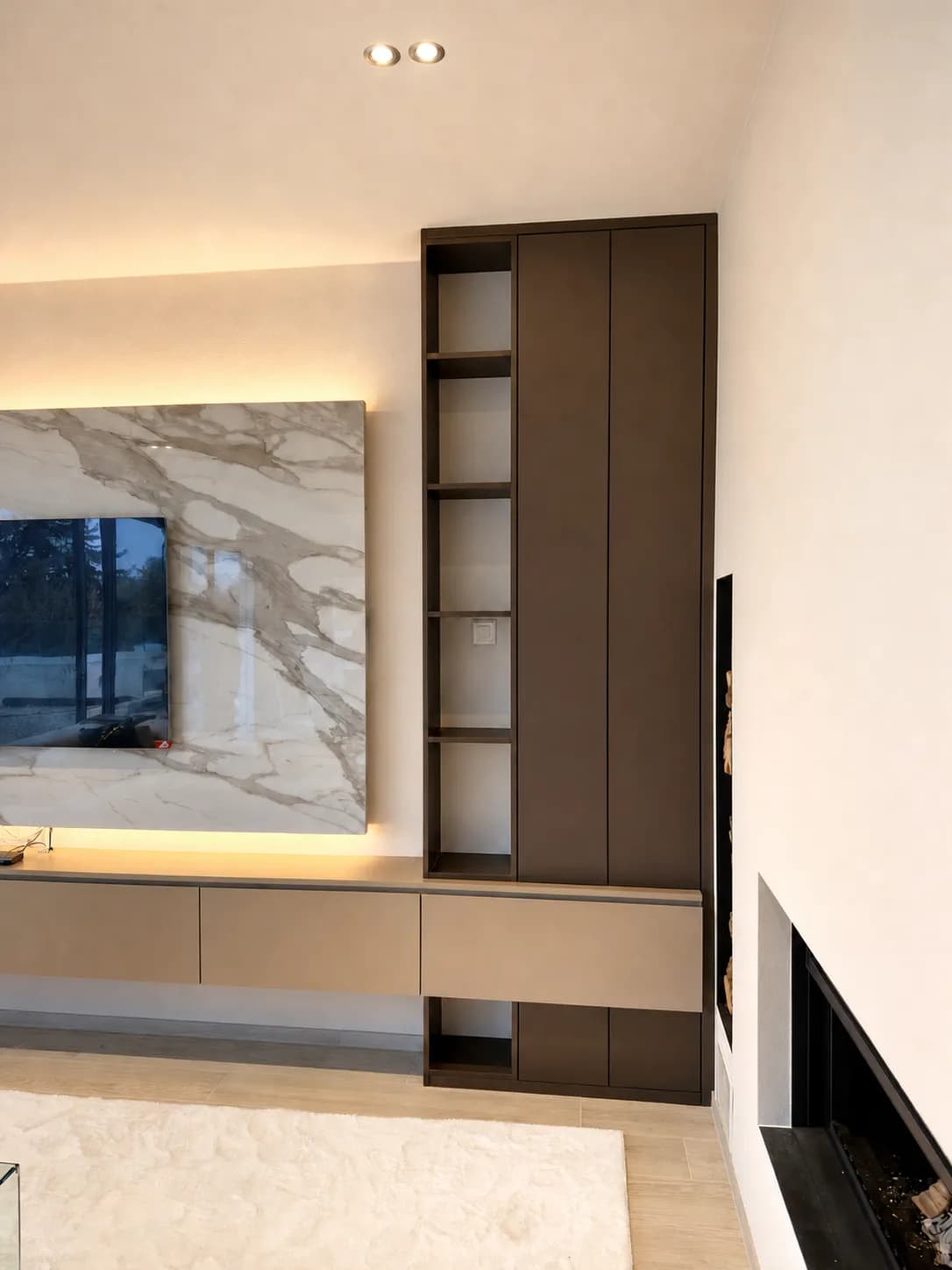
- A TV unit with walnut-veneered doors and integrated cable management
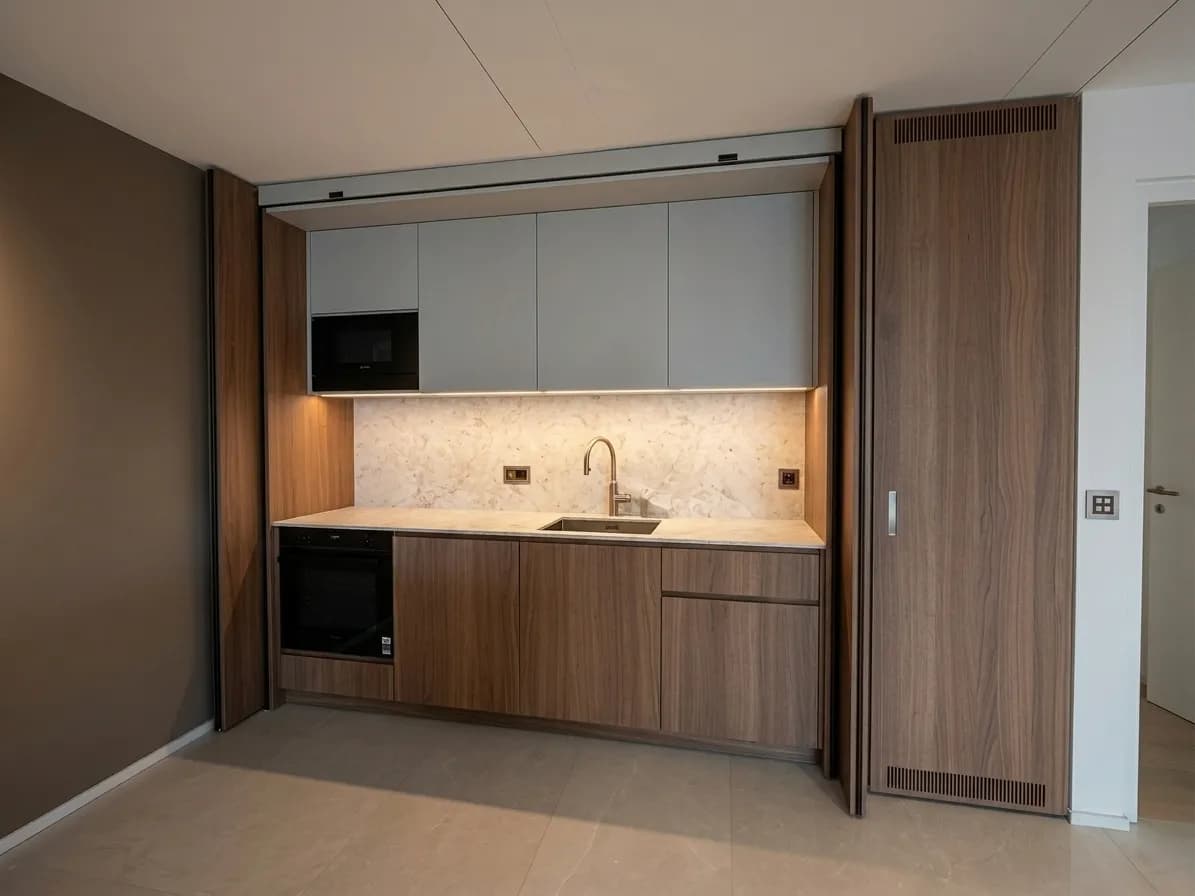
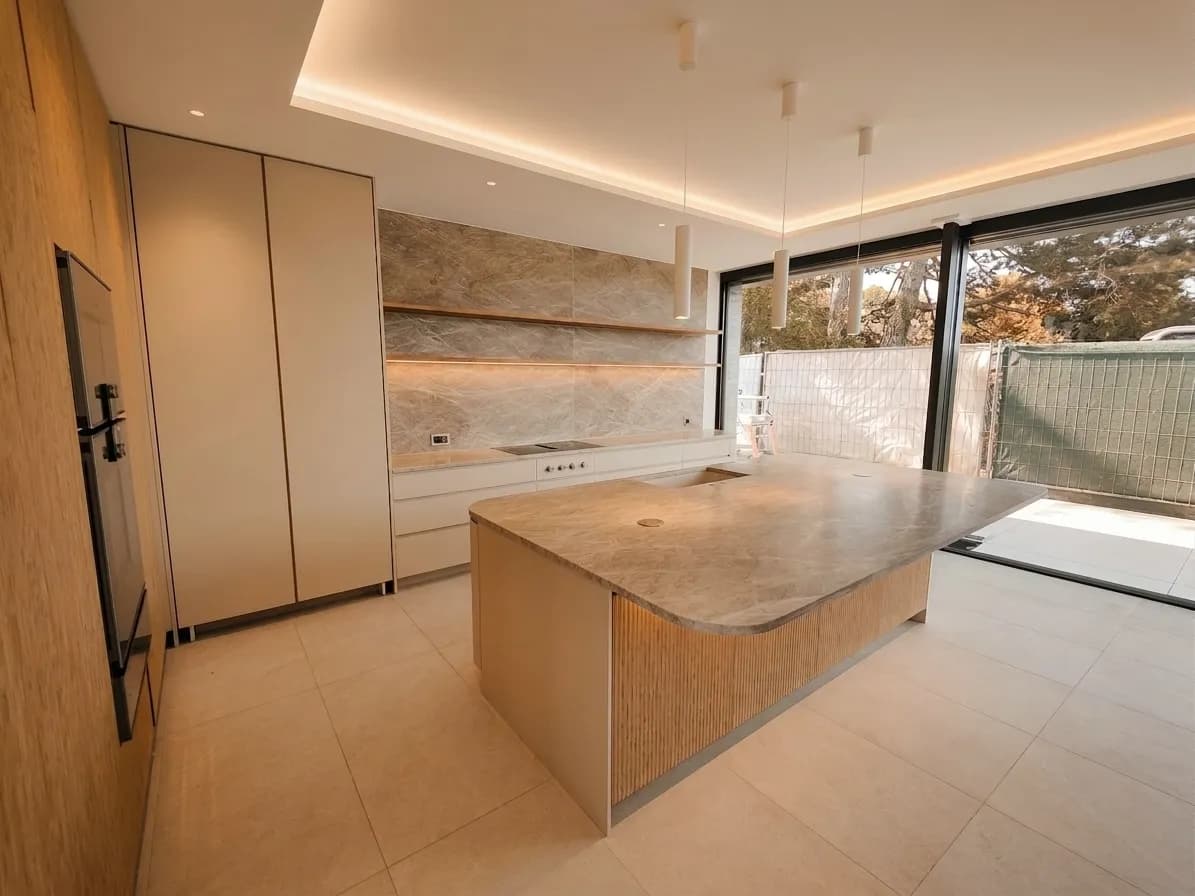
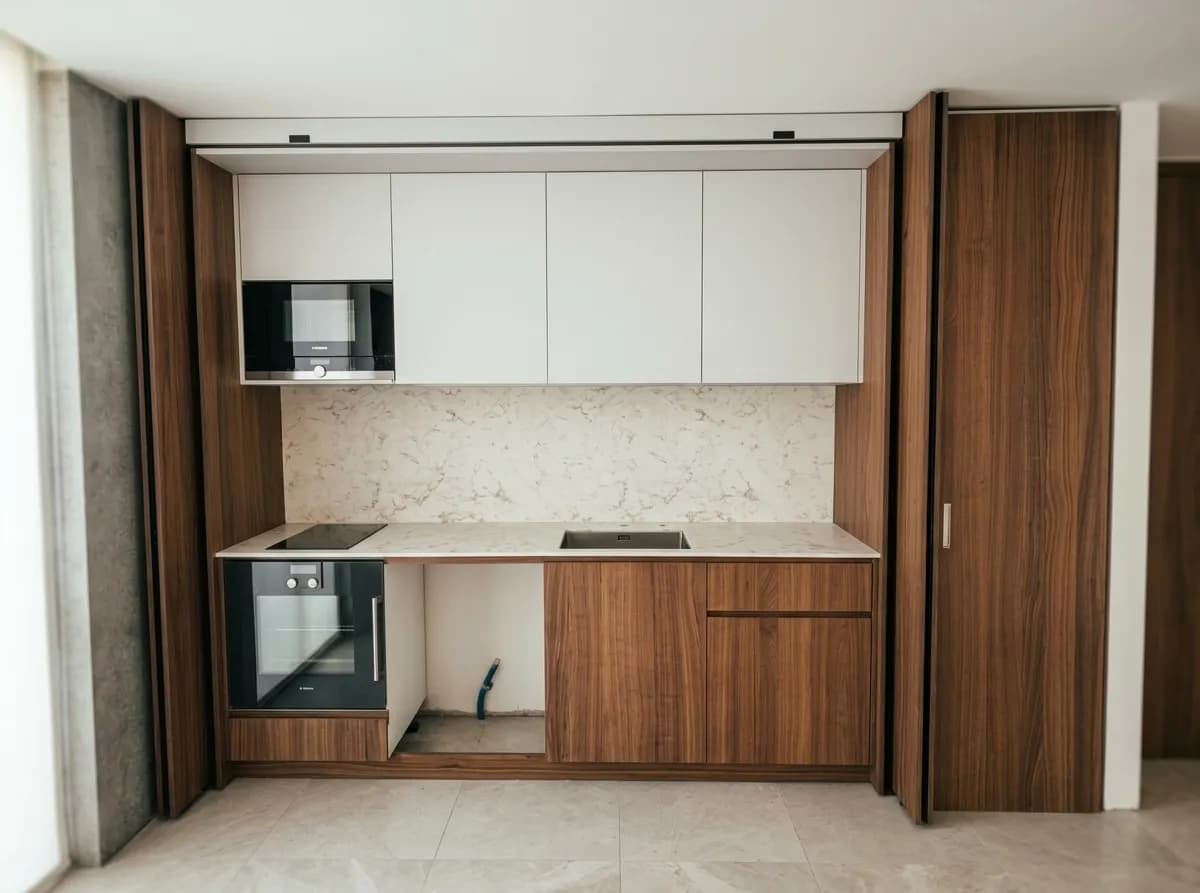
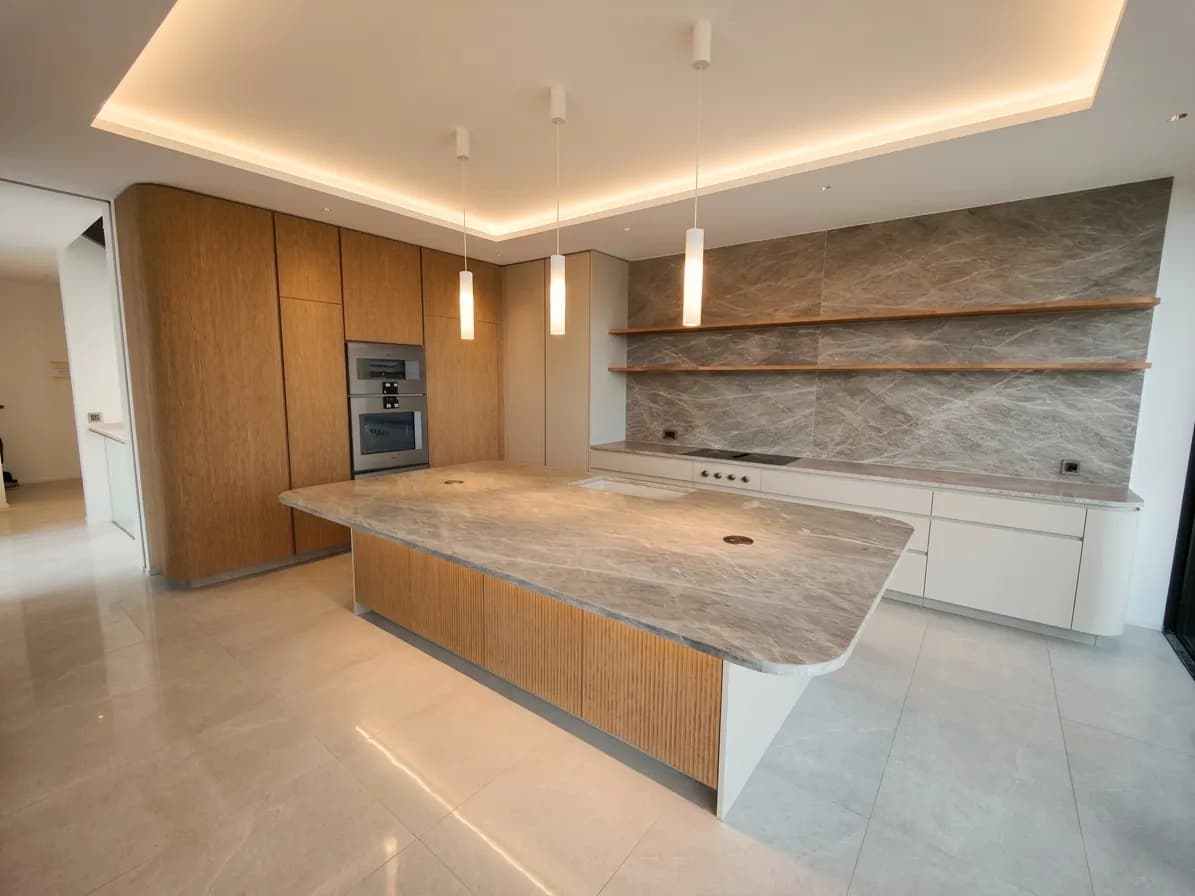
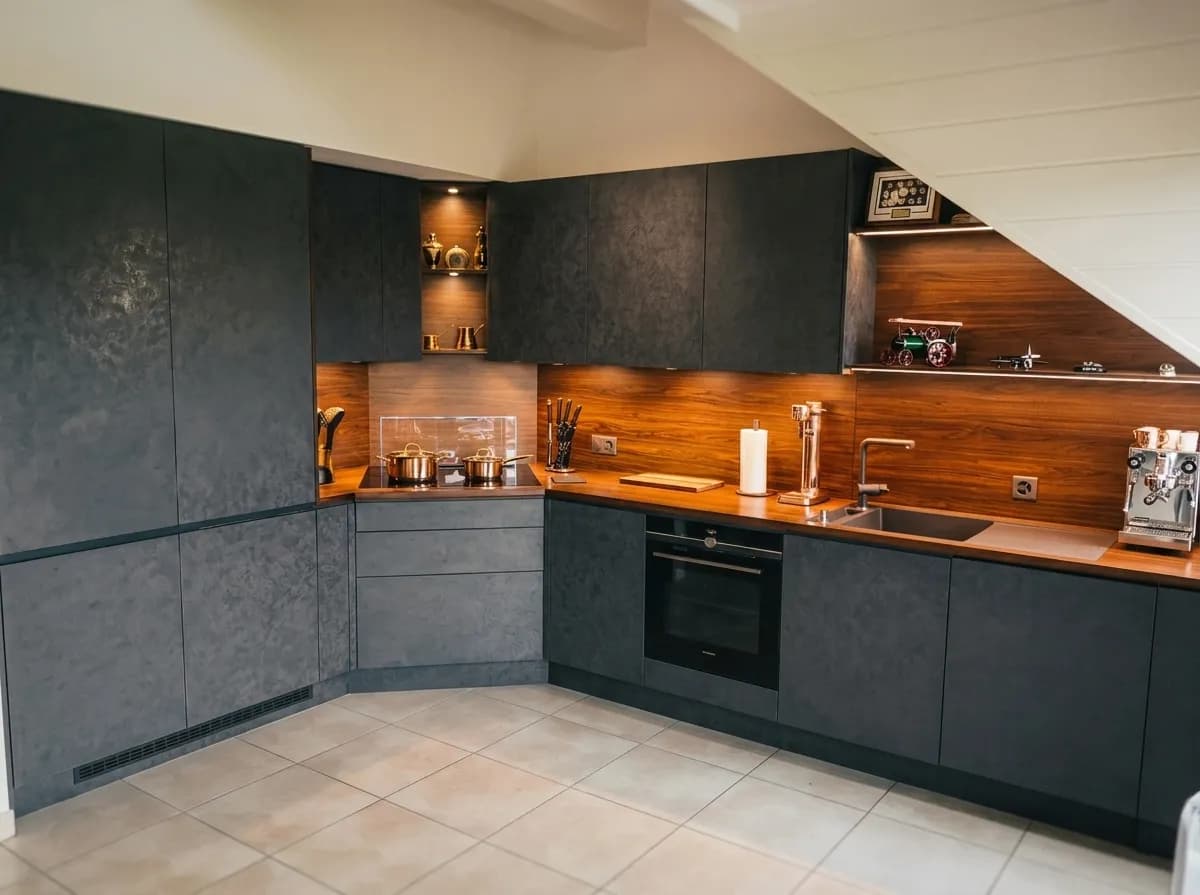
- A complete kitchen with stone worktops and Blum drawer runners
In all these cases, the common thread is this: the piece is drawn, dimensioned and made for a specific space, according to the actual needs of the people using it. It is not a product taken from a catalogue and cut to a standard length. That is precisely why this type of project falls naturally to the cabinetmaker: their trade begins where the catalogue ends.
To learn more about the design process, you can read our article on the budget and timescales for a bespoke furniture project.
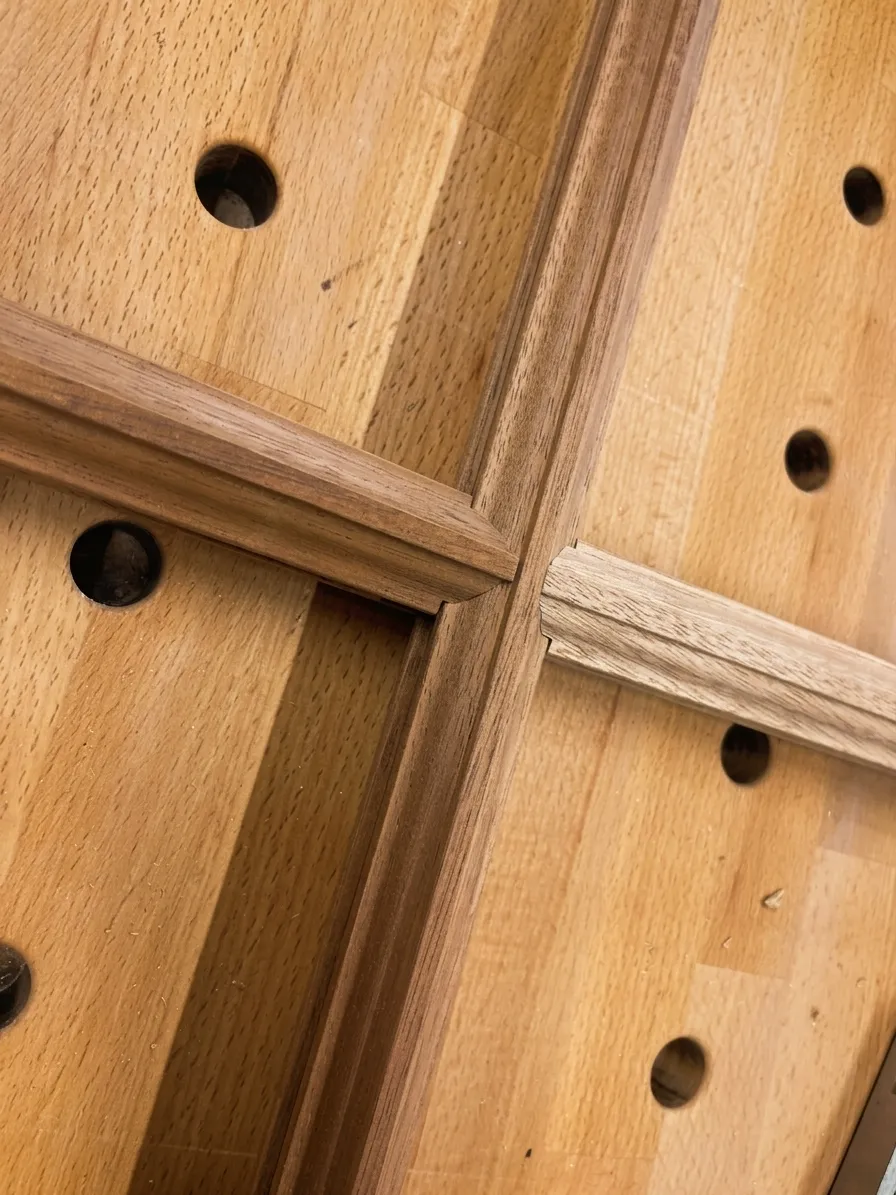 real project photo
Materials: choices that reveal the trade
A carpenter works primarily with large-format boards — plywood, OSB, particleboard — and timber profiles for the building trade. Their goal is structural strength and weathertightness.
The cabinetmaker combines several families of materials depending on the intended use and desired appearance:
- Solid timber: European oak, American walnut, ash, cherry, maple, beech — chosen for its mechanical properties, grain and colour
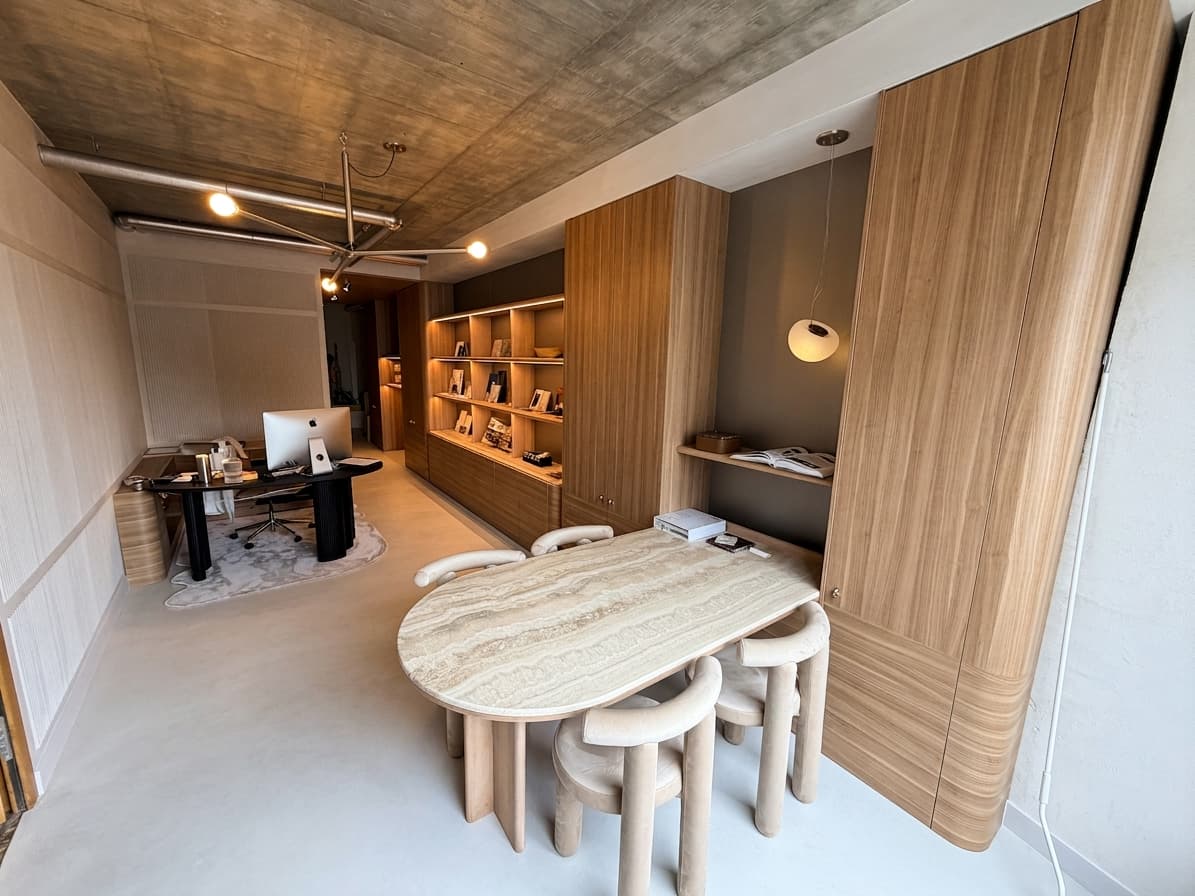
- Veneers: sliced wood leaves bonded to an MDF or plywood substrate, allowing symmetrical effects (mirror veneer, book-match) that are impossible in solid timber
- Melamine-faced boards (Egger, Kronospan) for interior carcasses — robust and easy to maintain
- Lacquered MDF for painted door panels, with the finish applied in a spray booth for a uniform and durable result
The choice of material is never incidental. In our workshop, a solid walnut door panel and a walnut-veneered MDF panel offer a similar visual appearance, but behave very differently in response to changes in humidity — which is particularly important in Romandy kitchens and bathrooms, where hygrometric variation between summer and winter is significant.
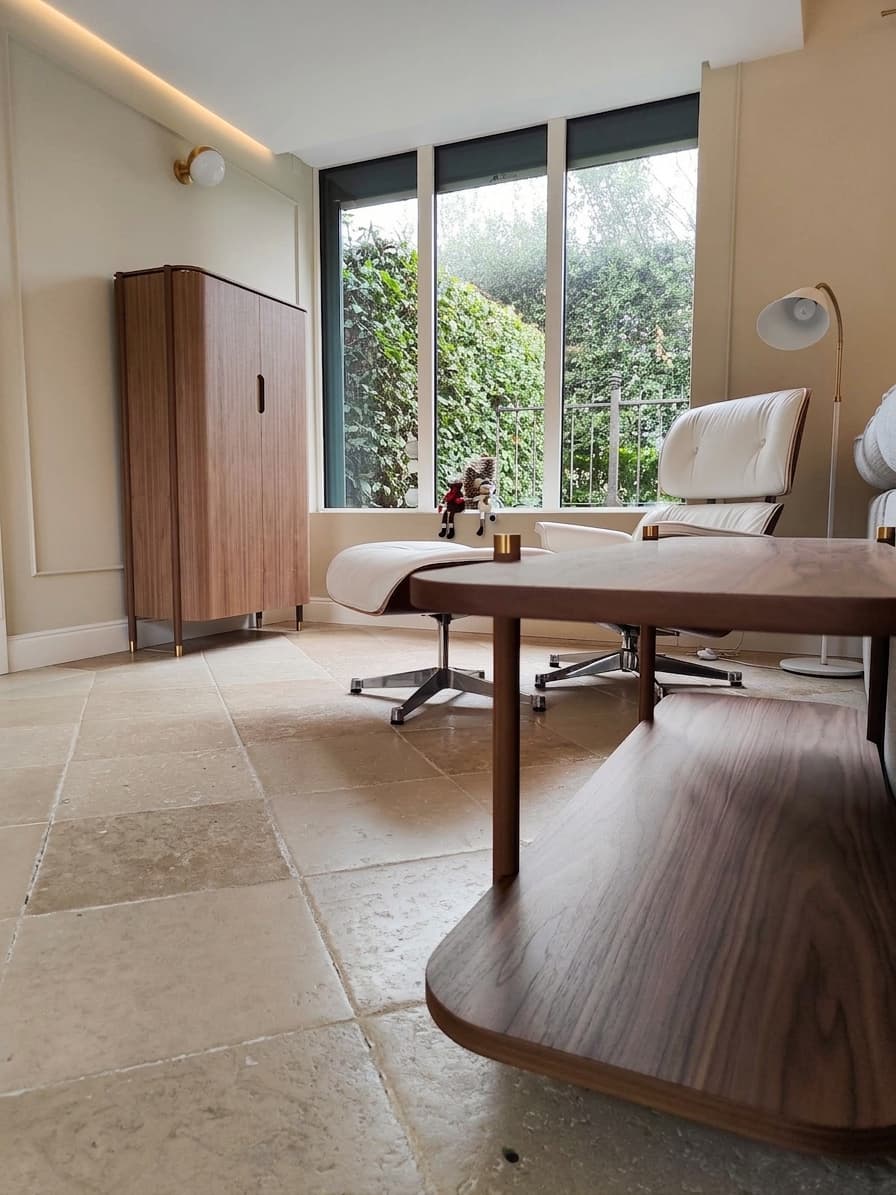
Our article on American walnut as an exceptional timber details the specific qualities of this prized wood for high-end furniture.
Joinery and finishes: where durability is determined
A well-made piece of furniture can be recognised in two places: its joinery and its finish.
Joinery
The cabinetmaker uses mechanically strong assemblies that are often visible and form part of the aesthetic of the piece. Dovetail drawers are the most well-known example: their trapezoidal profile locks the drawer without glue or screws. On contemporary carcasses, Blum full-extension soft-close runners have become the reference in modern cabinetmaking — they support heavy loads and maintain their precision after thousands of cycles.
Finishes
The finish protects the wood and determines its long-term maintenance. The cabinetmaker has several options:
- Oil: penetrates the wood, nourishes the fibres, is easily renewed; ideal for worktops and furniture that is handled regularly
- Matt or satin varnish: forms a protective film on the surface, highly resistant to scratches and moisture
- Lacquer: applied in a spray booth at controlled temperature and humidity, it delivers a uniform surface and an unlimited choice of colour (using the RAL or NCS system)
A piece lacquered in a workshop and a piece painted with a roller on site are not the same result — nor the same durability. The spray booth controls particle projection, preventing runs and ensuring a consistent coat thickness.
When to call a carpenter, and when to call a cabinetmaker?
A simple rule, applicable to most projects in Romandy:
Window replacement, parquet installation, interior staircase Carpenter Interior door, front door, timber partition Carpenter Bespoke wardrobe, bookcase or TV unit Cabinetmaker Table, desk, sideboard, solid timber bench Cabinetmaker Bespoke kitchen with carcasses and door panels Cabinetmaker Decorative wall panelling, interior cladding Cabinetmaker Commercial interior fit-out (practice, boutique) CabinetmakerSome projects sit on the boundary: a staircase with a stained timber balustrade and integrated drawers beneath, for example, may call on both trades working in coordination. In that case, it is useful for one of them to take overall responsibility for the project to avoid interface problems on site.
Our page dedicated to bespoke fittings and furniture presents the types of projects we carry out in the workshop.
The role of 3D plans in a bespoke furniture project
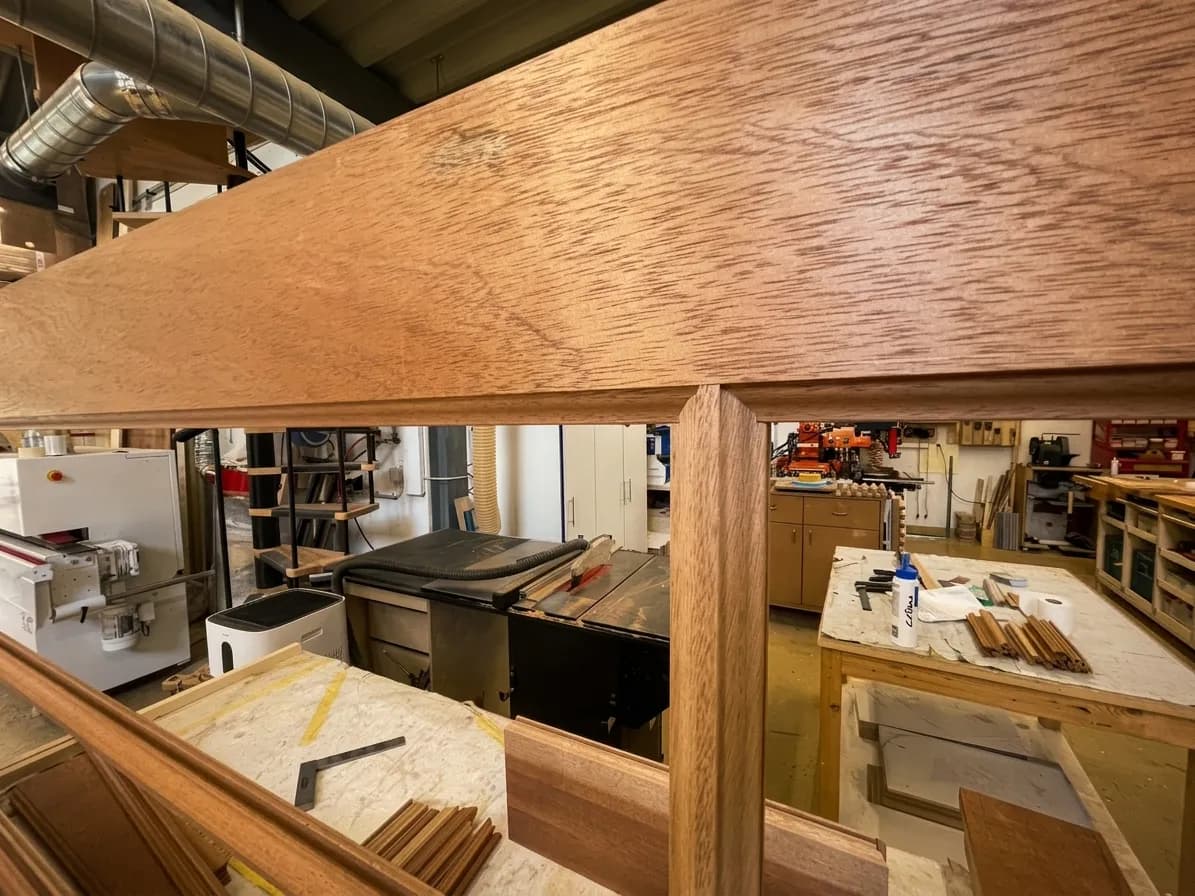
Whether you work with a carpenter or a cabinetmaker, the quality of the preparatory drawings determines the success of the project. In our workshop, every project goes through a study phase: on-site measurements, 2D technical drawings and then 3D modelling, selection of timber species and finishes. The client approves the plans before the first piece is cut.
This step is not a luxury. A sloping-ceiling wardrobe involves angles, varying heights and sometimes exposed beams to integrate. Without approved plans, dimensional errors are paid for in wasted material and additional delays. With approved plans, production is predictable and installation takes between one and three days depending on complexity.
For storage projects, our article on the bespoke bookcase and its design guide illustrates how this design phase influences the final result.
Timescales and organisation for a cabinetmaking project in Romandy
A bespoke furniture project takes time — it is inherent to the process. Here are the typical timescales at our workshop, given as a guide:
- Initial contact and first estimate: reply within 48 hours
- Study phase (measurements, plans, 3D modelling, approval): 2 to 3 weeks
- Workshop manufacture: 4 to 6 weeks for a complete fitting
- Installation: 1 to 3 days depending on the piece
For a single piece of furniture — a table, a desk, a sideboard — the total timeframe is between 6 and 10 weeks. These timescales depend on the complexity of the project and the state of the order book at the time of enquiry.
Our article on the budget for a sloping-ceiling installation in Switzerland gives similar benchmarks for that specific type of project.
Key points to remember
Carpenters and cabinetmakers both work with wood, but not in the same field of expertise. For bespoke furniture — a wardrobe, bookcase, table, kitchen or interior fitting — the cabinetmaker is the craftsman whose training, materials and working methods are suited to this type of project. What makes the difference in the outcome: the precision of the preparatory drawings, the quality of the joinery, the considered choice of materials and the finish applied in the workshop. None of these elements can be improvised; they are prepared, drawn and approved before the saw ever turns.
Tell us about your project
In our workshop in Gingins, every project begins with a conversation: you describe the space, the intended use, the constraints — we assess the feasibility and reply within 48 hours with an initial direction or a proposal for a site visit. The study, plans and 3D modelling are completed before any manufacturing begins; you approve the drawings before anything is cut. The cabinetmakers who make your furniture are the ones who come to install it.
Describe your project in a few lines via our contact form, or call us on +41 79 367 26 99 Monday to Friday, 08:00 to 18:00.